
Buddhist Healing
Buddhist Healing is a fundamental aspect of Buddhism that focuses on the physical, mental, and spiritual well-being of individuals. This form of healing is based on the teachings of Buddha and is deeply rooted in the principles of compassio…
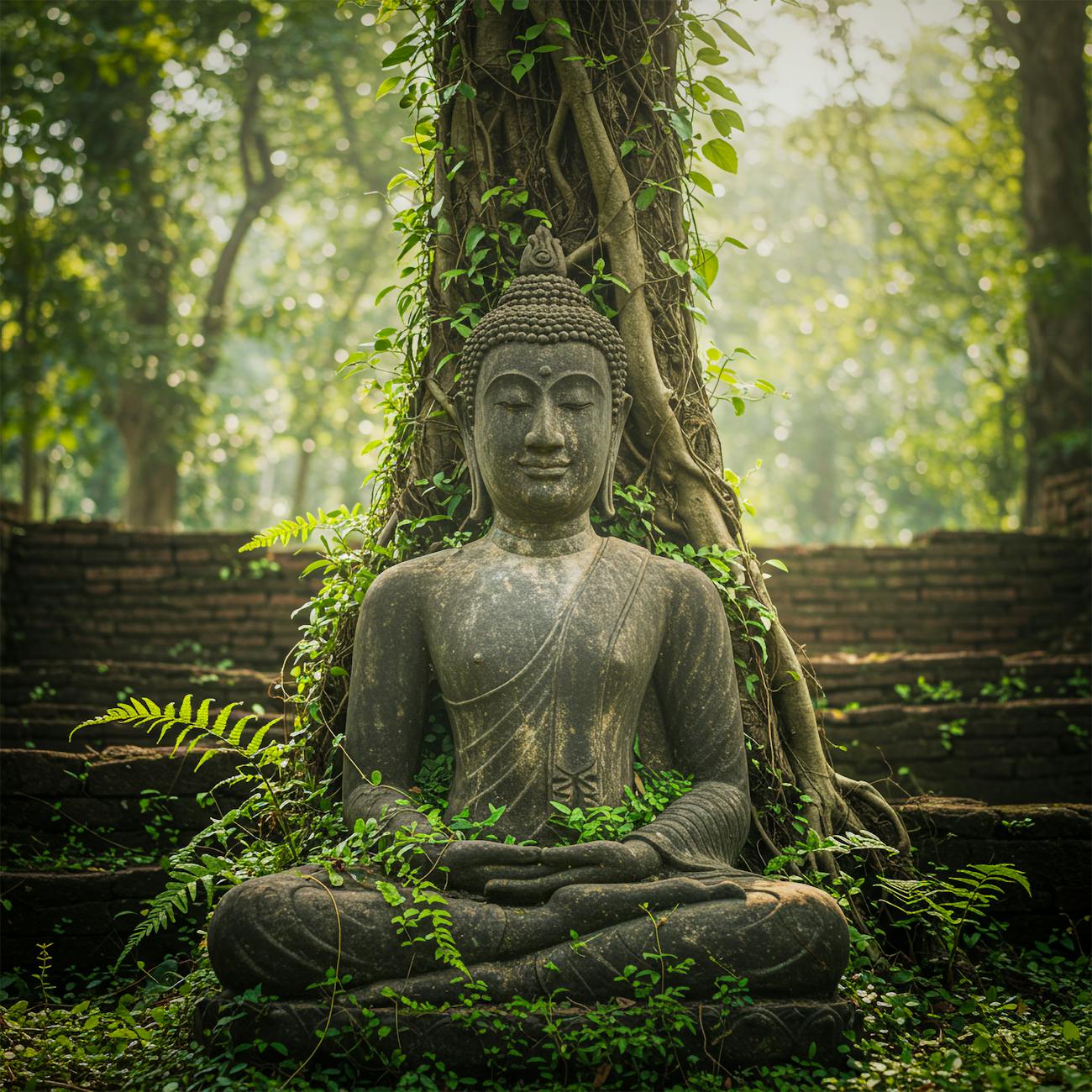
Buddhist Healing is a fundamental aspect of Buddhism that focuses on the physical, mental, and spiritual well-being of individuals. This form of healing is based on the teachings of Buddha and is deeply rooted in the principles of compassion, mindfulness, and interdependence. In this explanation, we will explore some of the key terms and vocabulary related to Buddhist Healing in the context of the Advanced Certificate in Buddhism and Psychology.
1. The Four Noble Truths
The Four Noble Truths are the foundation of Buddhism and provide a framework for understanding the nature of suffering and the path to liberation. The first Noble Truth states that suffering exists, the second Noble Truth identifies the cause of suffering as craving and ignorance, the third Noble Truth teaches that suffering can be overcome, and the fourth Noble Truth outlines the path to the end of suffering, known as the Noble Eightfold Path.
In the context of Buddhist Healing, the Four Noble Truths provide a roadmap for understanding the causes of suffering and the means to alleviate it. By recognizing the impermanent and interconnected nature of all things, individuals can develop a greater understanding of their own suffering and the suffering of others, and can cultivate compassion and mindfulness as a means of healing.
2. The Noble Eightfold Path
The Noble Eightfold Path is the path to the end of suffering, as outlined in the Fourth Noble Truth. The path consists of eight interconnected factors: right understanding, right intention, right speech, right action, right livelihood, right effort, right mindfulness, and right concentration.
In the context of Buddhist Healing, the Noble Eightfold Path provides a framework for ethical living and spiritual growth. By cultivating right understanding and intention, individuals can develop a clearer understanding of the nature of suffering and the path to liberation. Right speech, action, and livelihood help to promote harmony and compassion in relationships and communities, while right effort, mindfulness, and concentration support the development of mental discipline and clarity.
3. Mindfulness
Mindfulness is the practice of paying attention to the present moment with a non-judgmental and open attitude. In Buddhist Healing, mindfulness is used as a means of cultivating self-awareness, reducing stress, and promoting healing. By bringing attention to the breath, body, and senses, individuals can develop a greater awareness of their thoughts, emotions, and physical sensations, and can cultivate a sense of spaciousness and ease.
Mindfulness can be practiced in many forms, including meditation, yoga, and mindful movement. In the context of Buddhist Healing, mindfulness is used as a means of cultivating a deeper understanding of the interconnectedness of all things, and as a means of promoting compassion and healing.
4. Compassion
Compassion is the feeling of deep sympathy and concern for the suffering of others, accompanied by a desire to alleviate that suffering. In Buddhist Healing, compassion is seen as a fundamental aspect of healing, as it helps to promote a sense of interconnectedness and interdependence. By cultivating compassion, individuals can develop a greater understanding of the suffering of others, and can take action to alleviate that suffering.
Compassion can be cultivated through various practices, including meditation, loving-kindness meditation, and acts of service. In the context of Buddhist Healing, compassion is seen as a means of promoting healing on both a personal and collective level.
5. Interdependence
Interdependence is the principle that all things are connected and interdependent, and that nothing exists independently. In Buddhist Healing, interdependence is seen as a fundamental aspect of healing, as it helps to promote a sense of connection and interconnectedness. By recognizing the interdependence of all things, individuals can develop a greater understanding of their own suffering and the suffering of others, and can cultivate compassion and mindfulness as a means of healing.
Interdependence can be experienced in many ways, including through relationships, communities, and the natural world. In the context of Buddhist Healing, interdependence is seen as a means of promoting healing on both a personal and collective level.
6. Karma
Karma is the principle that actions have consequences, and that our actions in this life can affect our experiences in future lives. In Buddhist Healing, karma is seen as a means of understanding the causes and effects of suffering, and as a means of promoting ethical living. By recognizing the consequences of our actions, individuals can cultivate mindfulness and compassion as a means of promoting healing.
7. Impermanence
Impermanence is the principle that all things are constantly changing and that nothing is permanent. In Buddhist Healing, impermanence is seen as a means of understanding the nature of suffering and the path to liberation. By recognizing the impermanent nature of all things, individuals can develop a greater understanding of the causes of suffering and can cultivate mindfulness and compassion as a means of healing.
8. No-Self
No-Self is the principle that the self is an illusion, and that there is no permanent, unchanging self that exists independently. In Buddhist Healing, no-self is seen as a means of understanding the nature of suffering and the path to liberation. By recognizing the illusory nature of the self, individuals can develop a greater understanding of the interconnectedness of all things, and can cultivate mindfulness and compassion as a means of healing.
9. Emptiness
Emptiness is the principle that all things lack an inherent, independent existence, and that all things are empty of a separate, independent self. In Buddhist Healing, emptiness is seen as a means of understanding the nature of suffering and the path to liberation. By recognizing the empty nature of all things, individuals can develop a greater understanding of the interconnectedness of all things, and can cultivate mindfulness and compassion as a means of healing.
10. Healing
Healing is the process of promoting physical, mental, and spiritual well-being. In Buddhist Healing, healing is seen as a means of promoting compassion, mindfulness, and interdependence, and as a means of alleviating suffering. By cultivating mindfulness, compassion, and interdependence, individuals can promote healing on both a personal and collective level.
In conclusion, Buddhist Healing is a complex and multifaceted field that draws on the teachings of Buddhism to promote physical, mental, and spiritual well-being. Through the cultivation of mindfulness, compassion, and interdependence, individuals can develop a deeper understanding of the nature of suffering and the path to liberation, and can promote healing on both a personal and collective level. By recognizing the interconnectedness of all things, individuals can cultivate a sense of compassion and healing that extends beyond the self, and can promote a more just and compassionate world.
Key takeaways
- In this explanation, we will explore some of the key terms and vocabulary related to Buddhist Healing in the context of the Advanced Certificate in Buddhism and Psychology.
- The Four Noble Truths are the foundation of Buddhism and provide a framework for understanding the nature of suffering and the path to liberation.
- By recognizing the impermanent and interconnected nature of all things, individuals can develop a greater understanding of their own suffering and the suffering of others, and can cultivate compassion and mindfulness as a means of healing.
- The path consists of eight interconnected factors: right understanding, right intention, right speech, right action, right livelihood, right effort, right mindfulness, and right concentration.
- Right speech, action, and livelihood help to promote harmony and compassion in relationships and communities, while right effort, mindfulness, and concentration support the development of mental discipline and clarity.
- By bringing attention to the breath, body, and senses, individuals can develop a greater awareness of their thoughts, emotions, and physical sensations, and can cultivate a sense of spaciousness and ease.
- In the context of Buddhist Healing, mindfulness is used as a means of cultivating a deeper understanding of the interconnectedness of all things, and as a means of promoting compassion and healing.