
Hull Inspection And Maintenance
Expert-defined terms from the Dry Dock Operations course at HealthCareCourses (An LSIB brand). Free to read, free to share, paired with a professional course.
Abrasion – A mechanical wear process where hull surfaces lose material du… #
Related terms: erosion, impact damage. Explanation: Abrasion removes protective coating layers and can expose underlying steel to corrosion. Example: A vessel operating in Arctic routes experiences sand‑laden ice particles that gradually wear the hull’s forward plating. Practical application: Regular visual inspection during dry‑dock surveys identifies abrasions early, allowing targeted sanding and recoating before structural thinning occurs. Challenge: Detecting early‑stage abrasion can be difficult because surface roughness may be mistaken for normal coating texture, requiring skilled inspectors and sometimes portable profilometers.
Anti‑Fouling Coating – A specialized paint applied to a ship’s hull to pr… #
Related terms: biocide, bottom paint, environmental compliance. Explanation: The coating contains biocidal agents that deter barnacles, algae, and mussels, reducing drag and fuel consumption. Example: A bulk carrier uses a copper‑based anti‑fouling system that must be reapplied every 18 months in warm waters. Practical application: During dry‑dock, the old coating is stripped, surface contaminants are removed, and a new layer is applied following manufacturer‑specified cure times. Challenge: Balancing performance with increasingly strict environmental regulations that limit the use of toxic biocides, requiring careful selection of approved alternatives.
Alignment – The precise positioning of hull components and structural mem… #
Related terms: parallelism, plumbness, laser alignment. Explanation: Proper alignment ensures load distribution is uniform, preventing undue stress on frames, bulkheads, and deck equipment. Example: After a major repair to the forward section, a shipyard uses laser theodolites to verify that the newly installed bow plate aligns within 2 mm of the original longitudinal axis. Practical application: Alignment checks are performed before and after welding operations to guarantee that deformations have not introduced misalignment. Challenge: Thermal expansion and hull flexure during welding can cause hidden misalignments that only become apparent after the vessel leaves the dry dock.
Ballast Water Management – The process of controlling ballast water to ma… #
Related terms: ballast tanks, treatment system, IMO D‑2. Explanation: Proper inspection of ballast tank integrity, inlet/outlet valves, and treatment equipment is essential for compliance and safety. Example: A container ship’s ballast tanks are examined for corrosion, coating degradation, and valve leakage during a scheduled dry‑dock. Practical application: Maintenance includes repainting tank interiors, replacing worn seals, and calibrating the onboard treatment system. Challenge: Accessing confined tank spaces can be hazardous; inspectors must use confined‑space protocols and may need remote‑visual tools to assess hard‑to‑reach areas.
Bilge Inspection – The examination of the lowest part of the hull where w… #
Related terms: scuppers, pump alarms, corrosion monitoring. Explanation: Bilge areas are prone to corrosion due to constant moisture, making regular inspection vital to prevent hull thinning. Example: During dry‑dock, inspectors remove bilge panels, use a handheld ultrasonic thickness gauge, and record measurements at each bilge strake. Practical application: Findings dictate whether additional protective coating, sacrificial anodes, or structural reinforcement is required. Challenge: Bilge spaces often contain debris, oil residues, and limited lighting, complicating accurate measurement and increasing the risk of overlooking localized pitting.
Corrosion Monitoring – The systematic tracking of metal loss rates on hul… #
Related terms: cathodic protection, anode performance, material degradation. Explanation: Monitoring provides data to predict maintenance intervals and assess the effectiveness of protective systems. Example: A tanker’s hull is surveyed quarterly; data shows a 0.12 mm yr⁻¹ loss in a high‑stress area, prompting a recommendation for additional anodes. Practical application: Results are logged in the vessel’s maintenance management system, influencing future dry‑dock repair plans. Challenge: Variability in measurement technique, environmental conditions, and probe placement can lead to inconsistent data, requiring calibrated equipment and trained personnel.
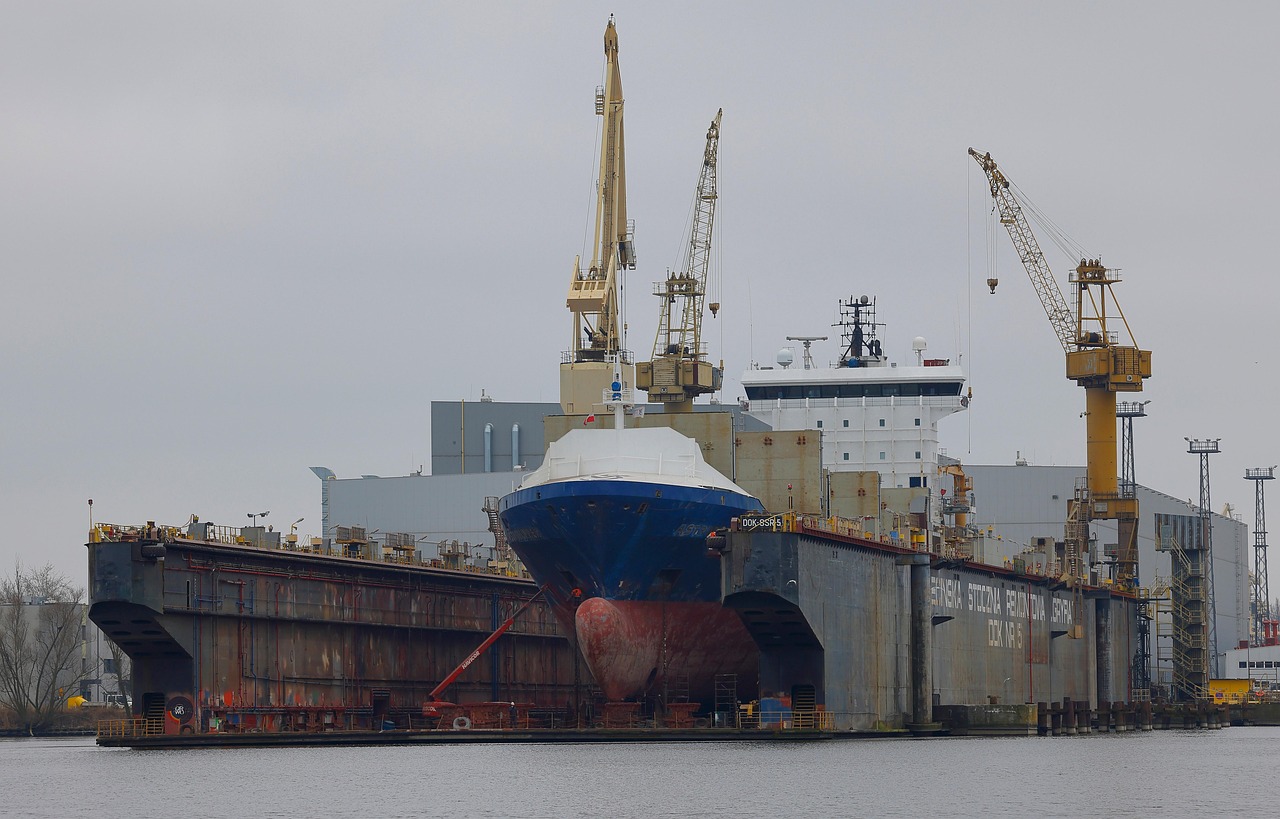
Dry Dock – A specialized facility that can be flooded and drained to allo… #
Related terms: graving dock, floating dock, shiplift. Explanation: Dry docking provides a controlled environment where hull work can be performed safely and efficiently. Example: A cruise liner is scheduled for a 30‑day dry‑dock where hull plating, propeller shafts, and sea‑chests are overhauled. Practical application: Dock planners coordinate vessel arrival, ballast de‑watering, and support services such as scaffolding and waste disposal. Challenge: Dock availability is limited; unexpected repairs may cause schedule disruptions, and the cost of a dry‑dock can represent a significant portion of the vessel’s annual operating budget.
Hull Survey – A comprehensive examination of the ship’s structural condit… #
Related terms: class certification, condition assessment, survey report. Explanation: The survey evaluates plating thickness, weld quality, corrosion, and compliance with construction standards. Example: Prior to renewal of class, a vessel undergoes an in‑depth hull survey that includes ultrasonic thickness mapping of the bow, mid‑ship, and stern sections. Practical application: Survey findings dictate corrective actions, such as plating replacement or reinforcement, and may affect insurance premiums. Challenge: Surveyors must balance thoroughness with time constraints; incomplete documentation can lead to disputes with owners or classification societies.
Hull Plate – The large steel sheets that form the outer skin of a ship’s… #
Related terms: longitudinal framing, transverse stiffener, plate thickness. Explanation: Plates are fabricated to specific grades, thicknesses, and tolerances, and are joined by welding, riveting, or bolting. Example: During a mid‑life refit, a 12 mm stern plate shows excessive thinning; the shipyard replaces it with a new 12 mm plate, ensuring proper welding procedures are followed. Practical application: Plate selection influences vessel weight, fuel efficiency, and resistance to corrosion. Challenge: Plate distortion during welding, residual stresses, and alignment errors can compromise structural performance if not properly managed.
Inspection Checklist – A standardized list of items and criteria used by… #
Related terms: audit tool, risk matrix, regulatory requirement. Explanation: Checklists ensure consistency, facilitate documentation, and help identify deviations. Example: A dry‑dock inspection team uses a 150‑item checklist covering hull coating condition, anode placement, and non‑destructive testing results. Practical application: Completed checklists become part of the vessel’s technical file and support regulatory submissions. Challenge: Overly generic checklists may miss vessel‑specific issues; customizing the list for each ship’s design and operating environment is essential for effectiveness.
Joint – The connection point between two hull components, which may be we… #
Related terms: butt joint, fillet weld, stress concentration. Explanation: Proper joint design and execution are critical to maintain structural continuity and prevent crack initiation. Example: A shipyard inspects a series of butt joints on the hull’s mid‑section, checking for weld penetration, undercut, and crack presence. Practical application: Joint inspection includes visual examination, ultrasonic testing, and sometimes destructive testing of sample welds. Challenge: Complex joint geometries in curved hull areas can create hidden defects that are difficult to detect without advanced NDT methods.
Keel – The central longitudinal structural member running along the botto… #
Related terms: keelson, baseline, structural integrity. Explanation: The keel carries longitudinal loads, distributes weight, and provides attachment points for frames and decks. Example: During a dry‑dock, inspectors examine the keel for corrosion pits and verify that the protective coating is intact along the entire length. Practical application: Keel condition influences overall hull stiffness; any damage may require plate replacement or reinforcement. Challenge: Access to the keel is limited by the vessel’s draft and dock configuration; specialized scaffolding or remote‑inspection tools are often required.
Lifeboat Davit – The mechanical arm used to launch lifeboats from the shi… #
Related terms: launching gear, structural attachment, corrosion protection. Explanation: Davits impose localized loads on the hull; their brackets and fittings must be inspected for fatigue and corrosion. Example: A passenger liner’s davit brackets are examined for paint degradation and galvanic corrosion at the interface with the hull plating. Practical application: Findings may lead to repainting, replacement of corroded bolts, or reinforcement of mounting plates. Challenge: The davit’s moving parts can hide corrosion under the pivot points, making thorough inspection essential but time‑consuming.
Moulding – The curved shape of a hull segment, defined by the combination… #
Related terms: hydrostatic form, shape deviation, fairing. Explanation: Accurate moulding ensures hydrodynamic efficiency and structural alignment. Example: After hull plating installation, a laser scanner measures the hull moulding, revealing a 3 mm deviation from the design curve in the aft section. Practical application: Deviations are corrected by controlled removal of material (fairing) and re‑welding to achieve the intended shape. Challenge: Cumulative small errors from multiple welds can lead to significant overall moulding distortion, requiring careful monitoring throughout construction and repairs.
Non‑Destructive Testing (NDT) – Inspection techniques that evaluate mater… #
Related terms: ultrasonic testing, radiography, magnetic particle inspection. Explanation: NDT methods detect internal flaws, thickness loss, and weld defects, providing critical data for maintenance decisions. Example: An ultrasonic thickness gauge records a 4 mm loss in a 12 mm hull plate, prompting a recommendation for plate replacement. Practical application: NDT is routinely performed during dry‑dock to verify coating adhesion, weld quality, and structural integrity. Challenge: Operator skill, equipment calibration, and surface condition affect reliability; false‑positive or false‑negative results can lead to unnecessary repairs or missed defects.
Opening – Any cutout or penetration in the hull, such as sea‑chests, thru… #
Related terms: sealant, structural reinforcement, water ingress. Explanation: Openings must be properly reinforced and sealed to maintain watertight integrity. Example: A dry‑dock survey discovers that a sea‑chest flange has become loose, allowing water ingress during heavy seas. Practical application: The opening is repaired by tightening bolts, applying marine‑grade sealant, and re‑coating the surrounding area. Challenge: Complex geometries and limited access can make it difficult to ensure a uniform seal, especially after repeated maintenance cycles.
Patching – The repair method of installing a new piece of steel to replac… #
Related terms: splicing, fit‑up, heat‑affected zone. Explanation: Patches restore structural continuity and water tightness when corrosion or impact damage exceeds acceptable limits. Example: A 250 mm × 150 mm corrosion cavity in the mid‑ship hull is cut out; a new plate of matching thickness is welded and ground smooth. Practical application: Proper preparation, including cleaning, beveling, and pre‑heating, ensures a sound weld and minimizes residual stresses. Challenge: Achieving a seamless blend between the patch and existing hull can be difficult, especially on curved surfaces, and may require skilled welding and post‑weld heat treatment.
Quasi‑Non‑Destructive Testing – Inspection techniques that are minimally… #
Related terms: coating pull‑off, surface profiling, micro‑hardness testing. Explanation: These methods provide more accurate data than purely surface‑level techniques while still preserving overall hull integrity. Example: A coating pull‑off test on a cargo vessel’s hull shows an adhesion strength of 1.5 MPa, below the required 2.0 MPa threshold. Practical application: Results guide decisions on whether to strip and re‑coat or perform localized repairs. Challenge: Even minor removal can create spots that need subsequent repair, and the tests must be carefully controlled to avoid contaminating surrounding areas.
Riveting – A mechanical fastening method where rivets are inserted and de… #
Related terms: bolting, structural fastening, heat‑affected zone. Explanation: Riveted joints distribute loads over a larger area but require periodic inspection for loosening or corrosion. Example: A historic steamship undergoing preservation work is inspected for rivet head corrosion; several rivets are found cracked and are replaced with new aluminum rivets. Practical application: Rivet inspection includes checking for shear deformation, backing plate integrity, and proper head formation. Challenge: Accessing rivet heads in confined spaces can be difficult, and replacing rivets often requires specialized tools and skilled labor.
Sponson – A protruding hull structure that provides additional buoyancy,… #
Related terms: side tank, ballast tank, structural reinforcement. Explanation: Sponsons experience high stress concentrations where they join the main hull, necessitating careful inspection. Example: During a dry‑dock, inspectors examine a vessel’s aft sponson for corrosion at the weld interface and discover a 5 mm deep pit. Practical application: The pit is repaired by grinding out the corroded area, installing a new weld patch, and re‑coating the entire sponson. Challenge: The geometry of sponsons can hinder inspector access and make it hard to achieve uniform coating thickness around curved surfaces.
Thickness Measurement – The process of determining the remaining material… #
Related terms: ultrasonic testing, material loss, minimum allowable thickness. Explanation: Accurate thickness data informs repair decisions and ensures compliance with classification society standards. Example: A surveyor records a 10 mm thickness on a 12 mm plate, indicating 2 mm loss; the area is flagged for possible reinforcement. Practical application: Measurements are plotted on a hull thickness map, highlighting zones of concern and guiding future maintenance planning. Challenge: Surface roughness, coating thickness, and temperature variations can affect ultrasonic readings, requiring calibration and skilled interpretation.
Ultrasonic Testing (UT) – A NDT method that uses high‑frequency sound wav… #
Related terms: pulse‑echo, acoustic coupling, attenuation. Explanation: UT is widely used for hull inspection because it provides rapid, non‑intrusive assessment of steel plates. Example: A technician conducts UT on a tanker’s hull, identifying a subsurface crack 30 mm below the surface in a high‑stress area. Practical application: The crack is evaluated for severity; if it exceeds allowable limits, a remedial repair is scheduled. Challenge: Couplant selection, probe positioning, and operator expertise heavily influence data quality; improper technique can miss critical defects.
Vibration Monitoring – The continuous observation of hull and machinery v… #
Related terms: modal analysis, accelerometer, fatigue assessment. Explanation: Excessive vibration can accelerate fatigue cracking in hull plates and joints. Example: Sensors installed on a cruise ship’s hull record increased vibration levels after a propeller shaft modification, prompting an inspection that finds minor hairline cracks at the propeller boss. Practical application: Data is used to schedule targeted inspections and to adjust operating parameters to reduce vibration amplitudes. Challenge: Distinguishing between normal operational vibration and early signs of structural damage requires sophisticated signal processing and baseline data.
Welding – The process of joining metal components by melting the base mat… #
Related terms: shielded metal arc welding (SMAW), gas metal arc welding (GMAW), heat‑affected zone (HAZ). Explanation: Proper welding techniques are essential for hull integrity; defects such as porosity, lack of fusion, or cracking can compromise strength. Example: A shipyard welds a new stern plate using SMAW; post‑weld ultrasonic inspection reveals a lack of fusion defect, leading to immediate repair. Practical application: Weld procedures are documented in welding procedure specifications (WPS) and must be approved by the classification society. Challenge: Controlling heat input to avoid excessive distortion, managing residual stresses, and ensuring consistent quality across large hull areas demand experienced welders and rigorous quality control.
X‑Ray Radiography – An NDT technique that uses penetrating radiation to p… #
Related terms: gamma radiography, film imaging, digital radiography. Explanation: Radiography reveals volumetric defects such as voids, inclusions, and lack of penetration that may be hidden from surface inspection. Example: A dry‑dock team employs digital X‑ray to inspect a critical longitudinal weld on a tanker’s hull, detecting a 2 mm void that requires repair. Practical application: Radiographic images are interpreted by certified NDT personnel, and any identified defects are documented for corrective action. Challenge: Safety concerns related to radiation exposure, the need for controlled environments, and the cost of equipment can limit the frequency of use.
Yield Strength – The stress at which a material begins to deform plastica… #
Related terms: tensile strength, elastic limit, material specification. Explanation: Knowing the yield strength of hull steel helps engineers determine allowable loads and thickness requirements. Example: A naval architect references a steel grade with a yield strength of 355 MPa when calculating reinforcement for a high‑stress bow area. Practical application: During inspections, if material loss reduces plate thickness below the design margin, additional reinforcement or plate replacement is mandated. Challenge: Variations in actual material properties due to manufacturing tolerances or aging may differ from nominal specifications, requiring material testing for critical repairs.
Zero‑Corrosion Zone – Areas of the hull that are intentionally designed t… #
Related terms: sacrificial anodes, impressed current system, coating system. Explanation: Maintaining a zero‑corrosion zone extends hull life and reduces maintenance frequency. Example: A ferry’s hull section around the propeller shaft is designated as a zero‑corrosion zone; regular monitoring shows negligible metal loss over five years. Practical application: The zone is monitored with occasional ultrasonic thickness checks to verify protection effectiveness. Challenge: Unexpected coating failure or anode depletion can quickly compromise the zone, requiring rapid response to prevent localized corrosion.
Anti‑Corrosion Paint System – A multilayer coating designed to protect hu… #
Related terms: primer, intermediate coat, topcoat. Explanation: The system typically includes a rust‑inhibitive primer, a barrier intermediate layer, and a UV‑resistant topcoat. Example: During a dry‑dock, a vessel’s existing paint is found to have delaminated in several spots; the shipyard applies a new anti‑corrosion system following surface preparation standards. Practical application: Proper surface preparation, such as abrasive blasting to a specified cleanliness level, is critical for coating adhesion and longevity. Challenge: Inadequate preparation or environmental contamination during application can lead to premature coating failure, increasing the risk of hull corrosion.
Ballast Tank Cleaning – The removal of sludge, oil, and debris from balla… #
Related terms: tank stripping, environmental regulation, waste disposal. Explanation: Cleaning is typically performed during dry‑dock and must comply with MARPOL and local regulations. Example: A bulk carrier’s ballast tanks are cleaned using high‑pressure water jets; residues are collected and disposed of according to hazardous waste guidelines. Practical application: After cleaning, tanks are inspected for corrosion, and fresh protective coating is applied to extend service life. Challenge: Residual oil can create fire hazards, and confined‑space entry risks require strict safety protocols and specialized equipment.
Corrosion Under Insulation (CUI) – Localized corrosion that occurs beneat… #
Related terms: thermal coating, moisture ingress, inspection blind spots. Explanation: CUI can lead to rapid metal loss while the exterior appears intact, making detection difficult. Example: A dry‑dock inspection uncovers CUI on a ship’s hull where insulation was improperly sealed, revealing up to 3 mm of steel loss. Practical application: Remediation involves removing insulation, cleaning the affected area, applying cathodic protection, and reinstalling insulation with proper vapor barriers. Challenge: Accessing CUI sites often requires extensive disassembly, increasing labor costs and downtime.
Deck Plate Alignment – The process of ensuring that deck plates are corre… #
Related terms: flatness, tolerance, structural continuity. Explanation: Misaligned deck plates can cause stress concentrations and affect equipment installation. Example: After a large hull repair, surveyors use a laser level to verify that the deck plate sits within a 2 mm tolerance across a 30 m span. Practical application: Adjustments are made by shimming or re‑welding to achieve the required flatness before cargo or machinery is installed. Challenge: Thermal expansion during welding can cause warping, requiring post‑weld straightening procedures.
Electro‑Galvanic Protection – A method of preventing corrosion by attachi… #
Related terms: zinc anodes, magnesium anodes, current distribution. Explanation: The anodes preferentially corrode, protecting the steel hull from electrochemical attack. Example: A vessel’s hull is protected by a series of zinc anodes; during inspection, one anode is found to be 60 % depleted and is replaced. Practical application: The spacing and size of anodes are calculated based on hull surface area, water conductivity, and anticipated service life. Challenge: Incorrect anode placement can lead to uneven protection, and anodes may become ineffective in low‑temperature or low‑salinity water.
Flange Failure – The rupture or deformation of a flange that connects hul… #
Related terms: gasket leakage, stress concentration, bolted joint. Explanation: Flange failure can result in water ingress, loss of structural integrity, or equipment malfunction. Example: During a dry‑dock survey, a flange on a sea‑chest is found cracked due to fatigue; the flange is removed, a new one is installed, and the surrounding hull plating is reinforced. Practical application: Flange inspections include checking for bolt torque, gasket condition, and signs of corrosion. Challenge: Flange cracks may propagate quickly under cyclic loading, making early detection vital to avoid catastrophic failure.
Galvanic Corrosion – An electrochemical process where two dissimilar meta… #
Related terms: metal coupling, electrolyte, protective coating. Explanation: In shipbuilding, galvanic corrosion can occur where steel hull meets copper alloy fittings. Example: A dry‑dock inspection reveals accelerated corrosion at the junction of a steel hull and a copper alloy propeller shaft bearing. Practical application: Mitigation strategies include isolation barriers, compatible material selection, and sacrificial anodes. Challenge: Even with protective measures, localized galvanic cells can develop in hidden crevices, requiring thorough inspection and monitoring.
Hull Fairing – The process of smoothing and shaping hull surfaces to achi… #
Related terms: fairing compound, surface continuity, drag reduction. Explanation: Fairing removes imperfections that could increase resistance or cause turbulent flow. Example: After extensive plating replacement, a vessel’s hull is surveyed with a laser scanner; detected waviness is corrected by applying fairing compound and re‑surfacing. Practical application: A fair hull improves fuel efficiency and reduces vibration, contributing to lower operating costs. Challenge: Achieving a high degree of fairness on large, curved sections demands precise measurement tools and skilled technicians.
Inspection Access Platforms – Temporary structures such as scaffolds, gan… #
Related terms: scaffolding safety, load rating, fall protection. Explanation: Properly designed platforms provide stable footing and reduce the risk of injury during hull work. Example: In a dry‑dock, inspectors erect a modular scaffold system to inspect the starboard side of the hull from the keel up to the deck level. Practical application: Platforms must comply with occupational safety standards, and their placement should not damage hull coatings. Challenge: Limited space, uneven dock surfaces, and the need to move platforms frequently can increase setup time and labor costs.
Joint Reinforcement – Additional structural elements added to a joint to… #
Related terms: stiffener plate, reinforcement bar, stress redistribution. Explanation: Reinforcement is employed when a joint is identified as a weak point during inspection. Example: A survey reveals that a longitudinal weld on the hull experiences high cyclic stresses; the shipyard installs a doubler plate over the weld to reinforce the area. Practical application: Reinforcement designs follow engineering calculations and are approved by classification societies. Challenge: Adding reinforcement adds weight and may affect vessel stability; careful analysis is required to avoid unintended consequences.
Kinetic Energy Transfer – The movement of energy from moving parts, such… #
Related terms: propeller thrust, structural damping, fatigue loading. Explanation: Understanding kinetic energy transfer helps predict where hull fatigue may develop. Example: Vibration monitoring shows elevated energy levels at the hull region adjacent to the propeller shaft after a propeller pitch change. Practical application: Engineers may add dampening materials or redesign support structures to mitigate transferred energy. Challenge: Accurately modeling complex fluid‑structure interactions requires sophisticated simulation tools and validation through sea trials.
Longitudinal Framing – The arrangement of structural members that run par… #
Related terms: transverse frames, bulkheads, girder system. Explanation: Longitudinal frames bear bending loads and distribute weight along the hull. Example: During a hull inspection, a cracked longitudinal frame is identified near the mid‑ship area; the frame is replaced and re‑aligned to restore structural integrity. Practical application: Frame spacing and dimensions are designed according to classification rules and vessel size. Challenge: Corrosion at frame connections can weaken the overall hull, and access for inspection may be limited by adjacent equipment.
Marine Growth – Accumulation of organisms such as algae, barnacles, and m… #
Related terms: biofouling, drag increase, fuel consumption. Explanation: Marine growth increases hull roughness, leading to higher resistance and fuel costs. Example: After a six‑month voyage, a vessel’s hull shows significant barnacle coverage; the ship is scheduled for dry‑dock cleaning and re‑application of anti‑fouling paint. Practical application: Regular cleaning and effective anti‑fouling systems mitigate growth and improve performance. Challenge: In warm waters, rapid growth can outpace coating protection, requiring more frequent dry‑dock intervals.
Noise Isolation – Techniques used to reduce transmission of machinery and… #
Related terms: acoustic dampening, vibration isolation, soundproofing. Explanation: Proper hull construction and insulation minimize noise, enhancing crew comfort. Example: A cruise ship’s hull is fitted with a layer of sound‑absorbing material during dry‑dock to reduce engine noise in passenger cabins. Practical application: Noise isolation measures are integrated during construction and may be upgraded during major repairs. Challenge: Adding insulation can increase hull weight and affect stability; careful engineering trade‑offs are required.
Oxidation Rate – The speed at which steel corrodes in seawater, often exp… #
Related terms: corrosion rate, environmental factors, protective coating efficacy. Explanation: The oxidation rate guides maintenance planning and coating selection. Example: Laboratory testing of a hull steel sample indicates an oxidation rate of 0.08 mm yr⁻¹ in tropical waters, prompting selection of a higher‑performance coating system. Practical application: Monitoring actual oxidation rates during inspections validates predictive models and informs repair schedules. Challenge: Rates can vary widely with temperature, salinity, and oxygen content, making universal predictions unreliable without site‑specific data.
Penetration Weld – A weld that joins two pieces of metal by fusing them t… #
Related terms: full‑penetration, root pass, heat input. Explanation: Penetration welds provide strong, continuous joints essential for structural integrity. Example: A survey reveals a partial‑penetration weld on a hull plate; the weld is repaired by grinding down to the root and re‑welding to achieve full penetration. Practical application: Welding procedures specify the required penetration depth and pre‑heat temperature to avoid defects. Challenge: Achieving consistent full penetration in thick plates requires skilled welders and careful control of welding parameters.
Quench and Temper – A heat‑treatment process applied to steel to enhance… #
Related terms: post‑weld heat treatment (PWHT), tempering temperature, hardness reduction. Explanation: Proper quenching and tempering reduce residual stresses and improve weld metal properties. Example: After welding a new hull plate, the shipyard performs a PWHT cycle that includes heating to 590 °C, holding, and then controlled cooling to achieve the desired mechanical properties. Practical application: The process is documented in welding procedure specifications and verified by hardness testing. Challenge: Incorrect temperature control can lead to excessive hardness, making the material brittle and prone to cracking.
Rudder Stock Inspection – Examination of the vertical shaft that connects… #
Related terms: steering gear, bearing wear, shaft alignment. Explanation: The rudder stock transmits steering forces; damage can impair maneuverability. Example: During dry‑dock, the rudder stock shows signs of pitting and misalignment; the stock is removed, machined, and re‑installed with new bearings. Practical application: Regular inspection ensures reliable steering and prevents catastrophic failure. Challenge: Access to the stock often requires removal of surrounding hull plating, increasing labor and cost.
Sulphate‑Resistant Coating – A protective paint system formulated to with… #
Related terms: chemical resistance, coating degradation