
Robotics and Automation
Robotics and automation are interdisciplinary fields that combine engineering and computer science to design, develop, and deploy intelligent systems that can perform tasks autonomously. These systems have the potential to revolutionize var…
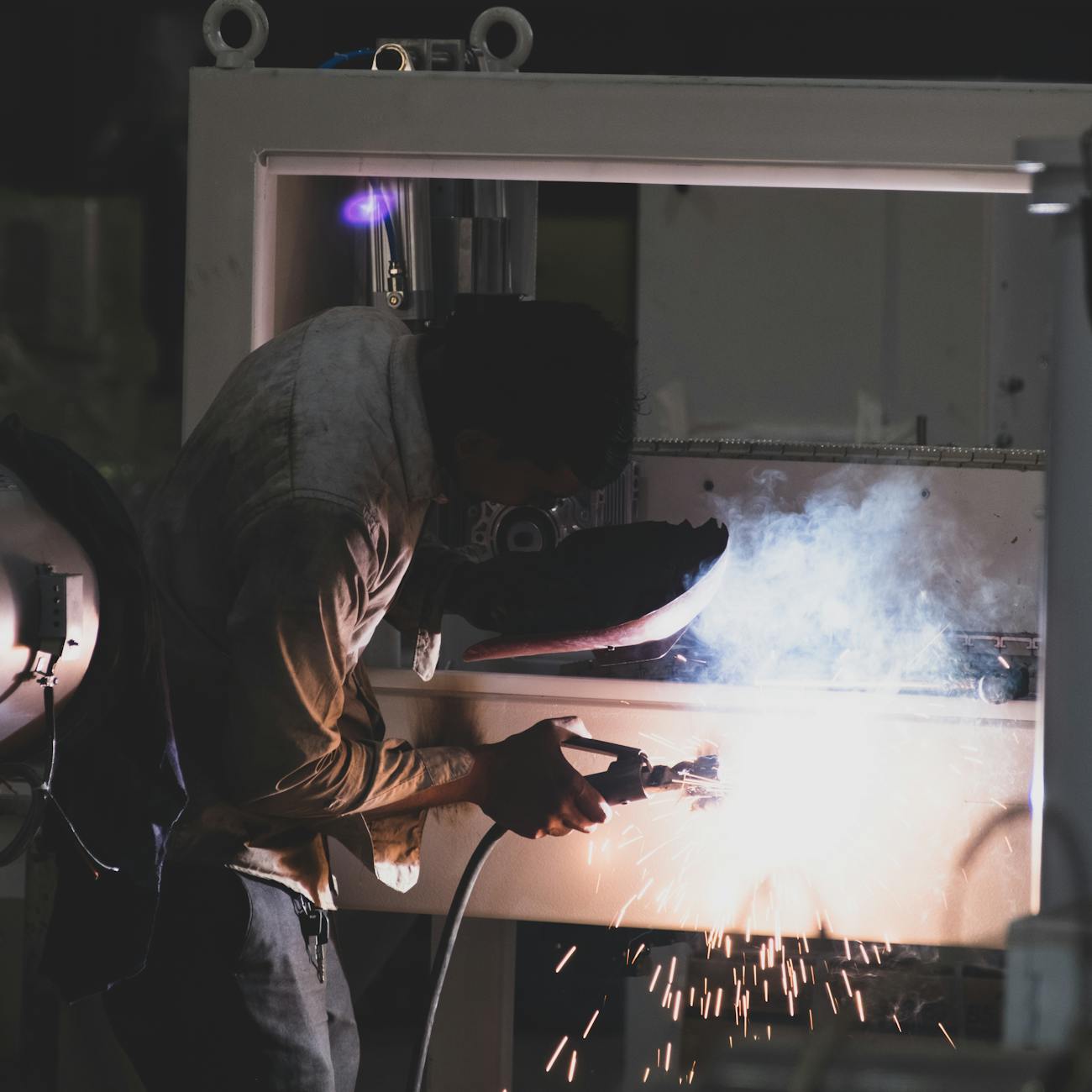
Robotics and automation are interdisciplinary fields that combine engineering and computer science to design, develop, and deploy intelligent systems that can perform tasks autonomously. These systems have the potential to revolutionize various industries, including manufacturing, healthcare, transportation, and logistics. The key terms and vocabulary in robotics and automation include actuators, which are devices that convert energy into motion, and sensors, which are devices that detect and measure physical parameters such as temperature, pressure, and position.
In the context of robotics, kinematics refers to the study of the motion of robots, including the position, velocity, and acceleration of their joints and end-effectors. Dynamics is another important concept, which deals with the forces and torques that cause motion in robots. Understanding kinematics and dynamics is crucial for designing and controlling robots that can perform complex tasks such as assembly, manipulation, and locomotion.
Robotics and automation also involve the use of control systems, which are designed to regulate and command the behavior of robots. These systems typically consist of feedback loops, which allow robots to adjust their actions based on sensory feedback from their environment. Control algorithms are used to implement control systems, and they can be categorized into different types, including proportional, integral, and derivative control.
Another important concept in robotics and automation is artificial intelligence, which refers to the development of computer systems that can perform tasks that typically require human intelligence. In robotics, artificial intelligence is used to enable robots to learn from experience, reason about their environment, and make decisions autonomously. Machine learning is a subset of artificial intelligence, which involves the use of algorithms and statistical models to enable robots to learn from data and improve their performance over time.
In the context of automation, programmable logic controllers (PLCs) are widely used to control and monitor industrial processes. PLCs are specialized computers that can be programmed to perform specific tasks, such as controlling motors, valves, and sensors. They are commonly used in manufacturing, process control, and building automation systems.
Human-robot interaction is another important area of research in robotics and automation, which focuses on designing robots that can interact with humans safely and effectively. This includes the development of user interfaces, such as voice recognition and gesture recognition, which allow humans to communicate with robots. Collaborative robots are a type of robot that is designed to work alongside humans, and they are equipped with sensors and algorithms that enable them to detect and respond to human presence.
Robotics and automation have numerous practical applications in various industries, including manufacturing, healthcare, and transportation. In manufacturing, robots are used to perform tasks such as welding, assembly, and inspection. In healthcare, robots are used to perform tasks such as surgery, rehabilitation, and patient care. In transportation, robots are used to perform tasks such as driving, navigation, and logistics.
However, robotics and automation also pose significant challenges, including job displacement, cybersecurity risks, and ethical concerns. As robots and automated systems become more prevalent, there is a risk that they could displace human workers, particularly in industries where tasks are repetitive or can be easily automated. Additionally, robots and automated systems can be vulnerable to cyber attacks, which could compromise their safety and security. Finally, there are ethical concerns surrounding the use of robots and automated systems, particularly in areas such as autonomy and accountability.
In terms of robotics engineering, there are several key concepts and techniques that are used to design and develop robots. These include mechanical engineering, which deals with the design and development of robotic mechanisms and structures. Electrical engineering is also important, as it deals with the design and development of robotic control systems and power systems. Computer science is also crucial, as it deals with the development of algorithms and software that enable robots to perceive, reason, and act.
Artificial intelligence is a key enabler of robotics, as it allows robots to learn from experience, reason about their environment, and make decisions autonomously. Deep learning is a type of machine learning that is particularly well-suited to robotics, as it allows robots to learn complex patterns and relationships in data.
In the context of automation engineering, there are several key concepts and techniques that are used to design and develop automated systems. These include control systems, which deal with the regulation and command of automated processes. Instrumentation is also important, as it deals with the measurement and sensing of physical parameters such as temperature, pressure, and flow rate. Communication protocols are also crucial, as they enable automated systems to exchange data and coordinate their actions.
Industrial automation is a key application of automation engineering, as it deals with the use of automated systems to control and monitor industrial processes. Process control is a type of industrial automation that deals with the regulation and command of industrial processes, such as chemical processing and power generation. Manufacturing automation is another type of industrial automation, which deals with the use of automated systems to manufacture products such as cars and electronics.
In terms of robotics applications, there are several key areas where robots are being used to perform tasks that are difficult or impossible for humans. These include search and rescue, where robots are used to locate and retrieve people trapped in rubble or debris. Space exploration is another key area, where robots are used to explore and study the surface of planets and moons. Healthcare is also an important area, where robots are used to perform tasks such as surgery and rehabilitation.
Autonomous systems are a type of robot that can operate independently, without human intervention. These systems use sensors and algorithms to perceive their environment and make decisions autonomously. Unmanned aerial vehicles (UAVs) are a type of autonomous system that is used to perform tasks such as surveillance and inspection. Autonomous ground vehicles (AGVs) are another type of autonomous system, which are used to perform tasks such as transportation and logistics.
In the context of robotics research, there are several key areas where researchers are focused on developing new technologies and techniques. These include human-robot interaction, which deals with the design of robots that can interact with humans safely and effectively. Artificial intelligence is also an important area, as it enables robots to learn from experience, reason about their environment, and make decisions autonomously. Machine learning is a subset of artificial intelligence, which involves the use of algorithms and statistical models to enable robots to learn from data and improve their performance over time.
Robotics education is also an important area, as it deals with the teaching of robotics concepts! And techniques to students and professionals. Online courses and training programs are widely available, which provide students and professionals with the skills and knowledge they need to design and develop robots. Research institutions and universities are also important, as they provide a platform for researchers to develop new technologies and techniques in robotics.
In terms of robotics industry, there are several key sectors where robots are being used to perform tasks that are difficult or impossible for humans. These include manufacturing, where robots are used to perform tasks such as welding and assembly. Healthcare is another key sector, where robots are used to perform tasks such as surgery and rehabilitation. Transportation is also an important sector, where robots are used to perform tasks such as driving and navigation.
Robotics companies are also playing a crucial role in the development and deployment of robots. These companies are involved in the design, development, and manufacture of robots, as well as the provision of services and support to customers. Startups and small businesses are also important, as they provide a platform for entrepreneurs and innovators to develop new technologies and techniques in robotics.
In the context of robotics technology, there are several key areas where researchers and developers are focused on developing new technologies and techniques. These include artificial intelligence, which enables robots to learn from experience, reason about their environment, and make decisions autonomously. Computer vision is also an important area, as it enables robots to perceive and understand their environment through cameras and sensors.
Robotics standards are also important, as they provide a framework for the development and deployment of robots. These standards deal with issues such as safety, security, and interoperability, and they are widely adopted by industry and government. Regulations and laws are also important, as they provide a framework for the development and deployment of robots, and they are widely adopted by government and industry.
These include industrial automation, where robots are used to perform tasks such as welding and assembly. Healthcare is another key area, where robots are used to perform tasks such as surgery and rehabilitation. Transportation is also an important area, where robots are used to perform tasks such as driving and navigation.
Robotics challenges are also significant, and they include issues such as job displacement, cybersecurity risks, and ethical concerns.
In the context of robotics future, there are several key areas where researchers and developers are focused on developing new technologies and techniques.
Robotics research is also ongoing, and it is focused on developing new technologies and techniques in areas such as human-robot interaction, artificial intelligence, and machine learning. Autonomous systems are also an important area of research, as they enable robots to operate independently, without human intervention.
In terms of robotics education, there are several key areas where researchers and developers are focused on developing new technologies and techniques. These include online courses and training programs, which provide students and professionals with the skills and knowledge they need to design and develop robots.
Robotics industry is also growing, and it is expected to continue to grow in the coming years. Robotics companies are playing a crucial role in the development and deployment of robots, and they are involved in the design, development, and manufacture of robots, as well as the provision of services and support to customers.
Key takeaways
- Robotics and automation are interdisciplinary fields that combine engineering and computer science to design, develop, and deploy intelligent systems that can perform tasks autonomously.
- Understanding kinematics and dynamics is crucial for designing and controlling robots that can perform complex tasks such as assembly, manipulation, and locomotion.
- Control algorithms are used to implement control systems, and they can be categorized into different types, including proportional, integral, and derivative control.
- Another important concept in robotics and automation is artificial intelligence, which refers to the development of computer systems that can perform tasks that typically require human intelligence.
- PLCs are specialized computers that can be programmed to perform specific tasks, such as controlling motors, valves, and sensors.
- Collaborative robots are a type of robot that is designed to work alongside humans, and they are equipped with sensors and algorithms that enable them to detect and respond to human presence.
- Robotics and automation have numerous practical applications in various industries, including manufacturing, healthcare, and transportation.