
Control Systems and PLC Programming
Control system terminology forms the foundation for understanding how automated storage and retrieval systems (AS/RS) operate within modern warehouses. In an AS/RS, the primary objective is to move items from storage locations to designated…
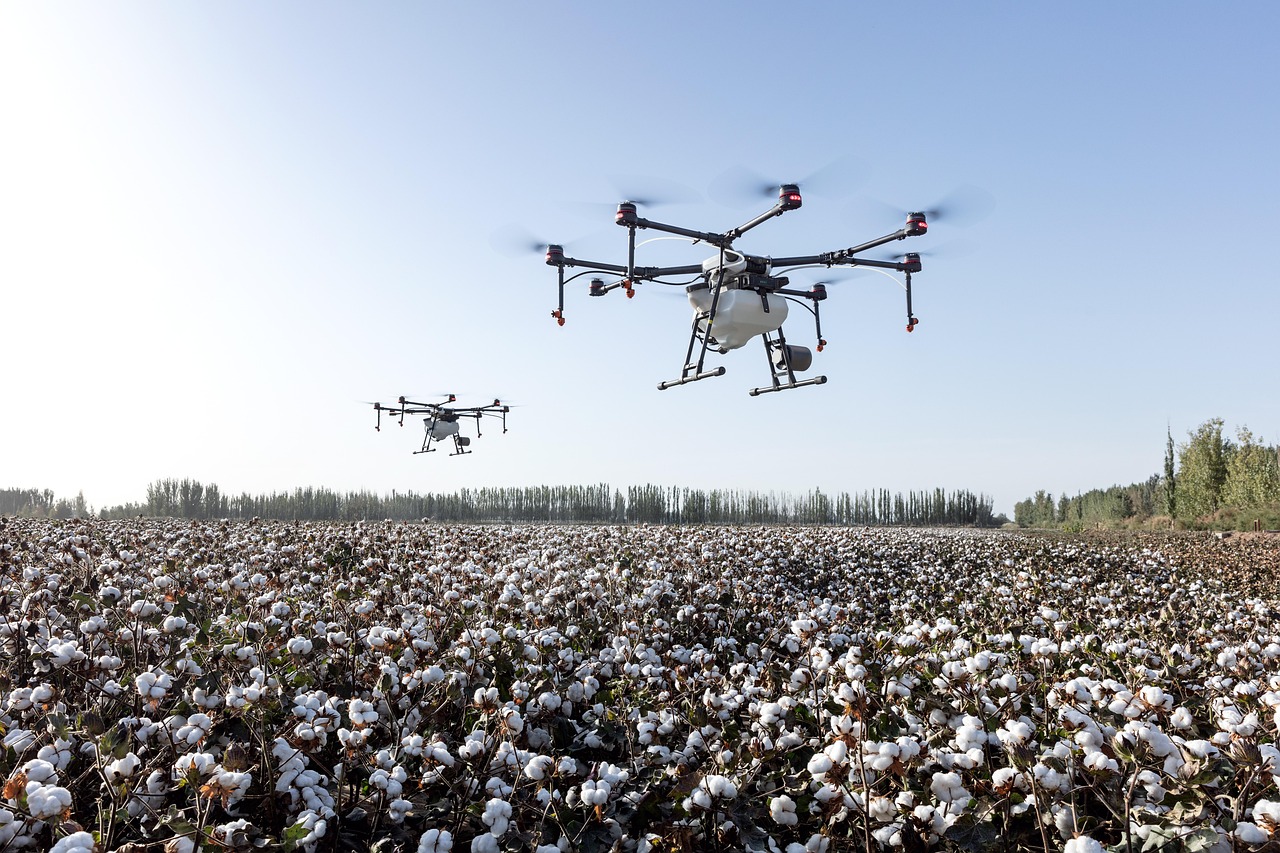
Control system terminology forms the foundation for understanding how automated storage and retrieval systems (AS/RS) operate within modern warehouses. In an AS/RS, the primary objective is to move items from storage locations to designated pick points, or vice‑versa, with speed, accuracy, and safety. To achieve this, a combination of mechanical components, sensors, actuators, and programmable logic controllers (PLCs) must work together in a coordinated fashion. The following sections describe the essential vocabulary that students will encounter when studying control systems and PLC programming in the context of warehouse automation.
Open‑loop versus closed‑loop control An open‑loop system sends a command to an actuator without checking the result. For example, a conveyor motor may be started for a fixed time regardless of whether the conveyed load has actually arrived at the next station. In contrast, a closed‑loop system incorporates a feedback signal that compares the actual condition (process variable) with the desired condition (setpoint). If the two differ, the controller adjusts the actuator output until the error is minimized. Most AS/RS applications employ closed‑loop control because precise positioning of shuttles, cranes, and stackers is critical.
Setpoint and process variable The setpoint is the target value that the control system tries to achieve. In a rack‑to‑rack transfer, the setpoint might be a specific bin location such as “A‑12‑03”. The process variable is the actual measured value, typically obtained from a sensor that reports the current bin location of a shuttle. The controller continuously calculates the difference between setpoint and process variable, known as the error.
Feedback and feed‑forward Feedback uses the error to correct the system after a deviation occurs. Feed‑forward, on the other hand, predicts the required control action based on known disturbances or system dynamics before the error manifests. In high‑speed AS/RS, feed‑forward control can be combined with feedback to improve response time and reduce overshoot when a shuttle accelerates onto a new aisle.
Actuator and sensor Actuators are devices that convert electrical signals into mechanical motion. Typical actuators in a warehouse include electric motors, pneumatic cylinders, and hydraulic pistons. Sensors provide the feedback needed for closed‑loop control; common sensor types are limit switches, photoelectric sensors, encoders, and load cells. An encoder mounted on a shuttle motor shaft supplies a precise count of revolutions, enabling the PLC to calculate the shuttle’s exact position along the aisle.
PID controller PID stands for proportional, integral, and derivative. A PID controller generates an output that is the sum of three terms: a proportion of the current error, an accumulation of past errors, and a prediction of future error based on the rate of change. Tuning the PID parameters (Kp, Ki, Kd) is essential for achieving smooth motion without oscillation. For instance, a crane that lifts pallets must avoid sudden jerks (high derivative) while also preventing steady‑state positioning errors (adequate integral action).
Deadband and hysteresis Deadband defines a range around the setpoint within which the controller will not react, preventing unnecessary cycling of actuators. Hysteresis refers to a deliberate difference between the activation point and deactivation point of a control element, such as a thermostat that turns on heating at 18 °C and turns it off at 22 °C. In AS/RS, deadband can be used to avoid constantly re‑positioning a shuttle when it is already within an acceptable tolerance of the target bin.
Scan cycle and scan time A PLC executes its program repeatedly in a cycle called the scan. During each scan, the PLC reads inputs, processes the logic, and updates outputs. Scan time is the duration of one complete cycle. In fast‑moving AS/RS, a short scan time (typically a few milliseconds) is required to ensure that the controller can respond to rapid changes in sensor states. Excessive scan time can cause missed events, such as a conveyor sensor that detects a jam.
CPU and memory The central processing unit (CPU) of a PLC performs the logical calculations. Memory is divided into several regions: input image table (current status of inputs), output image table (desired status of outputs), and data tables that hold variables, timers, counters, and user‑defined data. Understanding how memory is organized helps programmers allocate resources efficiently, especially when dealing with large AS/RS configurations that may involve thousands of I/O points.
I/O modules Input modules convert physical signals (e.g., 24 VDC from a limit switch) into data that the CPU can interpret. Output modules perform the opposite conversion, driving relays, solenoids, or motor starters. Modules can be digital (on/off) or analog (continuous). An analog input may read the voltage from a load cell to determine the weight of a pallet before it is placed on a high‑bay rack.
Digital input and digital output Digital inputs are binary signals representing two states: true (high) or false (low). Typical examples include emergency‑stop contacts, presence sensors, and proximity switches. Digital outputs drive devices such as solenoid valves, motor contactors, and indicator lights. In ladder logic, a normally open contact becomes true when the associated input signal is high, allowing current to flow to a coil that energizes an output.
Analog input and analog output Analog signals vary continuously within a range, usually 0–10 V or 4–20 mA. They are used for measurements that require more resolution than a simple on/off state, such as temperature, pressure, or speed. An analog output can command a variable‑frequency drive (VFD) to adjust motor speed proportionally to the desired conveyor throughput.
Timer and counter Timers introduce delays or measure elapsed time. A TON (on‑delay timer) starts counting when its input becomes true and activates its output after a preset time. A TOF (off‑delay timer) deactivates its output after a preset time when the input goes false. Counters keep track of the number of occurrences of an event, such as the number of pallets processed by a shuttle. Proper use of timers and counters is vital for sequencing operations in an AS/RS, for example, to ensure a conveyor stops only after the last pallet has cleared a sensor zone.
Relay and contact Relays are electromechanical switches that isolate the low‑voltage control circuit from high‑power loads. In ladder diagrams, contacts represent the logical condition of inputs or internal bits, while coils represent the energization of outputs or internal bits. Understanding the distinction between a normally open (NO) contact that closes when the associated input is true, and a normally closed (NC) contact that opens under the same condition, is essential for building reliable logic.
Ladder logic Ladder logic is a graphical programming language that resembles an electrical schematic. It consists of vertical rails (power) and horizontal rungs (logic). Each rung can contain a combination of contacts, coils, timers, counters, and function blocks. Ladder logic is widely used because it is intuitive for electricians and technicians who are familiar with wiring diagrams. In an AS/RS, a typical rung might read a “shuttle at home” sensor, a “command to move” flag, and then energize a motor starter coil.
Function block diagram (FBD) FBD is another IEC 61131‑3 programming language that represents functions as blocks connected by lines indicating data flow. Common blocks include PID, timers, counters, and custom logic blocks. FBD is useful for visualizing complex control strategies, such as a multi‑axis motion control where the position of a crane, a shuttle, and a conveyor must be coordinated.
Structured text (ST) ST is a high‑level, Pascal‑like language that allows the programmer to write algorithmic code using IF‑THEN‑ELSE statements, loops, and arrays. Structured text is ideal for calculations that would be cumbersome in ladder logic, such as dynamic path planning for a shuttle that must avoid occupied bins. A typical ST routine might compute the shortest route from the current location to the target bin while checking for conflicts.
Program organization units (POU) POUs are the building blocks of a PLC program and include functions, function blocks, and programs. Functions are stateless subroutines that return a value, such as a conversion from raw encoder counts to meters. Function blocks retain internal state, such as a PID controller that remembers its integral term. Programs are the top‑level containers that execute cyclically. Proper use of POUs promotes modular, reusable code, which is especially valuable when scaling an AS/RS from a single aisle to a multi‑aisle warehouse.
Tag and address A tag is a symbolic name assigned to a piece of data, such as “ShuttlePos” or “ConveyorSpeed”. The tag abstracts the physical memory address, making the program easier to read and maintain. In many PLC environments, tags are organized into data tables (e.g., BOOL, INT, REAL) that define the data type and size. Consistent naming conventions help prevent errors, especially when multiple engineers collaborate on the same project.
Data type Common data types include BOOL (binary), BYTE (8‑bit), WORD (16‑bit), DWORD (32‑bit), INT (signed 16‑bit integer), DINT (signed 32‑bit integer), REAL (floating‑point), and STRING (text). Choosing the appropriate data type is important for memory efficiency and for ensuring that calculations are performed correctly. For example, the distance between two bins may be stored as a REAL value to allow fractional meters.
Network and fieldbus Modern AS/RS often use industrial Ethernet or dedicated fieldbus protocols to connect PLCs, HMIs, motor drives, and sensors. Ethernet/IP, ProfiNet, and Modbus TCP are common choices. These networks provide deterministic communication, meaning that messages are delivered within a known time frame, which is critical for coordinated motion control. Understanding the basics of network topology, bandwidth, and latency helps engineers design systems that avoid bottlenecks.
Human‑machine interface (HMI) The HMI is the graphical front‑end through which operators monitor system status, acknowledge alarms, and issue commands. In a warehouse, the HMI may display real‑time maps of shuttle positions, queue lengths, and equipment health. Designing an intuitive HMI reduces operator error and speeds up troubleshooting. Common features include alarm pop‑ups, trend graphs, and touch‑screen navigation.
Supervisory control and data acquisition (SCADA) SCADA systems aggregate data from multiple PLCs and provide higher‑level supervisory functions such as data logging, reporting, and remote control. In a large distribution center, a SCADA may integrate the AS/RS with warehouse management software (WMS), enabling real‑time inventory updates. Understanding the distinction between PLC‑level control (fast, deterministic) and SCADA‑level supervision (slow, informational) is key to designing a balanced architecture.
Safety PLC and safety relay Safety PLCs are dedicated controllers that meet functional safety standards (e.g., IEC 61508). They monitor emergency‑stop circuits, safety interlocks, and light‑curtain sensors. A safety relay may provide a simple, hardware‑based solution for low‑complexity safety functions, such as stopping a conveyor when a safety gate is opened. In AS/RS, safety logic must be independent of regular control logic to ensure that a fault in the main PLC cannot disable safety functions.
Emergency stop (E‑stop) The E‑stop is a hard‑wired, high‑priority input that, when activated, immediately disables power to all actuators. It is typically wired in series with a safety PLC or safety relay to guarantee a rapid, fail‑safe response. Proper placement of E‑stop buttons throughout the warehouse, as well as clear labeling, is a regulatory requirement.
Interlock and interlock logic Interlocks prevent unsafe or undesirable actions by requiring certain conditions to be true before an operation can proceed. For example, a shuttle may only be allowed to move out of a bin if the bin door is confirmed closed. Interlock logic can be implemented in ladder diagrams using series contacts that must all be true before a coil is energized.
Motion control and servo drive Motion control involves precise positioning and speed regulation of moving elements. Servo drives, combined with encoders, provide closed‑loop control of motor speed and position. In an AS/RS crane, the servo drive receives a position command from the PLC, compares it with encoder feedback, and adjusts motor torque to achieve the desired location. Parameters such as acceleration, deceleration, and jerk must be tuned to avoid mechanical stress.
Variable‑frequency drive (VFD) A VFD controls the frequency of the power supplied to an AC motor, thereby regulating motor speed. VFDs are often used for conveyors, allowing the system to adapt throughput based on real‑time demand. The PLC may send an analog output or a Modbus command to the VFD to set the desired frequency.
Conveyor and belt Conveyors transport pallets, cartons, or bins between different zones of the warehouse. Belt conveyors are the most common type, but roller, chain, and slat conveyors also exist. Each conveyor segment may have its own motor, VFD, and sensors, all coordinated by the PLC to achieve synchronized flow.
Shuttle and traveler A shuttle is a small, autonomous carrier that moves along an aisle, retrieving or depositing items from storage locations. Shuttles are typically powered by linear motors or belt drives and are equipped with encoders for position feedback. The term “traveler” is sometimes used interchangeably, especially in systems where the carrier travels on a rail.
Crane and stacker Cranes are large, overhead machines that lift pallets or containers vertically and move them horizontally across multiple aisles. Stackers are a type of crane that can also raise or lower loads to different rack levels. Both devices rely on precise motion control and safety interlocks to prevent collisions.
Racking and bin Racking systems provide the structural framework for storing items. Types include selective racking, drive‑in racking, and carousel racking. A bin is a defined storage location within a rack, often identified by a hierarchical address such as “Zone‑A‑Level‑3‑Slot‑07”. The PLC must translate high‑level inventory commands into specific bin addresses for the actuators.
Warehouse management system (WMS) The WMS is software that manages inventory, order processing, and routing of goods. It communicates with the PLC via OPC-UA, Modbus, or proprietary APIs to send commands like “pick item from bin X” and receive status updates such as “shuttle arrived”. Understanding the data exchange protocol between WMS and PLC is essential for seamless integration.
OPC-UA OPC Unified Architecture is a platform‑independent communication standard that provides secure, reliable data exchange between industrial devices and software applications. OPC-UA can be used to publish PLC tags to the WMS, allowing real‑time monitoring of system health and performance.
Tag mapping Tag mapping is the process of aligning PLC data points with the corresponding fields in the WMS database. For example, the PLC tag “Shuttle1_Pos” may be mapped to the WMS field “Shuttle1CurrentLocation”. Accurate tag mapping reduces the risk of mismatched information and ensures that inventory records reflect the true physical state.
Alarm and fault Alarms are notifications generated by the PLC when a predefined condition is met, such as a sensor timeout or a motor overload. Faults are more severe, indicating a hardware failure or safety breach. Alarms are typically displayed on the HMI for operator acknowledgment, while faults may trigger an automatic shutdown.
Diagnostic and troubleshooting Diagnostic features include online monitoring of I/O status, program step execution, and memory usage. PLC software often provides a “watch” window where the current value of a tag can be observed in real time. Troubleshooting involves isolating the root cause of a problem using these tools, as well as physical inspection of wiring and components.
Redundancy and failover Redundancy is the practice of duplicating critical components, such as CPUs, power supplies, or network links, to increase system reliability. In a failover configuration, if the primary component fails, the secondary component automatically takes over without interrupting operation. Redundant PLCs are common in high‑availability AS/RS installations.
Deterministic and non‑deterministic A deterministic system guarantees that a response will occur within a known time frame. Real‑time Ethernet protocols provide deterministic communication, which is essential for coordinated motion. Non‑deterministic systems, such as standard office Ethernet, may experience variable delays that could lead to timing errors in an AS/RS.
Cycle time and latency Cycle time is the period required for a PLC to complete one scan cycle; latency is the delay between an input change and the corresponding output update. Minimizing both is crucial for high‑speed applications, where a delay of even a few milliseconds can cause a shuttle to miss a synchronization point.
Programmable logic controller (PLC) architecture A typical PLC consists of a CPU, power supply, I/O modules, communication modules, and optional expansion racks. The CPU executes the control program, while I/O modules interface with the physical world. Communication modules enable networking with HMIs, SCADA, and other PLCs. Understanding the architecture helps in planning expansion and maintenance.
Modular I/O Modular I/O allows the addition or removal of input and output channels without rewiring the entire system. This flexibility is valuable when the warehouse layout changes or when new sensors are added. For example, a modular digital input card might provide 16 channels, each of which can be assigned to a different sensor.
Signal conditioning Signal conditioning modifies raw sensor signals to a form usable by the PLC. This may involve amplification, filtering, or conversion from voltage to current. A thermocouple measuring temperature might need a cold‑junction compensation module before its voltage can be interpreted as a temperature value.
Grounding and shielding Proper grounding and shielding prevent electrical noise from corrupting sensor data. In a warehouse with many motors and drives, electromagnetic interference (EMI) can affect analog signals. Using shielded cables and connecting shields to ground at one end reduces noise coupling.
Power distribution Power distribution units (PDUs) supply the necessary voltage and current to PLCs, drives, and sensors. Over‑current protection, such as circuit breakers or fuses, safeguards equipment from short circuits. Understanding load calculations helps prevent undersized power supplies that could cause brown‑outs.
Safety integrity level (SIL) SIL is a measure of safety performance defined by IEC 61508. SIL 2 and SIL 3 are common for warehouse automation where human workers share the same area with moving equipment. Achieving a particular SIL requires redundant safety circuits, regular testing, and documentation.
Lockout/tagout (LOTO) LOTO is a procedural safety practice that ensures equipment is de‑energized before maintenance. The PLC may provide a “maintenance mode” that disables all outputs while still allowing monitoring of inputs. Documenting LOTO procedures and integrating them with the control system improves compliance.
Batch processing and continuous processing Batch processing involves handling discrete groups of items, such as a set of pallets to be stored together. Continuous processing refers to a steady flow of items, like a conveyor line that never stops. PLC programs may need to switch between batch and continuous modes based on demand.
Throughput and utilization Throughput is the amount of material moved per unit time, often measured in pallets per hour. Utilization is the ratio of actual throughput to the system’s maximum capacity. PLCs can adjust speed, prioritize certain orders, or re‑route items to improve utilization.
Load balancing Load balancing distributes work evenly across multiple shuttles or cranes to avoid bottlenecks. The PLC may implement a simple round‑robin algorithm or a more sophisticated priority‑based scheduler. Proper load balancing reduces waiting times and improves overall system efficiency.
Priority and pre‑emptive scheduling High‑priority orders, such as rush shipments, may need to be processed before lower‑priority ones. Pre‑emptive scheduling allows the PLC to interrupt a lower‑priority task to service a higher‑priority request. Careful design is required to avoid starvation of lower‑priority jobs.
State machine A state machine models system behavior as a set of states and transitions. For an AS/RS shuttle, states might include “Idle”, “Moving to Bin”, “Loading”, “Returning Home”. Transitions are triggered by events such as sensor activation or completion of a timer. Implementing a state machine in ladder logic or structured text provides clear, deterministic flow.
Sequence of operations (SOO) The SOO is a step‑by‑step description of how the system should behave from start‑up to shutdown. It includes initialization, safety checks, normal operation, and emergency procedures. The PLC program is derived directly from the SOO, ensuring that the implemented logic matches the intended behavior.
Start‑up and shut‑down During start‑up, the PLC performs self‑tests, verifies sensor status, and brings actuators to a known safe condition. Shut‑down reverses the process, ensuring that moving parts are brought to a stop, brakes are applied, and power is safely removed. Both phases may be automated or require operator intervention.
Bootloader and firmware The bootloader is the small piece of code that loads the main firmware into the PLC’s memory at power‑on. Firmware updates may be required to fix bugs, add features, or improve performance. Updating firmware must be performed carefully to avoid corrupting the PLC, especially in a live warehouse environment.
Version control and change management Version control tracks revisions of PLC programs, allowing engineers to revert to previous states if a new change causes problems. Change management processes document the reason for each modification, the testing performed, and the approval workflow. This discipline is essential for maintaining reliability in a production environment.
Simulation and offline testing Before deploying code to a live PLC, engineers often use simulation tools to verify logic. Offline testing can include unit tests for individual function blocks, as well as integration tests that mimic the full system. Simulators may model sensor inputs, motor dynamics, and network latency, providing a safe environment to discover bugs.
Real‑time operating system (RTOS) Some advanced PLCs run on an RTOS, which guarantees that tasks meet strict timing constraints. The RTOS schedules program execution, I/O handling, and communication tasks, ensuring deterministic behavior. Understanding RTOS concepts such as task priority and pre‑emptive scheduling helps in optimizing performance.
Field‑programmable gate array (FPGA) Certain high‑performance motion controllers incorporate FPGAs to execute time‑critical logic, such as generating PWM signals for motor drives. While most warehouse PLCs do not require FPGA programming, awareness of this technology is useful when evaluating specialized motion control cards.
Digital signal processor (DSP) DSPs are optimized for high‑speed mathematical operations, often used in advanced motion control algorithms like model‑based predictive control. In a high‑throughput AS/RS, a DSP may handle the real‑time calculation of trajectory profiles for shuttles.
Trajectory planning and path optimization Trajectory planning determines the speed and acceleration profile for a moving element to reach a target location efficiently while respecting constraints such as maximum jerk. Path optimization selects the best route among multiple alternatives, minimizing travel distance or avoiding congested zones. Both concepts are implemented in the PLC’s high‑level logic or in a dedicated motion controller.
Collision detection and avoidance Collision detection uses sensors, such as laser scanners or ultrasonic rangefinders, to identify obstacles in the path of a moving element. When a potential collision is detected, the PLC may command an immediate stop or reroute the shuttle. Designing robust avoidance strategies reduces downtime and protects valuable equipment.
Redundant communication and heartbeat Redundant communication links ensure that a loss of one network path does not isolate the PLC from the HMI or SCADA. A heartbeat signal is a periodic message that confirms the health of a device; absence of a heartbeat triggers an alarm and may initiate a failover.
Time‑synchronization and timestamp Accurate time‑synchronization across devices enables precise correlation of events, which is essential for root‑cause analysis. Protocols such as IEEE 1588 Precision Time Protocol (PTP) provide sub‑microsecond synchronization. Timestamps attached to data logs allow engineers to reconstruct the exact sequence of actions leading to an incident.
Energy efficiency and power monitoring Energy‑saving strategies include variable‑frequency drives that adjust motor speed based on load, and sleep modes for idle PLCs. Power monitoring modules can report real‑time consumption, enabling the warehouse manager to identify high‑energy devices and optimize operation schedules.
Scalability and modularity Scalability refers to the ability of the control system to accommodate growth, such as adding new aisles or increasing throughput. Modularity in hardware (plug‑in I/O modules) and software (reusable function blocks) supports scalability by allowing straightforward expansion without redesign.
Compliance and regulatory standards Warehouse automation must comply with standards such as IEC 60204‑1 for electrical safety, ISO 9001 for quality management, and local occupational safety regulations. PLC programs often include documented compliance checks, such as verifying that all safety interlocks are active before motion is permitted.
Documentation and as‑built drawings Comprehensive documentation includes ladder diagrams, function block schematics, tag lists, and wiring diagrams. As‑built drawings reflect the actual installation, capturing any deviations from the design. Maintaining up‑to‑date documentation is essential for future maintenance, troubleshooting, and audits.
Training and skill development Operators and maintenance personnel must be trained on HMI operation, alarm handling, and basic PLC troubleshooting. Structured training programs reduce response time to faults and improve overall system reliability. Hands‑on practice with a test bench or simulator reinforces theoretical knowledge.
Changeover and productivity impact When a warehouse switches from one product line to another, the AS/RS may need to be reconfigured. Changeover procedures include updating bin mappings, adjusting conveyor speeds, and reprogramming the PLC to handle new item dimensions. Minimizing the downtime during changeover directly influences productivity.
Diagnostic codes and error handling PLC manufacturers assign diagnostic codes to specific fault conditions, such as “Overtemperature” or “Memory corruption”. The PLC program can translate these codes into human‑readable messages on the HMI, guiding operators to the appropriate corrective action. Robust error handling includes safe shutdown sequences and automatic restart attempts.
Red‑eye and green‑eye These informal terms refer to the state of a sensor: a red‑eye indicates a fault (often shown as a red LED on the sensor), while a green‑eye signals normal operation. While not formal vocabulary, these visual cues are commonly used by technicians during routine inspections.
Cycle counter and runtime statistics A cycle counter tracks the number of completed PLC scan cycles, which can be used to estimate system uptime. Runtime statistics, such as average scan time and peak CPU load, help engineers assess whether the PLC is operating within its performance envelope.
Load cell and force sensor Load cells measure weight or force, providing analog signals proportional to the applied load. In a stacking crane, a load cell can verify that the weight of a pallet does not exceed the crane’s rated capacity, preventing mechanical failure.
Proximity sensor and inductive sensor Proximity sensors detect the presence of an object without physical contact, using electromagnetic fields (inductive) or magnetic fields (Hall‑effect). They are frequently used to detect metal shuttles, bin doors, or the position of a crane trolley.
Photoelectric sensor and break‑beam sensor Photoelectric sensors emit a light beam that is interrupted by an object, generating a digital signal. Break‑beam sensors are a type of photoelectric sensor commonly placed across conveyor paths to count pallets or detect jams.
Limit switch and position sensor Limit switches provide a hard stop indication when a moving part reaches its mechanical limit. Position sensors, such as linear encoders, give continuous location data, enabling precise control over shuttle travel distance.
Encoder and resolution Encoders convert rotational motion into electrical pulses. Resolution refers to the number of pulses per revolution, determining the granularity of position measurement. High‑resolution encoders allow the PLC to calculate sub‑millimeter positions for fine‑grained bin alignment.
Servo motor and torque control Servo motors, paired with feedback encoders, provide precise speed and position control. Torque control limits the motor’s output to prevent over‑loading, which is valuable when lifting heavy pallets with a crane.
Gearbox and reduction ratio Gearboxes transmit power from motors to driven components, often reducing speed while increasing torque. The reduction ratio defines the relationship between motor speed and output speed. Selecting the appropriate ratio is crucial for achieving desired acceleration profiles.
Brake and holding brake Brakes stop motion and can hold a load in place when power is removed. Holding brakes are commonly used on cranes to prevent drift when the motor is idle. PLCs must command brake release before motion and engage the brake after stopping.
Safety light curtain and zone monitoring Safety light curtains create invisible barriers that detect intrusion. When a person or object breaks the light beam, the safety PLC initiates an emergency stop. Zone monitoring extends this concept by defining multiple overlapping safety zones for complex equipment layouts.
Programmable safety controller (PSC) A PSC combines the functionality of a standard PLC with safety‑rated logic, allowing both safety and regular control to reside in a single device. The PSC can execute safety‑critical functions such as monitoring emergency‑stop circuits, while also handling normal process control tasks.
Watchdog timer and system reset A watchdog timer monitors the PLC’s execution; if the program fails to “pet” the watchdog within a set interval, the timer triggers a system reset. This mechanism protects against software hangs that could leave equipment in an unsafe state.
Soft‑start and hard‑stop Soft‑start gradually ramps up motor voltage to reduce mechanical stress during start‑up. Hard‑stop abruptly cuts power, which may be required in emergency situations but can cause wear. PLCs often provide both options, selecting the appropriate method based on the situation.
Batch ID and lot tracking Batch IDs identify groups of items processed together, facilitating traceability. Lot tracking ensures that each item’s movement through the AS/RS is recorded, supporting quality control and recall procedures. PLC tags store batch identifiers and update them as items move between zones.
Quality control (QC) and inspection station QC stations may be integrated into the conveyor line to verify product integrity. Sensors at inspection points report pass/fail results to the PLC, which then routes defective items to a reject bin. The PLC can also trigger alarms and log inspection data for analysis.
Predictive maintenance and condition monitoring Predictive maintenance uses data such as motor current, vibration, and temperature to forecast equipment failure before it occurs. Condition monitoring modules collect this data and send it to the PLC, which can schedule maintenance windows or alert technicians when thresholds are exceeded.
Alarm hierarchy and operator acknowledgement Alarms are often categorized by severity: informational, warning, and critical. Critical alarms require immediate operator acknowledgement and may lock out certain functions until cleared. The PLC can enforce this hierarchy by disabling non‑essential outputs during a critical alarm.
Batch processing vs real‑time processing Batch processing groups commands for execution at scheduled intervals, suitable for low‑priority tasks such as nightly inventory reconciliation. Real‑time processing handles immediate actions like responding to a pick request, requiring deterministic response times. The PLC may manage both types using separate task priorities.
Task and priority In PLCs that support multitasking, a task is a separate execution thread with its own scan cycle. Assigning higher priority to safety‑critical tasks ensures they are processed before routine control logic. For example, a safety task that monitors emergency‑stop inputs may run at a higher priority than a task that updates the HMI display.
Data logger and historian Data loggers record process variables over time, while a historian aggregates data from multiple sources for long‑term storage and analysis. PLCs can write directly to a historian via OPC-UA, enabling performance trending and capacity planning.
Operator panel and touchscreen interface Operator panels provide localized control, often featuring physical buttons for critical functions like “Reset” or “Start”. Touchscreen interfaces enable richer interaction, such as drag‑and‑drop bin assignments. Designing intuitive navigation reduces operator error and training time.
Redundancy in power supply Dual power supplies, each capable of handling the full load, provide resilience against power failures. Automatic transfer switches (
Key takeaways
- The following sections describe the essential vocabulary that students will encounter when studying control systems and PLC programming in the context of warehouse automation.
- In contrast, a closed‑loop system incorporates a feedback signal that compares the actual condition (process variable) with the desired condition (setpoint).
- The process variable is the actual measured value, typically obtained from a sensor that reports the current bin location of a shuttle.
- In high‑speed AS/RS, feed‑forward control can be combined with feedback to improve response time and reduce overshoot when a shuttle accelerates onto a new aisle.
- An encoder mounted on a shuttle motor shaft supplies a precise count of revolutions, enabling the PLC to calculate the shuttle’s exact position along the aisle.
- A PID controller generates an output that is the sum of three terms: a proportion of the current error, an accumulation of past errors, and a prediction of future error based on the rate of change.
- Hysteresis refers to a deliberate difference between the activation point and deactivation point of a control element, such as a thermostat that turns on heating at 18 °C and turns it off at 22 °C.