
Quantum Mechanics Foundations
Wavefunction is the central object in quantum mechanics. It is a complex‑valued function ψ(x,t) that contains the complete information about a physical system. The absolute square |ψ(x,t)|² gives the probability density for finding a partic…
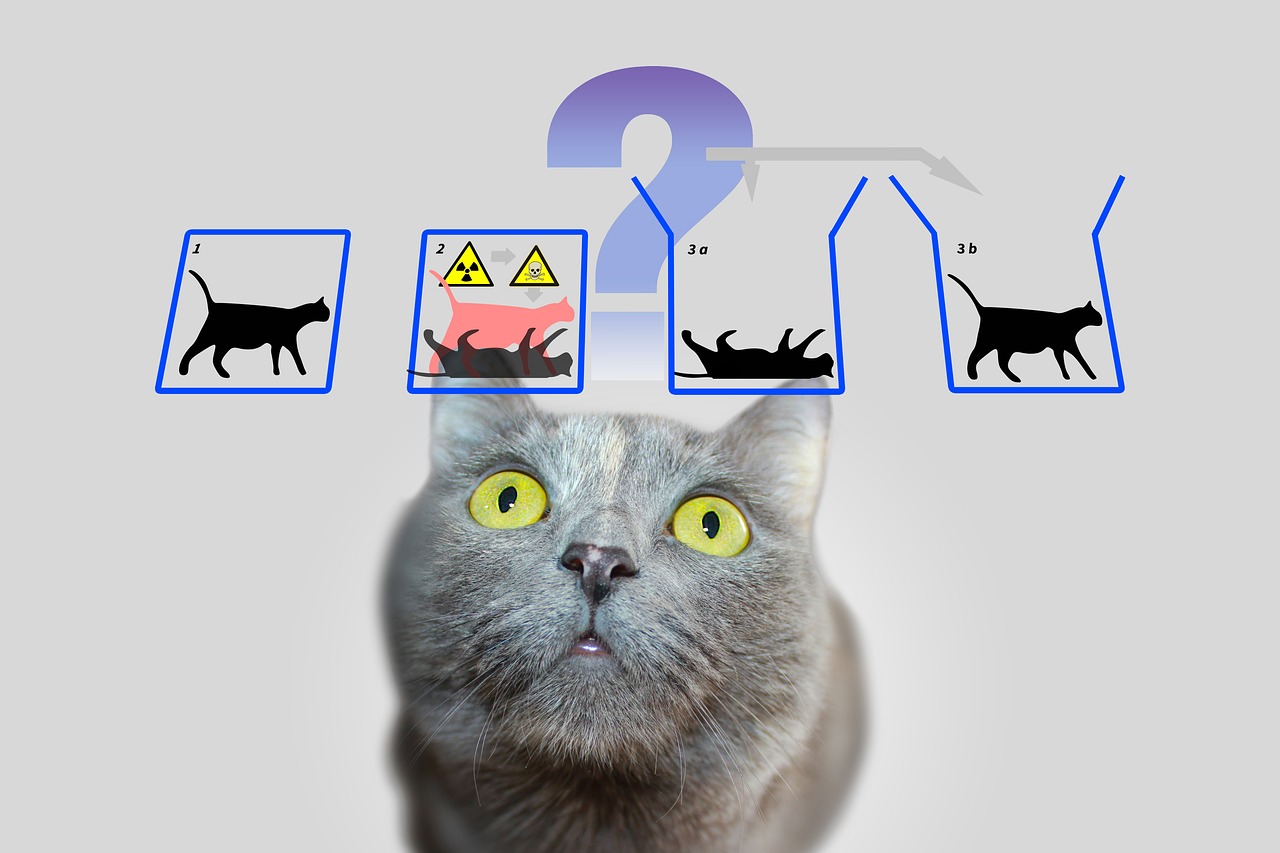
Wavefunction is the central object in quantum mechanics. It is a complex‑valued function ψ(x,t) that contains the complete information about a physical system. The absolute square |ψ(x,t)|² gives the probability density for finding a particle at position x at time t. For example, a Gaussian wavepacket ψ(x,0)= (1/πσ²)¹⁄⁴ exp[−x²/(2σ²)] represents a particle localized around the origin with spread σ. The evolution of ψ follows the Schrödinger equation, which can be derived from the principle of least action. In practice, the wavefunction is used to predict outcomes of experiments such as electron diffraction through a double slit, where the interference pattern arises from the superposition of two wavefunctions associated with each slit.
Superposition principle states that if ψ₁ and ψ₂ are allowed states, then any linear combination aψ₁+bψ₂ is also an allowed state. This linearity underlies many quantum phenomena. In a spin‑½ system, the state |↑⟩ along the z‑axis and |↓⟩ form a basis; a general state can be written as α|↑⟩+β|↓⟩ with |α|²+|β|²=1. A classic illustration is the Stern‑Gerlach experiment, where a beam of silver atoms prepared in a superposition of spin states splits into two distinct beams when passing through a magnetic field gradient, directly revealing the probabilistic nature of measurement outcomes.
Measurement in quantum mechanics is described by operators acting on the Hilbert space of states. When an observable  is measured, the system collapses onto one of the eigenstates |a⟩ of Â, and the corresponding eigenvalue a is recorded. The probability of obtaining a specific eigenvalue a is given by |⟨a|ψ⟩|². For instance, measuring the energy of an electron in a hydrogen atom yields discrete values En=−13.6 eV/n², where n is the principal quantum number. The post‑measurement state is the eigenfunction associated with the observed energy level, a result that explains the line spectra observed in atomic emission experiments.
Operators are mathematical entities that correspond to physical observables. They act on wavefunctions to produce new functions. The position operator x̂ simply multiplies ψ(x) by x, while the momentum operator p̂ =−iħ∂/∂x involves differentiation. Operators can be Hermitian, meaning they equal their own adjoint; this property guarantees real eigenvalues, which correspond to measurable quantities. The commutator [x̂,p̂]=x̂p̂−p̂x̂ = iħ is a fundamental result that leads directly to the uncertainty principle.
Uncertainty Principle quantifies the intrinsic limits on simultaneously knowing pairs of conjugate variables. For position and momentum, Δx Δp ≥ ħ/2. This inequality is not a statement about experimental imperfections, but a fundamental feature of quantum systems. It explains why electrons in atoms cannot spiral into the nucleus: Confining an electron to a very small region would increase its momentum uncertainty, raising its kinetic energy and preventing collapse. The principle also applies to energy and time, leading to phenomena such as virtual particle creation in quantum field theory.
Hilbert Space provides the abstract vector space framework for quantum states. Each state is a vector |ψ⟩, and physical observables correspond to linear operators acting on this space. The inner product ⟨φ|ψ⟩ yields a complex number that encodes overlap between states. Completeness of the space ensures that any physically relevant state can be expressed as a limit of linear combinations of basis vectors. In practice, Hilbert spaces can be finite‑dimensional, as in spin systems where the space is two‑dimensional, or infinite‑dimensional, as in the space of square‑integrable functions for a particle in a potential.
Dirac Notation (or bra‑ket notation) offers a concise way to represent vectors and operators. A ket |ψ⟩ denotes a column vector, while a bra ⟨φ| denotes a row vector, the Hermitian conjugate of a ket. The inner product ⟨φ|ψ⟩ is a scalar, and outer products |ψ⟩⟨φ| form operators. For example, the projection operator onto state |ψ⟩ is P̂=|ψ⟩⟨ψ|, which satisfies P̂²=P̂. This notation simplifies derivations of transition amplitudes, such as ⟨f|U(t)|i⟩, where U(t) is the time‑evolution operator.
Time‑Evolution is governed by the Schrödinger equation iħ∂ψ/∂t = Ĥψ, where Ĥ is the Hamiltonian operator representing total energy. In the time‑independent case, solutions separate as ψ(x,t)=φ(x) e⁻ⁱᴱᵗ/ħ, where φ(x) satisfies the eigenvalue equation Ĥφ=Eφ. This separation yields stationary states with definite energy. In many‑body systems, the Hamiltonian includes interaction terms, leading to complex dynamics that often require approximation methods such as perturbation theory or numerical diagonalization.
Commutation Relations encode the algebraic structure of observables. Two operators  and B̂ commute if [Â,B̂]=0; then they share a common set of eigenstates and can be simultaneously measured with arbitrary precision. Non‑commuting operators, such as position and momentum, cannot have simultaneous eigenstates, reflecting the uncertainty principle. In angular momentum theory, the components L̂x, L̂y, L̂z satisfy [L̂x,L̂y]=iħL̂z and cyclic permutations, leading to quantized eigenvalues ℓ(ℓ+1)ħ² for the total angular momentum and mħ for the projection along a chosen axis.
Spin is an intrinsic form of angular momentum that does not arise from spatial motion. For a spin‑½ particle, the Pauli matrices σ̂x, σ̂y, σ̂z represent the components of spin operators. The eigenstates of σ̂z are denoted |↑⟩ and |↓⟩, with eigenvalues +ħ/2 and −ħ/2 respectively. Spin is crucial in magnetic resonance imaging (MRI), where alignment of nuclear spins in an external magnetic field and subsequent manipulation with radiofrequency pulses produce signals that can be reconstructed into detailed images of biological tissue.
Entanglement describes a correlation between subsystems that cannot be factorized into separate states. A bipartite system AB is entangled if its joint state |Ψ⟩ cannot be written as |ψ⟩ₐ⊗|φ⟩ᵦ. The Bell state (|↑⟩ₐ|↓⟩ᵦ−|↓⟩ₐ|↑⟩ᵦ)/√2 is a paradigmatic example. Measurements on one particle instantaneously affect the statistics of the other, regardless of the spatial separation, a phenomenon confirmed experimentally through violations of Bell inequalities. Entanglement serves as a resource in quantum information processing, enabling protocols such as quantum teleportation and superdense coding.
Bell’s Theorem provides a quantitative test to distinguish quantum predictions from any local hidden‑variable theory. By measuring correlations of entangled particles at different settings, one computes the Bell parameter S. Quantum mechanics predicts S up to 2√2, while any local realist model limits S≤2. Experiments with photons, ions, and superconducting qubits have repeatedly observed violations, establishing the non‑local character of quantum correlations. This result has profound implications for secure communication, as it underlies device‑independent quantum key distribution schemes.
Quantum Tunneling occurs when a particle encounters a potential barrier higher than its kinetic energy. Classical physics would forbid passage, but the wavefunction penetrates into the barrier and may emerge on the other side with a finite probability. The tunneling probability T≈e⁻²κa for a rectangular barrier of height V₀, width a, and κ=√{2m(V₀−E)}/ħ. Tunneling explains phenomena such as alpha decay, where an α‑particle escapes the nucleus, and the operation of tunnel diodes, which exploit the nonlinear current‑voltage characteristic for high‑speed electronics. In scanning tunneling microscopy, the tunneling current between a sharp tip and a conductive surface provides atomic‑scale topographical information.
Potential Wells confine particles to limited regions of space, leading to quantized energy levels. The infinite square well of width L imposes boundary conditions ψ(0)=ψ(L)=0, yielding eigenfunctions φₙ(x)=√{2/L} sin(nπx/L) and energies En=n²π²ħ²/(2mL²). Realistic wells, such as semiconductor quantum wells, have finite depth, allowing some leakage of the wavefunction into surrounding barriers. These structures are the basis of quantum cascade lasers, where engineered intersubband transitions produce coherent mid‑infrared radiation.
Harmonic Oscillator is a solvable model with potential V(x)=½ mω²x². Its eigenfunctions are Hermite polynomials multiplied by a Gaussian envelope, and energies are En=ħω(n+½). The ladder operators â and ↠raise or lower the quantum number, satisfying [â,â†]=1. The harmonic oscillator models vibrational modes in molecules, phonons in crystal lattices, and quantized electromagnetic fields in cavities. In cavity quantum electrodynamics, the interaction between a two‑level atom and a single mode of the field is described by the Jaynes‑Cummings Hamiltonian, leading to phenomena such as vacuum Rabi splitting and photon blockade.
Schrödinger Equation exists in two common forms. The time‑dependent form iħ∂ψ/∂t = Ĥψ governs the full dynamics of a system. The time‑independent form Ĥψ = Eψ arises when the Hamiltonian is not explicitly time‑dependent, allowing separation of variables and the identification of stationary states. In many‑electron atoms, the many‑body Schrödinger equation becomes intractable, prompting the development of approximation techniques such as Hartree‑Fock, density functional theory, and configuration interaction methods, which remain essential tools for computational chemistry and materials science.
Heisenberg Picture offers an alternative formulation where operators evolve in time while states remain fixed. The Heisenberg equation of motion dÂ/dt = (i/ħ)[Ĥ,Â] + (∂Â/∂t) mirrors the classical Poisson bracket structure. For a free particle, the position operator evolves as x̂(t)=x̂(0)+p̂t/m, reproducing the expected linear motion. The Heisenberg picture is particularly useful in quantum optics, where field operators evolve under the influence of nonlinear media, and in many‑body theory, where it simplifies the treatment of correlation functions.
Density Matrix provides a unified description of pure and mixed states. For a pure state |ψ⟩, the density operator is ρ̂ = |ψ⟩⟨ψ|, satisfying Tr(ρ̂²)=1. A mixed state, representing statistical ensembles of different pure states with probabilities pₖ, is ρ̂ = Σₖ pₖ|ψₖ⟩⟨ψₖ|, with Tr(ρ̂²)<1. The density matrix formalism is indispensable for open quantum systems, where interaction with an environment leads to decoherence. The master equation dρ̂/dt = −(i/ħ)[Ĥ,ρ̂] + ℒ[ρ̂] includes dissipative terms ℒ that model relaxation and dephasing processes. This approach underlies the design of quantum error correction codes and the analysis of qubit lifetimes in superconducting circuits.
Decoherence describes the loss of quantum coherence due to uncontrolled coupling with external degrees of freedom. As the system interacts with its environment, off‑diagonal elements of the density matrix in a preferred basis decay exponentially, effectively suppressing interference effects. Decoherence timescτ are a critical metric for quantum technologies; for example, spin qubits in silicon can achieve coherence times exceeding seconds, while superconducting qubits typically have coherence times in the 100 µs range. Understanding and mitigating decoherence mechanisms—such as charge noise, magnetic flux noise, and phonon scattering—is a major research focus in the development of scalable quantum computers.
Quantum Gates are unitary operators that manipulate qubits in a controlled fashion. The single‑qubit Pauli‑X gate (also known as a NOT gate) flips the computational basis states, while the Hadamard gate creates superposition: H|0⟩ = (|0⟩+|1⟩)/√2. Two‑qubit entangling gates, such as the controlled‑NOT (CNOT), are essential for universal quantum computation. Physical implementations of quantum gates include microwave‑driven rotations in trapped‑ion systems, flux‑tunable couplers in superconducting circuits, and photonic beam splitters combined with nonlinear crystals. Gate fidelity, measured by the average gate error, must be below the fault‑tolerance threshold (≈10⁻³–10⁻⁴) for error‑corrected quantum computing to be feasible.
Quantum Information treats quantum states as carriers of information, leading to concepts such as qubits, entanglement entropy, and quantum channel capacity. The von Neumann entropy S(ρ̂)=−Tr(ρ̂ log ρ̂) quantifies the amount of uncertainty or mixedness in a state. In quantum cryptography, the no‑cloning theorem—proved by showing that a universal cloning operator would violate linearity—guarantees that an eavesdropper cannot perfectly duplicate an unknown quantum state, forming the security basis of the BB84 protocol. Quantum algorithms such as Shor’s factoring algorithm and Grover’s search algorithm demonstrate potential speedups over classical counterparts, motivating the pursuit of hardware capable of executing these protocols.
Quantum Optics studies the interaction of light and matter at the quantum level. The quantization of the electromagnetic field leads to photon number states |n⟩, coherent states |α⟩, and squeezed states, each with distinct statistical properties. Coherent states, produced by lasers, exhibit Poissonian photon statistics and minimal uncertainty, while squeezed states reduce noise in one quadrature below the standard quantum limit at the expense of increased noise in the conjugate quadrature. Applications include precision metrology, where squeezed light improves the sensitivity of interferometric gravitational‑wave detectors such as LIGO, and quantum key distribution, where continuous‑variable protocols employ Gaussian-modulated coherent states.
Quantum Statistics distinguishes between bosons and fermions. Bosons obey symmetric wavefunctions under particle exchange and follow Bose‑Einstein statistics, allowing multiple occupancy of a single quantum state. This property underlies phenomena like superfluidity in liquid helium‑4 and the formation of Bose‑Einstein condensates (BECs), where a macroscopic fraction of atoms occupies the ground state. Fermions obey antisymmetric wavefunctions and obey the Pauli exclusion principle, leading to Fermi‑Dirac statistics. Electron degeneracy pressure stabilizes white dwarf stars, while the band structure of solids arises from the filling of electronic states up to the Fermi energy.
Second Quantization provides a convenient formalism for many‑particle systems by promoting field amplitudes to operators that create and annihilate particles. The creation operator â†ₖ adds a particle with momentum k, while the annihilation operator âₖ removes it. The Hamiltonian of a non‑interacting gas becomes Ĥ = Σₖ εₖ â†ₖ âₖ, where εₖ is the single‑particle energy. Interaction terms introduce products of four operators, leading to phenomena such as superconductivity, described by the BCS theory where Cooper pairs of electrons form a condensate described by a macroscopic wavefunction. Second quantization is also the foundation of quantum field theory, where particles are excitations of underlying fields.
Path Integral formulation, introduced by Feynman, expresses the quantum amplitude as a sum over all possible classical paths, each weighted by e^{iS/ħ}, where S is the action along the path. This approach provides an intuitive connection between classical and quantum mechanics and is particularly useful in systems with many degrees of freedom, such as statistical field theory and quantum many‑body problems. In condensed‑matter physics, the path integral enables the derivation of effective actions for low‑energy excitations, leading to concepts like topological order and anyonic statistics.
Quantum Field Theory extends quantum mechanics to relativistic regimes, treating particles as excitations of underlying fields that obey Lorentz invariance. The quantization of the electromagnetic field yields quantum electrodynamics (QED), the most precisely tested theory in physics. In QED, the interaction between electrons and photons is described by the Dirac and Maxwell Lagrangians, and perturbation theory provides scattering amplitudes via Feynman diagrams. Renormalization techniques handle divergences, leading to finite predictions for observables such as the electron anomalous magnetic moment. Extensions to the strong and weak interactions, namely quantum chromodynamics (QCD) and the electroweak theory, form the Standard Model, which guides particle‑physics research.
Gauge Invariance is a symmetry principle stating that certain transformations of the fields leave the physical observables unchanged. In electromagnetism, the potentials (φ, A) can be shifted by the gradient of a scalar function without affecting the electric and magnetic fields. Enforcing gauge invariance in quantum mechanics leads to the minimal coupling prescription p̂ → p̂−qÂ, which introduces the interaction between charged particles and electromagnetic fields. In the Standard Model, non‑abelian gauge symmetries (SU(2)×U(1), SU(3)) dictate the form of the weak and strong interactions, and spontaneous symmetry breaking via the Higgs mechanism gives mass to gauge bosons.
Quantum Computing harnesses quantum superposition and entanglement to perform computation. A quantum register of n qubits can represent 2ⁿ basis states simultaneously, enabling parallelism in algorithm execution. Physical platforms include superconducting circuits, trapped ions, semiconductor quantum dots, and topological qubits based on Majorana zero modes. Each platform presents unique challenges: Superconducting qubits require cryogenic environments and careful microwave control; trapped ions offer long coherence times but face scaling constraints; semiconductor qubits promise integration with existing fabrication technology but suffer from charge noise. Error correction codes, such as the surface code, rely on a lattice of physical qubits to encode logical qubits, demanding high‑fidelity gate operations and rapid syndrome extraction.
Quantum Sensors exploit the extreme sensitivity of quantum states to external perturbations. Atomic interferometers, where matter waves are split and recombined, can measure accelerations and rotations with unprecedented precision, enabling applications in navigation and geodesy. NV‑centers in diamond provide room‑temperature spin sensors capable of detecting magnetic fields at the nanoscale, useful for imaging neuronal activity and characterizing materials. Superconducting quantum interference devices (SQUIDs) detect minute magnetic flux changes, forming the basis of magnetoencephalography for brain‑activity mapping. These technologies illustrate how the foundational concepts of quantum mechanics translate into practical devices with societal impact.
Quantum Thermodynamics investigates the flow of energy and information at the quantum scale. Concepts such as work, heat, and entropy acquire operational definitions that respect quantum coherence and measurement back‑action. The fluctuation theorems, like the Jarzynski equality, connect non‑equilibrium processes to equilibrium free energy differences, even for microscopic systems. Experimental implementations using trapped ions and superconducting circuits have demonstrated quantum heat engines that operate near the Carnot limit, providing insight into the ultimate efficiency of nanoscale energy conversion devices.
Quantum Chaos studies systems whose classical counterparts exhibit chaotic dynamics, but whose quantum behavior is constrained by interference and discreteness. Signatures of quantum chaos appear in spectral statistics, where level spacings follow the Wigner‑Dyson distribution rather than Poisson statistics. The kicked rotor, a paradigmatic model, exhibits dynamical localization, a quantum analog of Anderson localization, where classical diffusion is suppressed. Understanding quantum chaos informs the design of robust quantum control protocols and sheds light on thermalization processes in isolated many‑body systems.
Topological Quantum Matter encompasses phases characterized by global invariants rather than local order parameters. The integer quantum Hall effect, with quantized Hall conductance σ_xy = ν e²/h, is explained by Chern numbers associated with the Berry curvature of electronic bands. Topological insulators possess conducting edge states protected by time‑reversal symmetry, while their bulk remains insulating. These edge states are immune to backscattering, offering avenues for low‑dissipation electronics. In superconductors with p‑wave pairing, Majorana bound states emerge at vortex cores, providing potential building blocks for fault‑tolerant topological quantum computers.
Quantum Foundations explores interpretational questions and the limits of the theory. The Copenhagen interpretation emphasizes the role of measurement and the collapse postulate, whereas the many‑worlds interpretation posits that all possible outcomes coexist in a branching multiverse. Objective collapse models, such as the GRW theory, introduce stochastic terms to the Schrödinger equation to account for wavefunction reduction. Experiments testing macroscopic superpositions, like interferometry with massive molecules, aim to discriminate between these viewpoints by probing decoherence mechanisms and potential deviations from standard quantum mechanics.
Quantum Control seeks to steer quantum systems toward desired states using tailored external fields. Techniques include optimal control theory, where a cost functional is minimized to find the pulse shape that maximizes population transfer, and adiabatic passage methods, such as stimulated Raman adiabatic passage (STIRAP), which achieve robust state transfer without populating intermediate levels. In the context of quantum computing, pulse shaping reduces leakage errors and mitigates crosstalk, crucial for high‑fidelity gate implementation. Experimental demonstrations in ultracold atoms, nitrogen‑vacancy centers, and superconducting qubits illustrate the versatility of quantum control across platforms.
Quantum Metrology leverages entangled states to surpass classical limits in parameter estimation. The quantum Cramér‑Rao bound sets a lower limit on the variance of an unbiased estimator, Δθ ≥ 1/(√N F_Q), where F_Q is the quantum Fisher information. Entangled states such as NOON states achieve Heisenberg‑limited scaling Δθ ∝ 1/N, outperforming the shot‑noise limit Δθ ∝ 1/√N. Realizing these advantages in practice requires overcoming decoherence and loss, prompting research into loss‑tolerant states and adaptive measurement strategies. Applications include atomic clocks, where spin‑squeezed ensembles improve frequency stability, and interferometric sensors for gravitational wave detection.
Quantum Simulators are engineered quantum systems that emulate the dynamics of other, often intractable, quantum models. Analog simulators, such as ultracold atoms in optical lattices, reproduce Hubbard‑type Hamiltonians, allowing exploration of quantum phase transitions and high‑temperature superconductivity mechanisms. Digital quantum simulators employ gate‑based quantum computers to implement Trotterized evolution of target Hamiltonians, enabling studies of lattice gauge theories and fermionic models. By mapping complex problems onto controllable platforms, quantum simulators provide insights into condensed‑matter phenomena, chemistry, and high‑energy physics that are beyond classical computational capabilities.
Quantum Error Correction protects quantum information from errors induced by decoherence and imperfect operations. The stabilizer formalism defines a set of commuting operators that detect errors without disturbing the encoded logical state. The three‑qubit bit‑flip code corrects a single σ̂x error by encoding |0⟩_L = |000⟩ and |1⟩_L = |111⟩, while the Shor code combines bit‑flip and phase‑flip protection. Surface codes arrange qubits on a two‑dimensional lattice, offering high thresholds and local stabilizer measurements, making them attractive for scalable architectures. Implementations in superconducting and trapped‑ion systems have demonstrated logical qubits with error rates below the physical qubit error, a milestone toward fault‑tolerant quantum computation.
Quantum Cryptography utilizes the principles of quantum mechanics to achieve secure communication. The BB84 protocol encodes bits in non‑orthogonal photon polarization states; any eavesdropping attempt introduces detectable errors due to the no‑cloning theorem and measurement disturbance. Entanglement‑based protocols, such as Ekert’s scheme, employ Bell inequality violations to certify security. Practical deployments include fiber‑based QKD links spanning hundreds of kilometers and satellite‑based QKD demonstrations, which extend secure communication to a global scale. Ongoing challenges involve improving key rates, integrating QKD with existing telecom infrastructure, and developing quantum‑resistant classical cryptographic algorithms for hybrid security solutions.
Quantum Foundations Experiments continue to probe the limits of the theory. Tests of Leggett‑Garg inequalities examine macroscopic realism by measuring temporal correlations in superconducting qubits. Weak measurement techniques allow extraction of information with minimal disturbance, offering insight into the wavefunction’s reality. Recent experiments with optomechanical resonators have placed massive objects into superposition states, approaching the threshold where gravitational effects might induce wavefunction collapse according to certain models. These investigations not only deepen our understanding of quantum mechanics but also guide the development of technologies that exploit quantum coherence at ever larger scales.
Quantum Materials refer to substances whose electronic properties are governed by quantum effects, often leading to exotic phases. High‑temperature superconductors, such as cuprates, exhibit unconventional pairing mechanisms that challenge conventional BCS theory. Heavy‑fermion compounds display large effective electron masses due to strong correlations, while spin‑liquid materials host long‑range entangled states without magnetic order. Understanding these systems requires advanced theoretical tools, including dynamical mean‑field theory and tensor‑network methods, as well as experimental techniques like angle‑resolved photoemission spectroscopy and neutron scattering. The insights gained inform the design of next‑generation electronic devices, quantum sensors, and energy‑efficient technologies.
Quantum Transport studies the flow of electrons and other quasiparticles through nanostructures where quantum coherence plays a central role. Phenomena such as conductance quantization in quantum point contacts, where conductance steps occur in units of 2e²/h, reveal the wave nature of electrons. The Aharonov‑Bohm effect demonstrates phase shifts due to magnetic flux threading a ring, even when the magnetic field is confined away from the electron path. In mesoscopic systems, interference between multiple paths leads to universal conductance fluctuations, providing a fingerprint of the underlying disorder. Applications include single‑electron transistors and quantum Hall edge channels for low‑dissipation interconnects.
Quantum Optomechanics couples mechanical motion to optical fields via radiation pressure. A typical setup consists of a high‑finesse Fabry‑Pérot cavity with a movable mirror; the cavity field exerts a force proportional to the photon number, while the mirror motion modulates the cavity resonance frequency. In the resolved‑sideband regime, cooling of the mechanical mode to its quantum ground state is achieved by driving the cavity at the lower sideband, enabling preparation of non‑classical mechanical states such as squeezed phonons and cat states. Optomechanical platforms serve as interfaces between microwave and optical photons, facilitating quantum state transduction for hybrid quantum networks.
Quantum Chemistry applies quantum mechanical principles to predict molecular structure and reactions. The electronic Schrödinger equation for many‑electron molecules is solved approximately using methods like Hartree‑Fock, which assumes a single Slater determinant, and post‑Hartree‑Fock techniques such as coupled‑cluster theory, which systematically include electron correlation. Density functional theory (DFT) provides a practical approach by mapping the many‑body problem onto a set of non‑interacting particles subject to an effective potential, with exchange‑correlation functionals capturing many‑body effects. Quantum chemistry calculations underpin the design of pharmaceuticals, catalysts, and novel materials, and are increasingly accelerated by quantum computers that promise exponential speedups for certain electronic‑structure problems.
Quantum Noise arises from the intrinsic fluctuations of quantum fields and limits the performance of measurement devices. Shot noise, resulting from the discrete nature of charge carriers, sets a fundamental limit on current detection in mesoscopic conductors. In optical systems, vacuum fluctuations contribute to phase noise, affecting interferometric sensitivity. Squeezed light reduces noise in a chosen quadrature, enabling measurements below the standard quantum limit. Understanding and engineering quantum noise is essential for developing ultra‑low‑noise amplifiers, high‑precision clocks, and gravitational‑wave detectors.
Quantum Phase Transitions occur at zero temperature when a non‑thermal control parameter, such as pressure or magnetic field, drives a change in the ground state of a many‑body system. Unlike classical transitions, quantum fluctuations dominate the critical behavior. The transverse‑field Ising model provides a paradigmatic example: Tuning the transverse field strength drives the system from an ordered ferromagnetic phase to a disordered paramagnetic phase. Critical exponents characterize the universality class of the transition, and renormalization‑group analysis reveals scaling relations. Experimental realizations using ultracold atoms in optical lattices and superconducting qubit arrays enable controlled exploration of these transitions, shedding light on phenomena such as high‑temperature superconductivity and quantum magnetism.
Quantum Entropy measures the amount of quantum information or disorder in a state. The von Neumann entropy S(ρ̂) is zero for pure states and positive for mixed states, reflecting the degree of uncertainty. In bipartite systems, the entanglement entropy, defined as the von Neumann entropy of the reduced density matrix of one subsystem, quantifies the amount of entanglement. For ground states of gapped one‑dimensional systems, the entanglement entropy obeys an area law, scaling with the size of the boundary between subsystems. Violations of the area law, such as logarithmic scaling in critical systems, provide signatures of underlying conformal field theories. Entropy measures are central to quantum information theory, many‑body physics, and black‑hole thermodynamics.
Quantum Field Theory in Curved Space extends the concepts of QFT to spacetimes with non‑trivial geometry. A key prediction is Hawking radiation, where black holes emit thermal particles due to quantum effects near the event horizon. The Unruh effect states that an observer undergoing uniform acceleration perceives the vacuum as a thermal bath with temperature T = ħa/(2πck_B). These phenomena illustrate the deep interplay between quantum mechanics, general relativity, and thermodynamics, and motivate research into quantum gravity and the information paradox. Analog experiments using Bose‑Einstein condensates and optical fibers have simulated event‑horizon physics, providing experimental platforms to test these theoretical predictions.
Quantum Simulation of Chemistry utilizes quantum algorithms to calculate molecular energies with high accuracy. The variational quantum eigensolver (VQE) combines a parameterized quantum circuit with a classical optimizer to approximate the ground state energy of a Hamiltonian. By encoding the electronic structure problem into qubits using techniques such as the Jordan‑Wigner or Bravyi‑Kitaev transformations, VQE can handle molecular Hamiltonians beyond the reach of classical methods. Early demonstrations on superconducting and trapped‑ion devices have successfully computed the binding energy of simple molecules like H₂ and LiH, illustrating the promise of quantum computers for solving chemically relevant problems.
Quantum Machine Learning explores algorithms that leverage quantum resources to process data. Quantum support vector machines map data into a high‑dimensional Hilbert space via quantum feature states, potentially offering exponential speedups for kernel evaluations. Quantum neural networks, implemented as parameterized unitary circuits, aim to learn complex patterns through gradient‑based optimization. Hybrid quantum‑classical architectures, where quantum subroutines accelerate specific linear‑algebra tasks, are being investigated for applications in materials discovery and drug design. Current challenges include noise‑induced errors, limited qubit counts, and the development of robust training protocols that can operate on near‑term quantum hardware.
Quantum Foundations of Thermodynamics examines how thermodynamic laws emerge from microscopic quantum dynamics. The eigenstate thermalization hypothesis (ETH) posits that individual energy eigenstates of a chaotic many‑body system encode thermal properties, explaining how isolated quantum systems equilibrate. Work extraction protocols, such as quantum batteries, exploit coherent superpositions to achieve higher charging power compared to classical counterparts. Fluctuation theorems provide constraints on the probability distribution of work and entropy production, linking microscopic reversibility to macroscopic irreversibility. These insights are relevant for designing nanoscale engines and understanding energy flow in quantum technologies.
Quantum Error Mitigation addresses the challenge of reducing errors on noisy intermediate‑scale quantum (NISQ) devices without full error correction. Techniques include zero‑noise extrapolation, where circuit executions at varying noise levels are extrapolated to the zero‑noise limit, and probabilistic error cancellation, which constructs an inverse noise map using knowledge of error channels. Richardson extrapolation and virtual distillation are other strategies that improve expectation‑value estimates. While not a substitute for fault‑tolerant error correction, error mitigation extends the useful computational depth of current hardware, enabling more accurate simulations of chemistry, optimization, and quantum dynamics.
Quantum Cryptanalysis investigates the impact of quantum algorithms on classical cryptographic schemes. Shor’s algorithm can factor large integers and compute discrete logarithms in polynomial time, threatening RSA, ECC, and Diffie‑Hellman protocols. Grover’s algorithm provides a quadratic speedup for unstructured search, reducing the effective key length of symmetric ciphers. Consequently, post‑quantum cryptography focuses on lattice‑based, code‑based, and multivariate‑polynomial schemes believed to resist quantum attacks. Standardization efforts, such as those led by NIST, aim to transition critical infrastructure to quantum‑resistant algorithms before large‑scale quantum computers become available.
Quantum Communication Networks aim to interconnect quantum processors and sensors over long distances. Quantum repeaters, based on entanglement swapping and purification, extend entanglement distribution beyond the attenuation limit of optical fibers. Memory nodes, often realized with atomic ensembles or rare‑earth‑doped crystals, store photonic qubits while waiting for successful entanglement links. Recent field trials have demonstrated entanglement distribution over 400 km of fiber and satellite‑to‑ground links spanning 1,200 km, paving the way toward a global quantum internet. Challenges include achieving high‑efficiency photon‑matter interfaces, synchronizing remote nodes, and integrating quantum hardware with existing telecom infrastructure.
Quantum Metamaterials are engineered structures whose electromagnetic response is governed by quantum coherence. Superconducting metamaterials, composed of arrays of Josephson junctions, exhibit tunable negative permeability and can support left‑handed propagation. Embedding quantum emitters, such as quantum dots, into photonic crystals creates hybrid systems where light–matter interaction strength reaches the strong‑coupling regime, enabling phenomena like polariton condensation. These platforms hold promise for on‑chip quantum information processing, sub‑wavelength imaging, and novel light‑control devices that leverage quantum interference effects.
Quantum Topology studies the role of topological invariants in quantum systems. The Berry phase, acquired when a quantum state undergoes adiabatic evolution around a closed loop in parameter space, leads to observable effects such as the Aharonov‑Bohm phase shift. The quantization of conductance in the quantum Hall effect arises from the Chern number, an integer describing the winding of the Berry curvature over the Brillouin zone.
Key takeaways
- In practice, the wavefunction is used to predict outcomes of experiments such as electron diffraction through a double slit, where the interference pattern arises from the superposition of two wavefunctions associated with each slit.
- Superposition principle states that if ψ₁ and ψ₂ are allowed states, then any linear combination aψ₁+bψ₂ is also an allowed state.
- The post‑measurement state is the eigenfunction associated with the observed energy level, a result that explains the line spectra observed in atomic emission experiments.
- Operators can be Hermitian, meaning they equal their own adjoint; this property guarantees real eigenvalues, which correspond to measurable quantities.
- It explains why electrons in atoms cannot spiral into the nucleus: Confining an electron to a very small region would increase its momentum uncertainty, raising its kinetic energy and preventing collapse.
- In practice, Hilbert spaces can be finite‑dimensional, as in spin systems where the space is two‑dimensional, or infinite‑dimensional, as in the space of square‑integrable functions for a particle in a potential.
- This notation simplifies derivations of transition amplitudes, such as ⟨f|U(t)|i⟩, where U(t) is the time‑evolution operator.