
Car Appraisal Methods And Techniques
Provenance refers to the documented history of a vehicle’s ownership and location from the moment of its manufacture to the present day. In antique car appraisal this chain of custody is essential for establishing the car’s authenticity and…
Provenance refers to the documented history of a vehicle’s ownership and location from the moment of its manufacture to the present day. In antique car appraisal this chain of custody is essential for establishing the car’s authenticity and market credibility. For example, a 1935 Mercedes‑Benz 500 K that can trace its ownership through original factory invoices, period photographs, and the archives of a well‑known collector will command a premium over an identical model lacking such records. Appraisers must verify each link in the chain, often consulting historical registries, club archives, and auction house catalogues. The main challenge lies in gaps where documentation is missing or has been lost, which can diminish confidence and lower the assessed value.
Authenticity is the confirmation that a vehicle is exactly as it was when it left the factory, without unapproved alterations or counterfeit components. Authenticity encompasses chassis, engine, bodywork, interior fittings, and even paint. A practical application is the inspection of a 1957 Porsche 356 Speedster for original factory‑issued components such as the “Brembo” brake drums or the specific “Marmora” paint code. When non‑original parts are discovered, the appraiser must determine whether they are period‑correct replacements or modern fabrications, each affecting value differently. The difficulty often arises from “sleeper” restorations where original parts are hidden beneath newer components, requiring meticulous disassembly and expert knowledge.
Originality is closely related to authenticity but focuses specifically on the presence of the vehicle’s original parts and finishes. A car that retains its original upholstery, dashboard, and engine block is said to have high originality. For instance, a 1962 Jaguar E-Type with its original “British Racing Green” paint, original leather interior, and untouched 3.8‑litre engine is dramatically more valuable than a similarly rare model that has been fully reupholstered or repainted. Appraisers use visual inspection combined with documentation such as factory build sheets to assess originality. A frequent challenge is the lack of clear factory records for certain components, especially for models produced before systematic record‑keeping, leading to reliance on expert opinion.
Restoration describes the process of returning a vehicle to a condition that reflects its original factory specifications, using either original parts or period‑correct reproductions. Restorations can be classified as “full,” “partial,” or “concours‑level.” A full restoration of a 1949 Jaguar XK120 might involve complete disassembly, bodywork repair, replacement of worn engine bearings, and recreation of the original “British Racing Green” finish using historically accurate paint formulations. The practical application for an appraiser is to differentiate between restoration levels, as a full, meticulously executed restoration can sometimes increase value, while a poorly documented or overly modern restoration may diminish it. Challenges include determining whether the restoration work was performed with authentic techniques and materials, as modern welding or synthetic paints can compromise perceived originality.
Reproduction refers to parts or components that are newly manufactured to replicate the original specifications of a vehicle. Reproductions are acceptable when original parts are unavailable, provided they are indistinguishable from the originals and are documented as such. An example is a reproduction “Mors” steering column for a 1928 Bugatti Type 35, fabricated using original drawings from the Bugatti archives. In appraisal, the presence of reproductions is noted, and value adjustments are made based on the quality and documentation of the reproduction. The main difficulty is that high‑quality reproductions can sometimes be mistaken for originals, leading to potential misvaluation if not properly verified.
Chassis Number (or frame number) is a unique identifier stamped onto the vehicle’s frame, often used in conjunction with the engine number to verify a car’s identity. For vintage German automobiles, the chassis number is typically located on the front bulkhead or under the steering column. An appraiser will cross‑reference a 1938 Mercedes‑Benz 540 K’s chassis number with the original factory ledger to confirm its authenticity. The challenge arises when chassis numbers have been altered, either due to repairs after accidents or intentional tampering, which can cast doubt on the vehicle’s provenance and affect its market value.
Vehicle Identification Number (VIN) is a standardized 17‑character code introduced in the 1980s, but many pre‑VIN era cars have a manufacturer‑specific serial number that serves a similar purpose. For example, a 1954 Porsche 356 carries a “type” number that can be traced back to the Porsche archives. Understanding the format and location of these numbers is essential for accurate identification. A common challenge is the fading or corrosion of the metal plate, requiring careful cleaning or even metallurgical analysis to recover the original characters.
Engine Number is a unique identifier stamped onto the engine block, often used alongside the chassis number to verify that the powerplant matches the original specifications. In a 1930s Alfa Romeo 8C 2300, the engine number can be found on the rear of the block and must correspond to the factory production records. When the engine has been replaced, the appraisal must note whether the replacement is an original engine from a similar vehicle (a “matching engine”) or a modern rebuild, each carrying different implications for value. The difficulty lies in detecting subtle modifications or non‑original machining that may not be obvious on visual inspection alone.
Body Style denotes the external configuration of a car, such as “coupé,” “sedan,” “roadster,” or “convertible.” Certain body styles are rarer and therefore more valuable within a specific model range. For instance, a 1961 Jaguar E‑Type “Series 1” roadster with its original “soft‑top” configuration is generally more sought after than the limited‑production “hard‑top” variant. Appraisers must be familiar with factory body style options and production numbers. A challenge is that some vehicles were factory‑ordered with custom coachwork, making it necessary to verify the uniqueness of the body against factory records and coachbuilder archives.
Coachwork refers to the body of the vehicle, especially when built by an independent coachbuilder rather than the automobile manufacturer itself. Classic examples include bodies by “Carrozzeria Touring” for early Ferraris or “Münch” for German luxury cars. The coachbuilder’s reputation and the rarity of the specific design heavily influence value. An appraisal of a 1936 Mercedes‑Benz 540 K with a “Bergmann” body will note the coachbuilder’s signature design elements and any unique features. The primary difficulty is that many coachbuilt bodies have been altered over time, requiring careful comparison with original design drawings and period photographs.
Trim Level indicates the level of equipment and finish originally installed by the manufacturer, ranging from basic to high‑luxury specifications. In the context of a 1959 BMW 507, the “standard” trim includes the basic interior, while the “special edition” might feature “Alpine leather” seats and a “Mopar” steering wheel. Understanding trim levels helps the appraiser assess whether a vehicle is equipped with factory‑original options or later additions. Documentation such as original order forms or dealer invoices is crucial. A common challenge is that original trim documentation may be scarce, leading to reliance on visual cues and expert knowledge.
Original Paint is the factory‑applied finish applied at the time of manufacture. The composition, color code, and application method are all integral to authenticity. For a 1932 Bentley 4 ½ Litre, the original “British Racing Green” paint was typically a single‑stage enamel applied by hand. Modern repainting, even if using the correct color code, can never fully replicate the original’s texture and gloss, and therefore reduces value. Appraisers often employ paint analysis techniques, such as cross‑section microscopy, to confirm the presence of original layers. The challenge lies in distinguishing original paint from later touch‑ups that may have been performed with identical pigments.
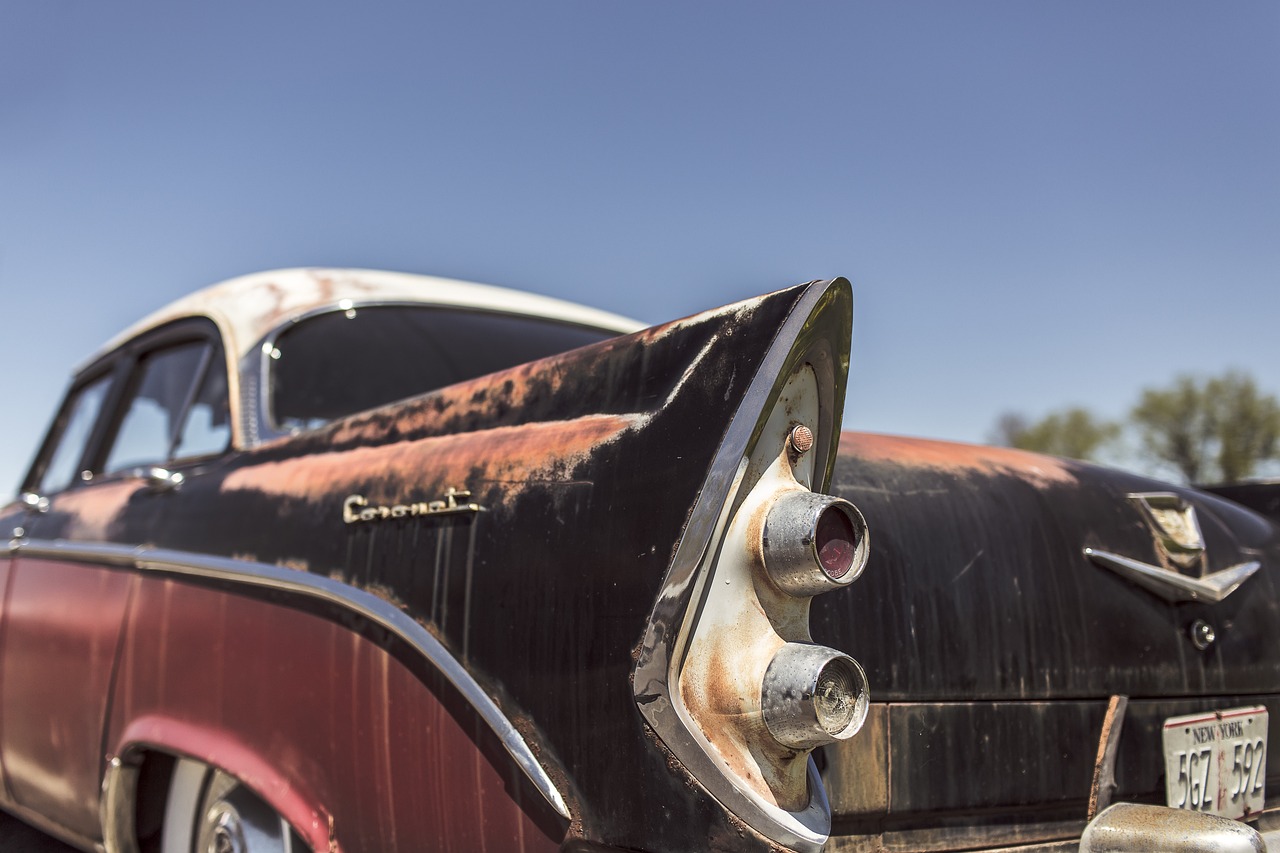
Patina describes the natural aging and surface characteristics that develop over time, such as oxidation, wear, and subtle color changes. In the vintage market, a well‑preserved patina is prized for its historical authenticity. A 1929 Rolls‑Royce Phantom III with a lightly oxidized “silvery‑blue” finish and original leather that has developed a soft “silver‑gray” sheen exemplifies desirable patina. Appraisers must balance the aesthetic appeal of patina against the potential for corrosion or deterioration. The difficulty is that excessive patina may indicate neglect, while overly aggressive cleaning can strip away valuable surface character.
Mechanical Condition encompasses the operational status of the engine, transmission, suspension, brakes, and other functional components. A thorough mechanical assessment includes compression testing, dyno runs, and inspection of wear patterns. For example, a 1965 Aston Martin DB5 that runs smoothly at 6,000 rpm with original gear ratios and no aftermarket modifications will be valued higher than one with a rebuilt engine using non‑original parts. Practical application involves creating a detailed mechanical report that documents each system’s condition. Challenges include hidden damage that only becomes apparent under load, requiring specialized testing equipment.
Electrical System includes the wiring harness, lighting, ignition components, and any electronic accessories. In vintage cars, electrical systems are often simple but can be prone to corrosion and wear. An appraisal of a 1953 Chevrolet Corvette will note the condition of the original “Bosch” generator, the integrity of the wiring loom, and the presence of original “halo” headlights. Restoring or replacing electrical components with modern equivalents can improve reliability but may affect originality. The main difficulty is that many owners replace original wiring with new harnesses, making it essential to verify the authenticity of the original electrical layout.
Interior Condition assesses the state of the cabin, including seats, dashboard, carpets, and trim. Original materials such as “Bakelite” dashboards or “Alcantara” upholstery are highly valued. A 1970 Porsche 911 with its original “black leather” seats, untouched dashboard, and original “wood‑grain” steering wheel will command a premium. Appraisers must document any repairs, reupholstering, or additions, noting whether they are period‑correct. The challenge often lies in distinguishing between original wear and damage that may have been repaired with non‑original materials.
Upholstery refers specifically to the fabric, leather, or other materials covering the seats and interior panels. Vintage upholstery is often hand‑stitched and may feature unique patterns. For instance, a 1962 Ferrari 250 GT’s “red top‑grain” leather seats are a hallmark of the model. In appraisal, the condition of the upholstery is examined for cracks, fading, and stitching integrity. When original upholstery is missing, a high‑quality reproduction must be documented, and a value deduction applied. The difficulty is that many vintage cars have had their interiors completely replaced, sometimes with superior modern materials, complicating the assessment of originality versus comfort.
Trim in the context of interior finishes includes decorative elements such as wood veneers, chrome accents, and gauges. A 1954 Mercedes‑Benz 300 SL with original “mahogany” wood trim on the dashboard and “chrome‑plated” door handles adds to its collectability. Appraisers must verify the authenticity of these details, often through close visual inspection and comparison with factory photographs. A common challenge is the replacement of original trim with similar-looking but non‑original parts, which can be difficult to detect without expert knowledge.
Market Value is the price a willing buyer would pay for a vehicle in an open market, reflecting current demand, rarity, and condition. Determining market value involves analyzing recent auction results, private sales, and dealer listings. For example, a 1967 Ford Mustang Fastback in “good” condition may have a market value of €45,000 based on comparable sales. The appraisal must consider both “retail” and “wholesale” market values, as they differ significantly. The challenge lies in fluctuating market conditions and regional variations that can cause rapid changes in value.
Comparative Market Analysis (CMA) is a method that compares the subject vehicle with similar cars that have recently sold or are currently listed. The appraiser selects comparable vehicles based on make, model, year, condition, and provenance, then adjusts for differences. A CMA for a 1955 Jaguar XK150 might include recent sales of similar XK150s with comparable mileage and original paint. Practical application requires access to reliable databases and auction archives. The difficulty is finding truly comparable examples, especially for highly unique or rare models where few recent transactions exist.
Adjusted Price is the final valuation after applying adjustments for factors such as condition, provenance, originality, and market trends. For instance, a base price of €80,000 for a 1972 Porsche 911 may be adjusted upwards by €10,000 for original provenance and downwards by €5,000 for minor interior wear, resulting in an adjusted price of €85,000. The appraisal report must clearly document each adjustment and the rationale behind it. Challenges include ensuring that adjustments are consistent with industry standards and that they are transparent to the client.
Rarity Index quantifies how uncommon a particular vehicle is within its production run, often expressed as a ratio or percentage. A 1934 Alfa Romeo “Quadrifoglio” may have a rarity index of 1/150, indicating only 150 units were produced. Appraisers use the rarity index to justify premium values for extremely scarce models. Practical application involves researching factory production numbers and cross‑checking with surviving examples. The difficulty is that production records may be incomplete or inaccurate, especially for pre‑World‑War II manufacturers.
Historical Significance evaluates the vehicle’s role in automotive history, motorsport, or cultural events. A car that won a notable race or was owned by a famous figure carries added value. For example, a 1969 Ford GT40 that participated in the “24 Hours of Le Mans” and finished on the podium has high historical significance. Appraisers must substantiate claims with documentation such as race results, photographs, and contemporary news articles. The challenge is verifying the authenticity of such claims, as provenance may be disputed or poorly documented.
Period Correct refers to components, finishes, or accessories that are appropriate for the vehicle’s original era. A 1958 Chevrolet Impala fitted with a “white‑wall” tire and “chrome‑plated” hubcaps is period correct, whereas a modern “all‑season” tire would not be. Appraisers must ensure that any replacement parts are period correct to maintain value. The difficulty arises when period‑correct parts are scarce, leading owners to install modern equivalents that may be aesthetically similar but not historically accurate.
Documentation encompasses all paperwork related to the vehicle, including factory build sheets, registration certificates, service logs, and historical photographs. Comprehensive documentation greatly enhances a car’s appraisal value. For instance, a 1940 Cadillac Series 62 with complete factory build sheets, original German registration, and a complete service log from the original owner provides strong evidence of authenticity. The challenge is that many vintage vehicles lack complete documentation due to loss, war, or neglect, requiring the appraiser to rely on secondary sources.
Service Records detail the maintenance history of a vehicle, illustrating how it has been cared for over time. Original service records from authorized dealers, such as a “Mercedes‑Benz Werkstattleitungen” logbook, are highly valued. An appraiser will review these records to confirm that the engine has been regularly serviced, which can positively influence mechanical condition assessments. The difficulty is that service records may be incomplete, illegible, or missing entirely, especially for vehicles that have changed owners multiple times.
Accident History records any collisions or damage the vehicle has sustained, including the extent of repairs performed. A thorough accident history is crucial for accurate valuation, as structural damage can significantly reduce value, even if repaired. For example, a 1964 Aston Martin DB4 that suffered a side‑impact and was subsequently repaired with original steel panels will be valued lower than an identical car with a clean history. Appraisers must verify accident reports, repair invoices, and photographic evidence. The challenge is that some owners may conceal minor accidents, making full disclosure difficult.
Mileage indicates the total distance the vehicle has traveled, typically recorded on the odometer. Low mileage is often associated with better condition and higher value, especially for limited‑production models. A 1970 Porsche 911 with only 12,000 km on the original odometer is more desirable than one with 80,000 km. However, mileage must be corroborated with service records and historical documentation to avoid “odometer fraud.” The challenge is that many vintage cars have had odometers replaced or tampered with, requiring careful verification.
Odometer Reading is the specific figure displayed on the vehicle’s mileage gauge. For pre‑digital odometers, readings may be affected by mechanical wear or misalignment. An appraisal must note the condition of the odometer, whether the reading is clearly legible, and whether any modifications have been made. In cases where the odometer is non‑functional, the appraiser may rely on alternative evidence such as service stamps to estimate mileage. The difficulty lies in distinguishing genuine wear from intentional rollback.
Condition Grading involves assigning a standardized rating to the overall state of the vehicle, often using a scale such as “Excellent,” “Very Good,” “Good,” “Fair,” and “Poor.” Each grade corresponds to specific criteria regarding mechanical functionality, cosmetic appearance, and originality. A 1939 Bentley 8 Litre in “Very Good” condition may have minor paint wear but an original engine. The appraisal report will include a detailed justification for the assigned grade. Challenges include subjectivity in grading and the need for consistency across multiple appraisals.
Grading Scale defines the specific parameters and descriptors for each condition level. For example, the “HAG” (Historic Automobile Group) grading scale outlines precise thresholds for paint wear, interior wear, and mechanical functionality. Appraisers must be familiar with the chosen grading scale and apply it uniformly. The difficulty arises when different markets or clients prefer alternative scales, requiring the appraiser to translate grades accurately.
Full Restoration is a comprehensive process that returns a vehicle to its original factory condition, including mechanical overhaul, bodywork repair, paint recreation, and interior refurbishment. A full restoration of a 1950 Jaguar XK120 would involve disassembly, chassis straightening, engine rebuilding to factory specifications, and a historically accurate paint job. In valuation, a fully restored vehicle may achieve a higher market price if the restoration is documented, uses original or period‑correct parts, and is performed by reputable specialists. The challenge is that full restorations can be costly, and the cost may exceed the increase in market value, especially for extremely rare cars.
Partial Restoration focuses on specific areas, such as mechanical repair or interior refurbishment, while leaving other components untouched. For instance, a 1966 Chevrolet Corvette that has been mechanically overhauled but retains its original paint may be considered partially restored. Appraisers must note which aspects have been restored and adjust the value accordingly. The difficulty is that partial restorations can create a “mixed” condition profile, making it harder to compare with fully original or fully restored examples.
Preservation emphasizes maintaining the vehicle in its current state, preventing further deterioration without altering its original fabric. Preservation is often preferred for historically significant cars where any alteration could diminish authenticity. A 1932 Rolls‑Royce Phantom III that is kept in a climate‑controlled garage, with minimal intervention, exemplifies preservation. Appraisers assess the effectiveness of preservation measures, such as rust protection and humidity control. The challenge is that preservation may limit the vehicle’s usability, potentially affecting market demand among collectors who desire both authenticity and drivability.
Conservation refers to the scientific methods used to stabilize and protect original materials, such as original paint, leather, or metal components. Conservation techniques may include corrosion inhibitors, leather conditioning, and controlled cleaning. In appraisal, evidence of professional conservation work can enhance value, as it demonstrates proactive care. However, over‑conservation or the use of inappropriate chemicals can damage original materials, leading to value loss. The difficulty is ensuring that conservation practices adhere to accepted standards and that documentation of the procedures is available.
Factoring is a mathematical method used to adjust values based on specific variables such as age, condition, or market trends. For example, an appraiser may apply a “condition factor” of 0.85 to a base market price to reflect a vehicle in “Good” condition. Factoring allows for systematic adjustments across multiple appraisals. The challenge is selecting appropriate factor values, which must be supported by market data and industry benchmarks to avoid arbitrary reductions or inflations.
Multipliers are coefficients applied to a base value to account for qualitative attributes like rarity, provenance, or historical significance. A “rarity multiplier” of 1.20 applied to a base price of €100,000 would increase the valuation to €120,000 for an exceptionally scarce model. Appraisers must justify each multiplier with documented evidence, such as production numbers or provenance records. The difficulty lies in ensuring that multipliers are not overly optimistic, which could lead to inflated valuations.
Depreciation describes the loss of value over time due to factors such as wear, obsolescence, or market shifts. While many modern cars depreciate rapidly, vintage automobiles often appreciate, but they can still experience depreciation if neglected. An appraiser may calculate depreciation for a 1975 BMW 3.0 CS by analyzing historical price trends and the vehicle’s condition. The challenge is that depreciation models for vintage cars are less standardized than for new vehicles, requiring bespoke analysis.
Appreciation is the increase in value over time, often driven by rarity, demand, and historical importance. For example, a 1963 Ferrari 250 GT has appreciated significantly since its production due to limited numbers and racing pedigree. Appraisers project appreciation by studying market trends and collector interest. The difficulty is predicting future appreciation accurately, especially in volatile markets or during economic downturns.
Indexation involves adjusting historical price data to present‑day values using inflation or market indices. An appraisal may index a 1990 sale price of €10,000 to 2024 euros using a consumer price index, resulting in a comparable figure of €18,000. Indexation helps in comparing past transactions with current market conditions. The challenge is selecting appropriate indices, as general inflation rates may not reflect the specific dynamics of the classic car market.
Auction Results are publicly available records of final sale prices achieved at auction houses. These results are a primary source for market value determination. An appraiser will reference recent auction results for comparable models, such as a 1955 Jaguar XK150 sold at “Bonhams” for €120,000. The difficulty is that auction prices can be influenced by auction day dynamics, buyer competition, and lot presentation, which may not reflect the intrinsic value of the vehicle.
Sale Price is the actual amount a buyer pays for a vehicle in a private transaction. Sale price data is often confidential, but when available, it provides a realistic benchmark for valuation. For example, a private sale of a 1970 Porsche 911 for €75,000 can be used to calibrate appraisal estimates. The challenge is obtaining reliable sale price information, as private sales are frequently undisclosed, requiring reliance on market estimates.
Retail Value represents the price a dealer would charge a consumer, typically higher than wholesale value due to overhead and profit margins. An appraiser must differentiate between retail and wholesale values when providing valuations for different purposes, such as insurance or resale. The difficulty lies in accurately estimating dealer markup percentages, which can vary by region and vehicle type.
Wholesale Value is the price a dealer would accept in a bulk or trade transaction, often lower than retail. For classic car dealers, wholesale values are essential for inventory acquisition and pricing strategies. An appraisal intended for a dealer’s purchase decision will focus on wholesale value. The challenge is that wholesale values are less transparent and may fluctuate based on dealer inventory levels and market demand.
Insurance Valuation is the process of determining a replacement cost for insurance purposes, often based on the cost to replace the vehicle with a comparable model in similar condition. An insurance appraisal for a 1962 Jaguar E‑Type may calculate the cost of sourcing original parts, labor, and a period‑correct paint job. The difficulty is that insurance valuations may differ from market values, especially for exceptionally rare vehicles where a true replacement may be impossible.
Tax Assessment involves estimating the taxable value of a vehicle for purposes such as inheritance tax or luxury tax. In Germany, the “Kraftfahrzeugsteuer” may be based on engine displacement, emissions, and vehicle age. An appraiser must provide a value that complies with tax regulations while reflecting the vehicle’s true market worth. The challenge is navigating complex tax codes and ensuring that the appraisal does not inadvertently inflate tax liabilities.
Legal Title confirms ownership and the right to transfer the vehicle. Documentation such as the “Zulassungsbescheinigung Teil I” (registration certificate) is essential. An appraisal must verify that the seller holds a clear legal title, free of liens or encumbrances. The difficulty arises when historical titles have been lost or when vehicles have been imported/exported multiple times, requiring thorough title research.
Import/Export Regulations govern the movement of vintage cars across borders, including customs duties, documentation, and compliance with safety or emissions standards. For example, exporting a 1961 Porsche 356 from Germany to the United States may require a “Historic Vehicle” exemption under the EPA. Appraisers advising clients on cross‑border transactions must be familiar with these regulations. The challenge is that regulations can change frequently, and non‑compliance can result in significant delays or penalties.
Emission Standards are environmental regulations that limit pollutants from vehicle exhaust. Vintage cars often fall under “exempt” categories, but in some jurisdictions they must meet specific standards to be road‑legal. An appraisal for a 1970 Mercedes‑Benz 300 SEL may need to note whether the vehicle complies with local emission requirements or if it is registered as a “historic vehicle” with exemptions. The difficulty is that emission testing equipment may be unavailable for very old engines, and modifications to meet standards can affect originality.
Safety Standards encompass regulations related to crash protection, lighting, and braking performance. While many classic cars predate modern safety mandates, they may still be required to meet baseline standards for road use. An appraisal might reference the need for updated brake pads or reinforced seat belts on a 1968 Jaguar XJ6. The challenge is balancing safety upgrades with the desire to preserve original components.
Authentic Parts are components that are original to the vehicle, either from the factory or from a matching period vehicle. Authenticity can be proven through part numbers, casting marks, or factory stamps. For example, an original “Mors” steering wheel on a 1932 Bugatti Type 57 is an authentic part that adds considerable value. Appraisers must verify authenticity through documentation and physical inspection. The difficulty lies in distinguishing authentic parts from high‑quality reproductions that may be visually identical.
Aftermarket Parts are components produced by third‑party manufacturers after the vehicle’s production period. While some aftermarket parts can improve performance or reliability, they often reduce collectability. A modern “Bosch” fuel injection kit installed on a 1965 Ferrari 250 GT, for instance, would likely be viewed negatively by purists. Appraisers must note the presence of aftermarket parts and adjust the valuation accordingly. The challenge is that some aftermarket parts become accepted as “standard” for certain models, blurring the line between acceptable modification and detrimental alteration.
Fabrication involves creating new parts that did not exist on the original vehicle, often to replace missing components. Fabricated parts must be documented and, where possible, made to match original specifications. A fabricated “Brembo” brake caliper for a 1969 Lamborghini Miura may be necessary if the original is unavailable. In appraisal, fabricated parts are typically considered less valuable than authentic or reproduced parts, but their quality can mitigate the impact. The difficulty is ensuring that fabricated parts are indistinguishable from originals, which can be a source of contention among collectors.
Reconditioning is a process that restores a component to functional condition without necessarily preserving its original material. For example, reconditioning an original engine block by machining worn surfaces while retaining the original casting is a common practice. Appraisers must differentiate between reconditioned and replaced components, as reconditioning generally preserves more value than full replacement. The challenge is that reconditioning can be concealed, requiring detailed inspection and perhaps metallurgical testing to detect.
Valuation Report is the formal document that presents the appraiser’s findings, supporting data, and final value conclusion. It includes sections such as vehicle description, condition analysis, market comparison, adjustments, and final valuation. A well‑structured valuation report for a 1958 Mercedes‑Benz 300 SL will contain photographs, a condition grading table, and a narrative explaining each adjustment. The challenge is ensuring the report meets the standards of professional bodies, such as the “International Society of Appraisers,” while remaining clear and understandable for clients.
Appraisal Certificate is an official statement, often signed and sealed, that attests to the valuation performed. It may be required for insurance, tax, or legal purposes. The certificate typically references the valuation methodology, data sources, and the appraiser’s credentials. For a 1963 Jaguar E‑Type, the certificate might state: “Certified value €210,000 as of 21 June 2026, based on comparative market analysis and condition grading.” The difficulty is maintaining the certificate’s credibility, which depends on the appraiser’s reputation and adherence to ethical standards.
Photographic Documentation provides visual evidence of the vehicle’s condition, provenance, and unique features. High‑resolution images of the engine bay, interior, exterior, and serial numbers are essential. For example, a series of close‑up photographs showing the original “Muntz” dashboard gauges on a 1949 Cadillac will support claims of authenticity. Appraisers must ensure photographs are properly labeled, dated, and stored securely. The challenge is that lighting, angle, and image quality can affect the ability to discern details, requiring professional photography equipment and expertise.
Condition Report is a detailed description of each component’s state, often presented in a tabular format. It includes assessments of the body, paint, interior, mechanical systems, and any modifications. A condition report for a 1952 BMW 503 might list “paint: original, minor oxidation,” “engine: original, fully functional,” and “interior: original leather, slight wear.” The difficulty lies in achieving consistency across reports, especially when multiple appraisers are involved, necessitating standardized terminology.
Narrative Description complements the condition report by providing a cohesive story of the vehicle’s history, significance, and appraisal rationale. It may explain how provenance, originality, and rarity combine to produce the final value. For a 1936 Bugatti Type 57, the narrative might highlight its participation in the “Le Mans” race, its ownership by a noted collector, and the meticulous restoration undertaken. The challenge is balancing technical detail with readability, ensuring the narrative remains informative without overwhelming the reader.
Comparative Analysis involves a side‑by‑side evaluation of the subject vehicle against comparable examples, highlighting similarities and differences. This analysis supports the adjustments made in the final valuation. For a 1960 Porsche 356 C, the comparative analysis may compare three recent sales of similar models, noting variations in paint, mileage, and provenance. The difficulty is selecting truly comparable vehicles, especially when the market offers limited data for rare models.
Market Trends refer to the direction and speed of price movements within the classic car market over a given period. Trends can be driven by collector interest, economic factors, or cultural events. An appraiser tracking market trends may observe that 1960s British sports cars have appreciated 15 % annually over the past five years. Understanding these trends helps in projecting future values and advising clients on investment timing. The challenge is that trends can be volatile, and external factors such as currency fluctuations or geopolitical events can cause abrupt shifts.
Economic Indicators such as GDP growth, disposable income, and consumer confidence influence demand for collectible cars. During periods of economic prosperity, collectors often increase spending on high‑value assets. An appraisal might incorporate economic indicators to justify a higher valuation for a 1972 Porsche 911 during a booming market. The difficulty is correlating macro‑economic data with niche market behavior, as the classic car market may not follow broader economic patterns precisely.
Currency Conversion is essential when dealing with international sales, as prices may be quoted in euros, dollars, or pounds. Accurate conversion rates, often based on the transaction date, must be applied. For example, a 1955 Mercedes‑Benz 300 SL sold in the United States for US $250,000 would be converted to euros using the exchange rate on the sale date. The challenge is accounting for exchange rate volatility, especially when valuations are prepared months before a transaction takes place.
Regional Differences affect demand and pricing, as certain models may be more popular in specific countries or continents. A 1970 Ford Escort RS 1600 may command higher prices in the United Kingdom due to its rally heritage, while similar models in the United States may be less sought after. Appraisers must adjust valuations to reflect regional market dynamics. The difficulty lies in obtaining reliable regional data, as many transactions occur privately and are not publicly reported.
Collector Demand measures the interest level among collectors for a specific make, model, or era. High collector demand can drive up prices, especially for limited‑production or historically significant vehicles. An appraisal for a 1962 Ferrari 250 GT may note strong collector demand driven by recent high‑profile auction results. The challenge is that collector demand can be fleeting, influenced by trends, media exposure, or the emergence of new collectors, requiring continuous market monitoring.
Investment Potential evaluates the likelihood that a vehicle will appreciate in value over time, considering factors such as rarity, provenance, and market trends. An appraiser may advise a client that a 1959 Porsche 356 Speedster has strong investment potential due to its limited production run and rising auction prices. The difficulty is forecasting future market conditions, as unexpected events (e.g., economic downturns, changes in tax law) can affect
Key takeaways
- For example, a 1935 Mercedes‑Benz 500 K that can trace its ownership through original factory invoices, period photographs, and the archives of a well‑known collector will command a premium over an identical model lacking such records.
- A practical application is the inspection of a 1957 Porsche 356 Speedster for original factory‑issued components such as the “Brembo” brake drums or the specific “Marmora” paint code.
- A frequent challenge is the lack of clear factory records for certain components, especially for models produced before systematic record‑keeping, leading to reliance on expert opinion.
- The practical application for an appraiser is to differentiate between restoration levels, as a full, meticulously executed restoration can sometimes increase value, while a poorly documented or overly modern restoration may diminish it.
- The main difficulty is that high‑quality reproductions can sometimes be mistaken for originals, leading to potential misvaluation if not properly verified.
- The challenge arises when chassis numbers have been altered, either due to repairs after accidents or intentional tampering, which can cast doubt on the vehicle’s provenance and affect its market value.
- Vehicle Identification Number (VIN) is a standardized 17‑character code introduced in the 1980s, but many pre‑VIN era cars have a manufacturer‑specific serial number that serves a similar purpose.