
Aircraft Structural Integrity
Aircraft structural integrity is the cornerstone of safe flight, encompassing the ability of an airframe to sustain all loads throughout its service life without unacceptable deformation or failure. Mastery of the vocabulary associated with…
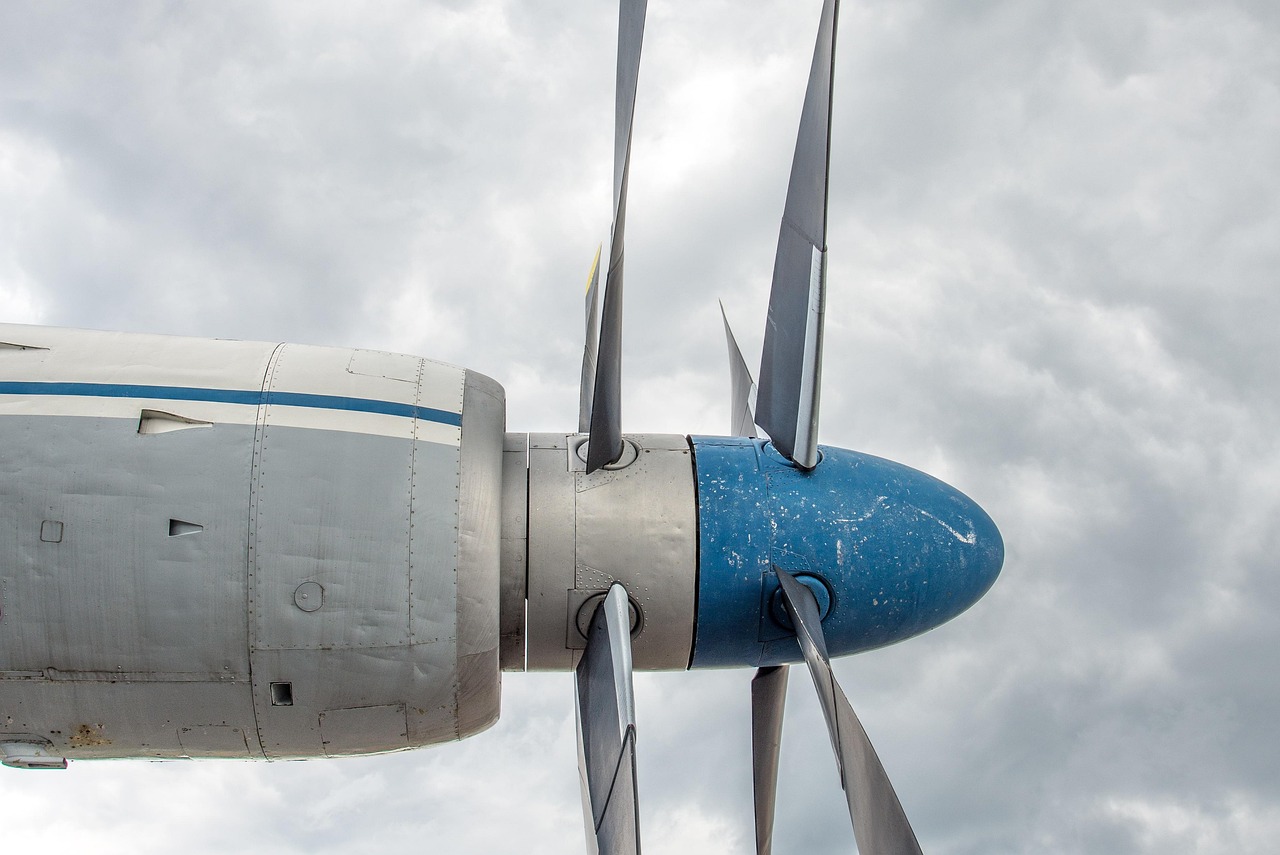
Aircraft structural integrity is the cornerstone of safe flight, encompassing the ability of an airframe to sustain all loads throughout its service life without unacceptable deformation or failure. Mastery of the vocabulary associated with this discipline is essential for engineers who design, certify, maintain, and repair modern aircraft. The following exposition defines the principal terms, illustrates their practical relevance, and highlights the challenges that arise when applying theory to real‑world structures.
Stress is the internal force per unit area that develops within a material when external loads are applied. It is expressed in units of pascals (Pa) or pounds per square inch (psi). For a wing spar under bending, the top surface experiences compressive stress while the bottom surface is in tension. Accurate stress prediction is critical because exceeding the material’s elastic limit leads to permanent deformation.
Strain measures the deformation of a material relative to its original dimensions. It is dimensionless, often reported as a fraction or percentage. In a fuselage skin panel, a tensile strain of 0.0015 Corresponds to a 0.15 % Elongation. Strain gauges attached to test coupons provide real‑time data that feed into structural health monitoring systems.
Load path describes the route by which forces travel from the point of application to the supporting structure. Understanding the load path in a wing box is essential for identifying critical members such as spars, ribs, and stringers. Misinterpreting the load path can result in over‑design of non‑critical components and under‑design of load‑bearing members, jeopardizing safety.
Primary structure refers to the load‑bearing elements that carry the majority of the aircraft’s loads, including the wing spars, fuselage frames, and bulkheads. These components are typically fabricated from high‑strength aluminium alloys, titanium, or advanced composites. For example, the main wing spar of a commercial jet is a primary structure that must resist bending moments up to several hundred thousand foot‑pounds.
Secondary structure comprises the non‑load‑bearing elements that provide shape, surface finish, and support for systems such as fuel tanks, wiring, and cabin interiors. The skin panels that attach to the primary frame are secondary structures. Although they do not carry primary loads, their stiffness and attachment quality affect the overall vibration characteristics of the aircraft.
Fuselage is the central body of the aircraft that houses passengers, cargo, and flight crew. The fuselage’s structural integrity depends on a combination of frames, stringers, and skin panels that work together to resist internal pressure, bending, and torsion. In pressurised commercial aircraft, each flight cycle imposes a cyclic pressure differential that contributes to fatigue damage.
Wingbox is the internal structural cage of a wing, formed by the upper and lower skins, spars, ribs, and sometimes shear webs. It is a closed‑section beam that provides high torsional rigidity. The wingbox must be designed to endure lift loads, gust loads, and the weight of fuel stored within the wing’s internal compartments.
Spar is the main longitudinal member of the wingbox, typically located at the point of maximum bending moment. It can be a single‑piece I‑section, a multi‑cell box spar, or a composite laminate spar. The spar’s design must balance stiffness, strength, and weight. In a high‑performance fighter, the spar may be a carbon‑fiber reinforced polymer (CFRP) laminate optimized for torsional loads.
Rib is a transverse structural element that connects the upper and lower skins and provides shape to the wing. Ribs also support the skin against buckling and distribute loads to the spars. In a typical aluminium wing, ribs are spaced at intervals of 0.3 M to 0.5 M, depending on the aerodynamic design.
Stringer is a longitudinal stiffener that runs parallel to the spar, attached to the fuselage or wing skin to prevent local buckling. Stringers are especially important in thin‑walled aluminium skins where compressive stresses can cause buckling. The placement and cross‑sectional shape of stringers are optimized using buckling analysis software.
Bulkhead is a transverse internal wall that divides the fuselage into compartments and provides resistance to longitudinal loads. Bulkheads also serve as attachment points for cabin interior components and fuel tanks. In pressurised cabins, bulkheads must be designed to sustain the differential pressure load without excessive deformation.
Frame is a primary structural element that forms the circular or oval shape of the fuselage. Frames are typically spaced at regular intervals (e.G., Every 0.3 M) and are welded or riveted to the skin and stringers. The frame’s geometry and material selection influence the fuselage’s ability to resist bending and torsion.
Joint refers to the region where two or more structural members intersect. Joints are often the most critical locations for stress concentration and fatigue initiation. In a wingbox, the spar‑to‑rib joint may be reinforced with doubler plates, rivets, or adhesive bonding to spread the load over a larger area.
Fastener is a generic term for mechanical devices such as rivets, bolts, and screws used to join structural components. The choice of fastener type, material, and installation method directly impacts the joint’s fatigue life. For instance, a pop‑riveted aluminium joint may have a lower fatigue limit than a friction‑stiffened lap joint.
Rivet is a permanent fastener that deforms to hold two sheets together. In aerospace, solid‑shank, self‑drilling, and blind rivets are common. Rivet installation introduces a local load path alteration, leading to a stress concentration factor that must be accounted for in fatigue analysis.
Bolt is a threaded fastener that can be removed for maintenance. High‑strength bolts are often used in high‑stress joints such as engine mounts. The torque applied during installation influences the clamp load, which in turn affects the joint’s fatigue performance.
Adhesive bond is a method of joining components using a polymeric or epoxy resin. Adhesive bonding provides a uniform load transfer and can reduce the number of fasteners, thus lowering weight. However, bond integrity is sensitive to surface preparation, cure temperature, and environmental exposure.
Composite layup describes the sequence and orientation of fibre plies in a laminated composite structure. The layup determines the stiffness, strength, and failure modes of the component. A typical wing spar may use a quasi‑isotropic layup of carbon fibres at 0°, ± 45°, and 90° orientations to achieve balanced properties.
Laminate is a stack of composite plies bonded together. The term also applies to metal‑clad structures where a thin aluminium layer is bonded to a titanium substrate. The performance of a laminate is evaluated using Classical Lamination Theory, which predicts the resultant stiffness matrix.
Shear is the component of force that acts parallel to the cross‑section of a member. Shear stress in a wing skin arises from aerodynamic loads that attempt to slide the upper and lower surfaces relative to each other. Shear flow analysis is used to design the rivet spacing needed to transfer these loads.
Bending is the deformation caused by a moment that produces curvature in a structural member. The bending stress distribution in a beam follows the classic linear pattern, with maximum tension at one extreme fiber and maximum compression at the opposite extreme. Aircraft wings experience significant bending due to lift.
Torsion is the twisting of a structural member about its longitudinal axis. In a wingbox, torsional loads arise from asymmetrical lift distribution or gusts. Torsional rigidity is enhanced by closed‑section designs, such as a multi‑cell wingbox.
Compression is a load that shortens a member. In a fuselage, compressive loads dominate during high‑speed flight where aerodynamic pressure pushes the nose forward. Compression members must be checked for buckling, especially when they are slender.
Tension is a load that elongates a member. The lower flange of a wing spar typically experiences tension due to upward bending. Tensile members are generally more forgiving than compressive members, but they must still be assessed for fatigue.
Buckling is a stability failure mode where a compressive member suddenly deforms laterally. Euler’s critical load formula predicts the buckling load for ideal columns, but real aircraft structures require finite‑element analysis to capture the effects of stiffeners, curvature, and material anisotropy.
Elastic limit is the stress level beyond which a material no longer returns to its original shape after unloading. Staying within the elastic limit ensures that the structure behaves predictably under service loads. Design criteria often limit operating stresses to a fraction (e.G., 0.6) Of the elastic limit.
Yield strength is the stress at which a material begins to deform plastically. For aluminium alloy 2024‑T3, the yield strength is approximately 330 MPa. In structural design, the allowable stress is typically set to a percentage of the yield strength to incorporate a safety margin.
Ultimate strength is the maximum stress a material can sustain before fracture. The ultimate tensile strength of a carbon‑fiber laminate may exceed 1 GPa, far higher than that of aluminium. Although ultimate strength is rarely reached in service, it defines the failure envelope for overload scenarios.
Safety factor (or factor of safety) is the ratio of a material’s strength to the applied load. A safety factor of 1.5 Means the component can theoretically sustain 150 % of the design load before failure. In aerospace, safety factors are often lower than in other industries because of weight considerations and rigorous testing.
Design limit load is the maximum load that the aircraft is expected to encounter in normal operation, including gusts and maneuver loads. The limit load is defined by certification standards such as FAR 25. The structure must be able to carry this load without permanent deformation.
Ultimate load is typically 1.5 Times the design limit load, as required by most airworthiness regulations. The structure must survive the ultimate load without catastrophic failure, providing a margin for unexpected overloads.
Factor of safety in the context of fatigue is often expressed as a damage tolerance margin. For example, a damage tolerance analysis may require that the residual strength after a crack of a certain size remains at least 1.2 Times the limit load.
Fatigue life quantifies the number of load cycles a component can endure before a crack initiates and grows to a critical size. Fatigue testing on coupons produces an S‑N curve (stress versus number of cycles) that guides life predictions for the actual structure.
S‑N curve (also called the Wöhler curve) plots the stress range against the number of cycles to failure. For high‑strength aluminium alloys, the S‑N curve shows a distinct fatigue limit below which the material can theoretically survive infinite cycles. Composite materials often lack a clear fatigue limit, requiring a different approach.
Goodman diagram is a graphical representation used to assess the combined effect of mean stress and alternating stress on fatigue life. The diagram plots the alternating stress on the vertical axis and the mean stress on the horizontal axis, with a straight line representing the allowable stress envelope. Engineers use the Goodman line to ensure that the operational stress state stays within safe limits.
Miner’s rule is a cumulative damage model that predicts fatigue life by summing the fraction of life consumed at each stress range. The rule states that failure occurs when the sum of damage fractions reaches unity. While simple, Miner’s rule can be overly conservative for variable‑amplitude loading typical of flight profiles.
Damage tolerance is a design philosophy that assumes the presence of cracks and ensures that the structure can continue to operate safely until a crack is detected and repaired. Damage‑tolerant design requires regular inspections, often using non‑destructive inspection techniques, to locate and assess crack growth.
Fail‑safe design is a related concept where the structure retains load‑carrying capability after the failure of one element. For example, a multi‑cell wingbox may continue to support the aircraft’s weight even if one cell loses its skin due to a puncture.
Damage detection encompasses the suite of methods used to locate and size defects within a structure. Early detection is crucial for extending service life and preventing catastrophic failure. Techniques include visual inspection, ultrasonic testing, eddy‑current testing, radiography, and thermography.
Non‑destructive inspection (NDI) refers to any testing method that evaluates a component’s integrity without causing damage. Ultrasonic testing is widely used to detect internal cracks in aluminium panels, while eddy‑current testing is effective for surface‑breaking cracks in conductive materials.
Ultrasonic testing employs high‑frequency sound waves to probe internal features. A transducer sends a pulse into the material; reflected echoes indicate discontinuities. Time‑of‑flight measurements allow the location and size of a crack to be estimated. The technique is highly sensitive to sub‑millimetre flaws.
Radiography uses X‑rays or gamma rays to create images of internal structures. Dense regions appear white, while voids or cracks appear darker. Radiography is especially useful for inspecting composite laminates where ultrasonic coupling may be difficult.
Eddy‑current testing induces circulating currents in conductive materials and measures changes in impedance caused by defects. The method is fast and effective for detecting surface cracks in aluminium and titanium, but it is limited by penetration depth.
Thermography detects infrared emissions from a component to reveal temperature variations caused by subsurface defects. In active thermography, a heat pulse is applied and the surface response is recorded. Defects such as delaminations in composites appear as abnormal thermal patterns.
Visual inspection remains the most common NDI method, performed by trained inspectors using magnification tools and borescopes. While less sensitive than other methods, visual inspection can quickly identify corrosion, rivet loosening, and obvious cracks.
Corrosion is the chemical or electro‑chemical degradation of a material, most commonly observed in aluminium alloys exposed to moisture and salts. Corrosion reduces cross‑sectional area and can act as a stress concentrator, accelerating fatigue crack initiation.
Corrosion fatigue combines the effects of cyclic loading and corrosive environments. In a marine environment, aluminium wing ribs may develop pits that serve as crack nucleation sites, reducing the effective fatigue life compared to dry conditions.
Environmental cracking includes phenomena such as stress corrosion cracking (SCC) and hydrogen‑induced cracking. SCC occurs when tensile stress, a corrosive medium, and susceptible material interact, leading to brittle fracture. Hydrogen embrittlement, often associated with electro‑plating processes, can cause sudden failure in high‑strength steels.
Stress concentration is a localized increase in stress caused by geometric discontinuities such as holes, notches, or changes in cross‑section. The stress concentration factor (Kt) quantifies the ratio of the peak stress to the nominal stress. Design practices aim to reduce Kt by adding fillets or using smooth transitions.
Notch is a deliberate or incidental cut in a component that can serve as a stress raiser. In a wing spar, a drilled inspection hole creates a notch that must be carefully designed to avoid excessive stress concentration.
Fillet radius is the curved transition between two intersecting surfaces. Increasing the fillet radius reduces the stress concentration factor, thereby improving fatigue resistance. For rivet holes, a typical fillet radius might be 1.5 Mm to balance weight and stress distribution.
Residual stress is the stress remaining in a material after manufacturing processes such as machining, welding, or heat treatment. Residual tensile stresses can accelerate crack growth, while compressive residual stresses can be beneficial by delaying crack initiation. Techniques such as shot peening are used to introduce beneficial compressive residual stresses.
Heat treatment modifies the microstructure of metals to improve properties such as strength, ductility, or fatigue resistance. For aluminium alloy 7075‑T6, solution heat treatment followed by aging produces a high yield strength suitable for high‑load components.
Annealing is a heat‑treatment process that softens a material, relieving residual stresses and improving ductility. After extensive machining of a fuselage frame, an annealing step may be employed to reduce the risk of crack formation during subsequent loading.
Stress corrosion cracking (SCC) occurs when a tensile stress field and a corrosive environment act together on a susceptible alloy. In aircraft, SCC is a concern for high‑strength aluminium alloys in the presence of chlorides. Detection often requires a combination of visual inspection and NDI techniques.
Load spectrum is a representation of the sequence of loads an aircraft experiences during a typical flight cycle, including take‑off, climb, cruise, descent, and landing. The load spectrum is used as input for fatigue analysis, allowing engineers to predict damage accumulation over time.
Flight cycle is defined as one complete pressurisation and depressurisation event, typically corresponding to a take‑off and landing. Commercial airliners may accumulate tens of thousands of flight cycles, each contributing to fatigue damage, especially in the fuselage skin.
Pressurisation cycle specifically refers to the pressure differential applied to the cabin during flight. The cyclic nature of pressurisation imposes a repeated tensile‑compressive stress on the fuselage skin, making it a primary source of fatigue cracking in transport aircraft.
Certification is the formal process by which an aviation authority verifies that an aircraft design meets all applicable safety standards. Certification involves extensive testing, analysis, and documentation. The certification basis for structural integrity includes standards such as FAR 25.571 And CS‑25.571.
Airworthiness is the condition of an aircraft that meets all regulatory requirements for safe operation. Maintaining airworthiness requires adherence to prescribed inspection intervals, repair procedures, and record‑keeping practices.
Maintenance encompasses all activities performed to preserve or restore the structural integrity of an aircraft. Maintenance tasks range from routine visual inspections to complex repairs such as replacing a damaged wing spar.
Repair is the process of restoring a damaged component to its original strength and stiffness. Common repair methods include rivet patching, bolted splice plates, and composite patch repairs. The repair must be validated through analysis or testing to ensure that the restored area meets the original design criteria.
Structural health monitoring (SHM) employs sensors, data acquisition systems, and algorithms to continuously assess the condition of a structure. Fiber‑optic strain sensors embedded in a wing spar can provide real‑time data on stress distribution, enabling early detection of abnormal load patterns.
Load alleviation refers to design features that reduce the loads transmitted to the primary structure during extreme events. Active load‑alleviation systems, such as wing‑flex control surfaces, can lower bending moments during gust encounters, thereby extending fatigue life.
Fatigue damage tolerance is the capability of a structure to sustain a certain amount of damage without catastrophic failure. Damage‑tolerant design requires the establishment of inspection intervals based on crack growth rates predicted by fracture mechanics.
Crack propagation describes the advance of a crack tip under cyclic or static loading. The rate of crack propagation is governed by the stress intensity factor range (ΔK) and material constants, as expressed by Paris’ law: Da/dN = C(ΔK)m.
Fracture mechanics is the field of mechanics that studies the formation and growth of cracks. It provides tools such as the stress intensity factor (K) and the J‑integral to predict when a crack will become unstable.
Paris law is an empirical relationship that relates crack growth per cycle (da/dN) to the range of stress intensity factor (ΔK). The constants C and m are material‑specific and determined from laboratory tests. Paris law is widely used in fatigue life prediction for aircraft components.
J‑integral is a contour integral used in elastic‑plastic fracture mechanics to characterize the intensity of the stress and strain field near a crack tip. The J‑integral is particularly useful for assessing crack growth in ductile aluminium alloys where plastic deformation is significant.
Stress intensity factor (K) quantifies the magnitude of the singular stress field near a crack tip. For a through‑thickness crack in a plate under uniform tension, K = σ√(πa), where σ is the nominal stress and a is the half‑crack length. The value of K must be compared to the material’s fracture toughness.
Fracture toughness (KIC) is a material property that defines the critical stress intensity factor at which rapid crack propagation occurs. High‑strength aluminium alloys may have KIC values around 30 MPa√m, while advanced composites can exhibit values exceeding 50 MPa√m.
Critical crack size is the crack length at which the applied stress intensity factor reaches KIC. Determining the critical crack size allows engineers to set inspection thresholds; any detected crack larger than this size must be repaired immediately.
Design criteria encompass the set of requirements that a structure must satisfy, including strength, stiffness, fatigue life, damage tolerance, and weight. These criteria are derived from regulatory standards, mission profiles, and economic considerations.
Aerospace standards such as the Federal Aviation Regulations (FAR), European Aviation Safety Agency (EASA) Certification Specifications, and industry guidelines (e.G., SAE, ASTM) provide the framework for structural design, testing, and inspection. Compliance with these standards is mandatory for type certification.
FAR (Federal Aviation Regulations) are the primary regulatory documents governing civil aviation in the United States. FAR 25 deals specifically with transport‑category airplanes and includes detailed provisions on structural load cases, fatigue testing, and inspection intervals.
CS (Certification Specification) is the EASA equivalent of FAR, with CS‑25 mirroring many of the same requirements. International aircraft manufacturers must often design to satisfy both FAR and CS criteria, ensuring global market acceptance.
ARP (Aerospace Recommended Practice) provides guidance on best practices for structural analysis, such as ARP‑4100, which addresses the development of fatigue life prediction methods for composite structures.
NDI (Non‑Destructive Inspection) techniques are referenced throughout certification documents, specifying the required detection capabilities for various defect sizes. For example, FAR 25.571 Mandates that ultrasonic inspections detect cracks as small as 0.5 Mm in critical wing spars.
Load alleviation systems, such as active wing‑flex control, illustrate how modern aircraft integrate structural and control design to mitigate peak loads. By adjusting control surface deflection in response to gust measurements, the wing’s bending moment can be reduced by up to 15 %, extending fatigue life.
Composite repair techniques often involve the use of prepreg patches cured in an autoclave. The repair must be designed to restore the original load‑carrying capacity, considering the stiffness mismatch between the patch and the underlying structure.
Rivet repair is a common method for fixing skin damage in aluminium structures. The repair sequence includes removing damaged material, installing doubler plates, and re‑riveting. Careful control of rivet torque is essential to avoid introducing excessive clamp loads that could accelerate fatigue.
Bolted splice plate repair is employed when a rib or spar is cracked. A splice plate is bolted across the cracked region, effectively bypassing the damaged area. The design of the splice plate follows the same load‑path analysis as the original component.
Corrosion control in aircraft includes protective coatings, cathodic protection, and moisture‑control storage environments. Anodizing aluminium provides a hard oxide layer that resists corrosion, while regular washing removes salt deposits that could initiate SCC.
Inspection interval is the scheduled time between mandatory inspections. Determination of intervals is based on fatigue damage accumulation models, damage‑tolerance analysis, and historical data. For high‑usage aircraft, intervals may be as short as 500 flight cycles for certain fuselage sections.
Damage tolerance analysis (DTA) involves creating a finite‑element model of a structure, inserting a representative crack, and simulating crack growth under realistic loading. The analysis yields the number of cycles required for a crack to grow from an initial detectable size to the critical size.
Finite‑element analysis (FEA) is the primary computational tool for evaluating stresses, strains, and buckling behavior in complex aircraft structures. High‑fidelity models incorporate material anisotropy, geometric non‑linearity, and contact interactions between fasteners.
Material anisotropy is a characteristic of composites where properties differ with direction. In a carbon‑fiber laminate, stiffness along the fibre direction may be ten times greater than across the fibres. Accurate representation of anisotropy is essential for predicting deflection and buckling.
Contact analysis in FEA models the interaction between rivet heads and skin panels. Proper modeling of contact friction and stiffness influences the predicted stress concentration around fasteners.
Non‑linear analysis accounts for large deformations, material plasticity, and post‑buckling behavior. In the case of a wing spar approaching its ultimate load, non‑linear analysis predicts the redistribution of stresses after local yielding.
Post‑buckling analysis evaluates the structural response after the initial buckling event. Some aircraft structures are designed to carry load in the post‑buckling regime, provided that the deformation remains within allowable limits.
Modal analysis determines the natural frequencies and mode shapes of an aircraft structure. Understanding modal characteristics is vital for avoiding resonance with engine or aerodynamic excitations. For example, the first bending mode of a wing may occur near 2 Hz, requiring careful design of flight‑control systems.
Vibration damping can be enhanced by adding viscoelastic layers or tuned mass dampers. Damping reduces the amplitude of resonant vibrations, protecting the structure from fatigue caused by cyclic stresses at resonant frequencies.
Weight‑critical design emphasizes the need to minimize mass while meeting structural requirements. The trade‑off between weight and safety factor is a central challenge in aerospace engineering; advanced materials and topology optimisation are employed to achieve optimal designs.
Topology optimisation is a computational method that iteratively removes material from a design space to achieve a target stiffness‑to‑weight ratio. The resulting lattice structures are often fabricated using additive manufacturing, offering high strength‑to‑weight performance.
Additive manufacturing (AM) enables the production of complex geometries such as lattice‑filled wing ribs. AM parts must be qualified for aerospace use, requiring rigorous material testing and NDI to ensure that internal defects are within acceptable limits.
Residual stress measurement techniques include X‑ray diffraction, hole‑drilling method, and neutron diffraction. Detecting residual stresses in critical joints helps engineers decide whether stress‑relief treatments are necessary.
Stress‑relief heat treatment reduces residual stresses by heating the component to a temperature below the material’s recrystallisation point and then cooling slowly. This process is commonly applied to welded fuselage frames to prevent crack initiation.
Weld‑induced distortion is a common issue when welding titanium components. Distortion can alter the alignment of the load path, necessitating re‑work or the use of fixture clamping during assembly.
Friction stir welding (FSW) is a solid‑state joining process that produces low‑distortion joints with superior fatigue properties compared to conventional welding. FSW is increasingly used for aluminium alloy components in modern aircraft.
Fastener fatigue is a specific concern for rivet and bolt holes, where the cyclic loading can cause the fastener to loosen or the hole to enlarge. Proper torque control and the use of lock‑wire or prevailing‑torque washers mitigate this risk.
Lock‑wire is a mechanical device that prevents a bolt from turning loose under vibration. In critical engine mount connections, lock‑wire is often required by certification standards.
Pre‑load in a bolted joint is the tensile force applied to the bolt during installation. Maintaining the correct pre‑load ensures that the joint shares the applied load evenly, reducing the likelihood of fatigue failure at the bolt‑hole interface.
Clamp load is the compressive force that a rivet or bolt exerts on the joined plates. Excessive clamp load can cause local yielding, while insufficient clamp load leads to joint separation under service loads.
Rivet shear flow analysis determines the spacing of rivets needed to transfer shear loads across a joint. The shear flow (q) is calculated as the total shear force divided by the length of the joint, and the required rivet spacing (s) is obtained by dividing the allowable shear per rivet (Fr) by q.
Rivet pull‑through is a failure mode where the rivet head or shank penetrates the material due to excessive shear loading. Design guidelines limit the shear per rivet to a fraction of the material’s shear strength to prevent this occurrence.
Stiffened panel refers to a thin skin reinforced with stringers, ribs, or frames to increase its buckling resistance. Stiffened panels are ubiquitous in wing skins and fuselage sections, where they provide high bending stiffness at low weight.
Panel buckling coefficient (k) is used in the classical plate buckling equation: Σcr = (kπ²E)/(12(1‑ν²))(t/b)², where σcr is the critical compressive stress, E is Young’s modulus, ν is Poisson’s ratio, t is panel thickness, and b is the panel width. The coefficient k depends on edge conditions and stiffener layout.
Shear panel is a structural element designed primarily to carry shear loads, such as the lower skin of a wingbox. Shear panels are often reinforced with shear webs and are subject to rigorous fatigue testing due to their load‑intensive role.
Shear web is a vertical plate that connects the upper and lower skins of a spar, providing shear resistance. In a box spar, the shear webs form the vertical faces of the closed section, significantly increasing torsional rigidity.
Skin thickness is a key design parameter; increasing thickness improves strength but also adds weight. Optimisation studies often target a thickness that satisfies both the required stress margin and the allowable weight growth.
Stiffener spacing influences both buckling resistance and weight. Closer stiffener spacing raises the buckling load but adds weight, while wider spacing reduces weight but may lower the safety margin. Engineers use parametric studies to find the optimal balance.
Multi‑cell wingbox divides the wing interior into several compartments, each acting as a closed‑section beam. Multi‑cell designs improve torsional stiffness and provide redundancy; if one cell is compromised, the remaining cells can still carry the load.
Cellular structure in a wing refers to the arrangement of spars, ribs, and shears that form discrete compartments. The cellular layout influences aerodynamic performance, fuel capacity, and structural efficiency.
Fuel tank integration requires careful consideration of the structural loads imposed by the fuel mass, as well as the pressure loads from fuel slosh. The tank walls are often part of the wingbox skin, and their structural contribution must be accounted for in the overall load analysis.
Fuel slosh generates dynamic loads that can amplify bending and torsional stresses. Slosh modelling uses fluid‑structure interaction techniques to predict the impact of fuel motion on the wing’s structural response.
Dynamic load factor (also called the gust factor) amplifies static loads to account for transient aerodynamic events. Certification standards specify a gust velocity envelope, and the dynamic load factor is applied to the limit load to obtain the ultimate load.
Gust load is a transient aerodynamic load caused by atmospheric turbulence. The gust load is calculated using the formula: ΔL = ρVgV·Cg·S, where ρ is air density, V is aircraft speed, g is gravitational acceleration, Vg is gust velocity, Cg is the gust alleviation factor, and S is wing area.
Gust alleviation factor (Cg) accounts for the aircraft’s ability to reduce the effective gust load through structural flexibility and control system response. A more flexible wing may have a higher Cg, resulting in lower peak loads.
Structural margin is the ratio of the ultimate load capacity to the design limit load after accounting for safety factors and damage tolerance. A typical structural margin may be 1.5 To 2.0, Ensuring that the aircraft can survive unexpected overloads.
Proof test is a destructive test performed on a prototype or production component to verify that it can sustain the ultimate load without failure. Proof testing is required for critical components such as spars and bulkheads.
Destructive testing includes tensile, compression, shear, and fatigue tests that permanently damage the test specimen. Results from destructive testing are used to calibrate analytical models and validate design assumptions.
Non‑destructive testing (NDI) techniques are employed throughout the aircraft’s service life to detect damage without compromising structural integrity. A typical inspection schedule for a commercial jet includes annual ultrasonic inspections of the wing spars and semi‑annual visual inspections of the fuselage skin.
Inspection reliability is a measure of the probability that an NDI method will correctly detect a defect of a given size. Reliability is quantified by the probability of detection (POD) curve, which is derived from controlled test data.
Probability of detection (POD) curves are essential for setting inspection intervals. A POD of 0.9 At a crack length of 2 mm indicates that there is a 90 % chance of detecting a crack of that size with the chosen NDI technique.
Inspection threshold is the crack size at which the POD reaches an acceptable level (often 0.9).
Key takeaways
- Aircraft structural integrity is the cornerstone of safe flight, encompassing the ability of an airframe to sustain all loads throughout its service life without unacceptable deformation or failure.
- For a wing spar under bending, the top surface experiences compressive stress while the bottom surface is in tension.
- Strain gauges attached to test coupons provide real‑time data that feed into structural health monitoring systems.
- Misinterpreting the load path can result in over‑design of non‑critical components and under‑design of load‑bearing members, jeopardizing safety.
- Primary structure refers to the load‑bearing elements that carry the majority of the aircraft’s loads, including the wing spars, fuselage frames, and bulkheads.
- Secondary structure comprises the non‑load‑bearing elements that provide shape, surface finish, and support for systems such as fuel tanks, wiring, and cabin interiors.
- The fuselage’s structural integrity depends on a combination of frames, stringers, and skin panels that work together to resist internal pressure, bending, and torsion.