
Fundamentals of Military Strategy
Fundamentals of Military Strategy
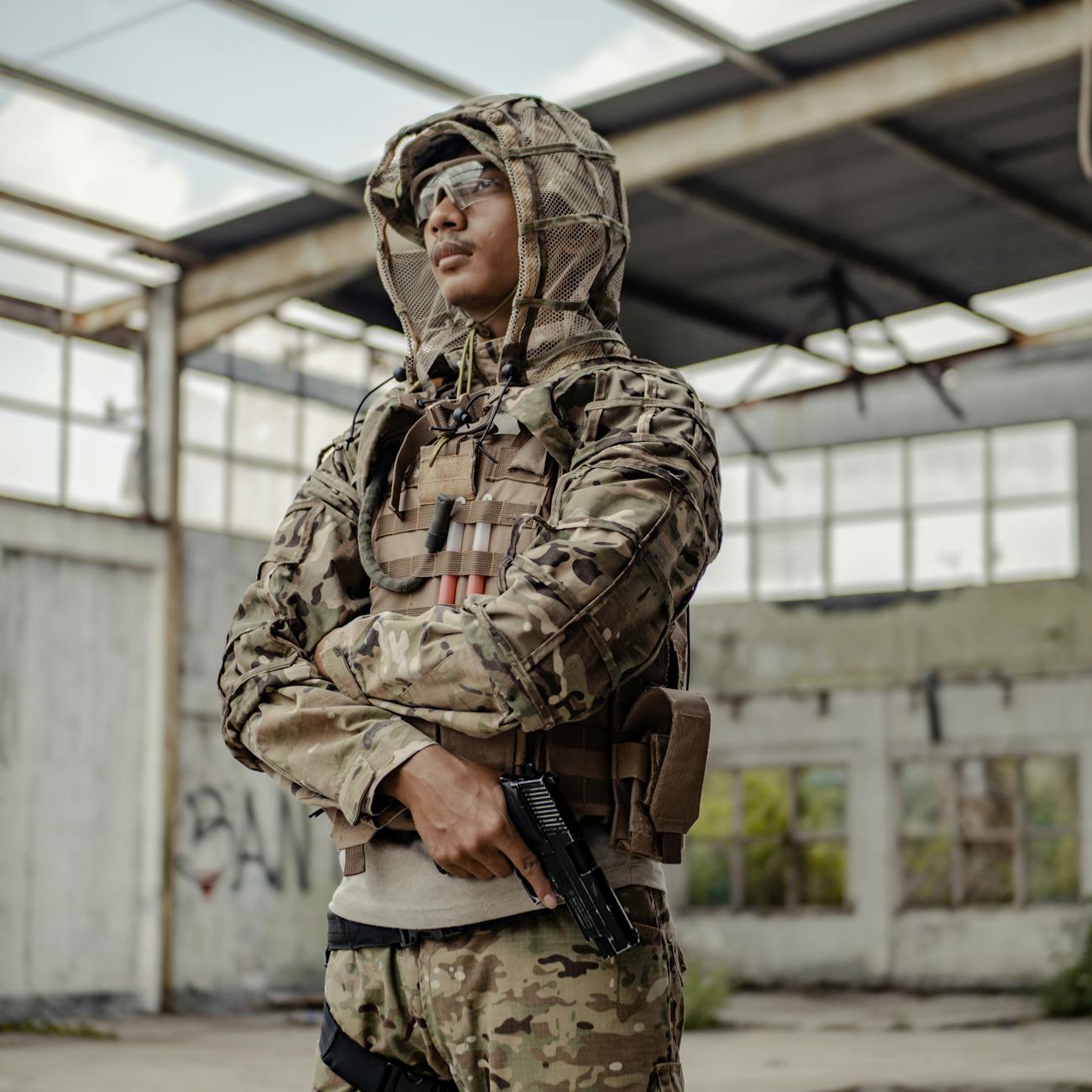
Fundamentals of Military Strategy
Military strategy is a crucial aspect of warfare, encompassing the planning, coordination, and execution of military operations to achieve specific objectives. In the course "Certificate in Military Planning," students will gain a comprehensive understanding of the key terms and vocabulary essential to developing effective military strategies. Let's delve into these fundamental concepts in detail.
Strategy
Strategy refers to the overarching plan developed to achieve a specific goal or objective. In the military context, strategy involves the allocation of resources, deployment of forces, and coordination of actions to defeat an adversary or accomplish a mission. It encompasses both the long-term vision and the short-term tactics required to achieve success.
Tactics
Tactics are the specific actions or maneuvers used to achieve objectives on the battlefield. While strategy focuses on the overall plan, tactics involve the detailed execution of that plan at the operational level. Tactics include movements, formations, and engagements designed to outmaneuver or outfight the enemy in a specific situation.
Operational Art
Operational art is the application of creative and critical thinking to develop strategies and plans that link tactical actions to strategic objectives. It involves the design and conduct of campaigns to achieve operational and strategic goals. Operational art bridges the gap between strategy and tactics, ensuring that military operations contribute effectively to the overall mission.
Doctrine
Doctrine refers to the fundamental principles that guide military forces in their operations. It provides a framework for decision-making and standardizes practices across the armed forces. Military doctrine is based on historical lessons, best practices, and the unique characteristics of a nation's military forces. It ensures unity of effort and coherence in military operations.
Center of Gravity
The center of gravity is a concept from military theory that identifies the key factor or capability that, if destroyed or neutralized, will lead to the enemy's defeat. It is the source of an opponent's strength or power and represents the focal point for military action. Understanding the center of gravity is essential for developing effective strategies to achieve victory.
Lines of Operation
Lines of operation are the paths along which military forces move and operate to achieve their objectives. These lines connect different elements of the force and link tactical actions to strategic goals. By controlling and exploiting lines of operation, commanders can shape the battlefield, control key terrain, and influence the enemy's decision-making process.
Force Multiplier
A force multiplier is any factor that increases the effectiveness of military forces beyond their inherent capabilities. Force multipliers can include technology, intelligence, leadership, training, and other elements that enhance the combat power of a force. By leveraging force multipliers, commanders can achieve superior results with fewer resources.
Decisive Point
A decisive point is a critical location, event, or action on the battlefield that, if successfully exploited, can lead to victory. It is a key juncture where the outcome of a battle or campaign hinges. Identifying and seizing decisive points is essential for gaining a strategic advantage and defeating the enemy.
Command and Control
Command and control (C2) refers to the exercise of authority and direction over military forces to achieve mission success. It involves the coordination of personnel, equipment, information, and resources to ensure unity of effort. Effective command and control systems enable commanders to make timely decisions and adapt to changing circumstances on the battlefield.
Logistics
Logistics is the process of planning, organizing, and supplying military forces with the necessary resources to sustain operations. It encompasses the transportation of personnel, equipment, and supplies, as well as the maintenance of infrastructure and facilities. Logistics is essential for maintaining combat effectiveness and supporting prolonged military campaigns.
Intelligence
Intelligence is information collected, analyzed, and disseminated to support military decision-making. It includes data on enemy capabilities, intentions, and vulnerabilities, as well as information on the operational environment. Intelligence enables commanders to make informed decisions, anticipate enemy actions, and exploit opportunities on the battlefield.
Counterinsurgency
Counterinsurgency (COIN) is the military, political, and economic effort to defeat an insurgency and establish stability in a conflict-affected area. COIN operations focus on winning the support of the local population, isolating insurgents, and addressing the root causes of the conflict. Effective COIN strategies require a comprehensive approach that integrates military and non-military efforts.
Hybrid Warfare
Hybrid warfare is a blend of conventional, irregular, cyber, and informational tactics used by state and non-state actors to achieve their objectives. It combines military force with political, economic, and psychological means to influence and control adversaries. Hybrid warfare challenges traditional military strategies and requires adaptive and flexible responses.
Asymmetric Warfare
Asymmetric warfare involves the use of unconventional tactics and strategies by weaker actors to exploit the vulnerabilities of stronger opponents. It leverages surprise, deception, and irregular tactics to offset the technological and numerical advantages of conventional forces. Asymmetric warfare poses unique challenges for military planners and requires innovative approaches to counter.
Mission Command
Mission command is a leadership philosophy that empowers subordinates to make decisions based on the commander's intent. It emphasizes trust, initiative, and decentralized decision-making to adapt to complex and rapidly changing environments. Mission command enables agile and responsive military operations by fostering creativity and flexibility at all levels of command.
Combined Arms
Combined arms is the integration of different combat arms, such as infantry, armor, artillery, and air support, to achieve complementary and mutually reinforcing effects on the battlefield. It involves coordinating the actions of multiple units and weapon systems to maximize combat power and exploit enemy weaknesses. Combined arms operations are essential for achieving decisive victories in modern warfare.
Joint Operations
Joint operations involve the coordinated use of military forces from different services, such as the Army, Navy, Air Force, and Marines, to achieve common objectives. Joint operations leverage the unique capabilities of each service to create synergies and enhance overall effectiveness. Joint planning, training, and execution are essential for success in modern military campaigns.
Strategic Communication
Strategic communication is the deliberate use of communication tools and techniques to influence perceptions, attitudes, and behaviors in support of military objectives. It involves crafting messages, engaging with key audiences, and shaping the information environment to gain a strategic advantage. Effective strategic communication is essential for winning hearts and minds in conflict zones.
Information Operations
Information operations are activities designed to influence, disrupt, or exploit the information environment to achieve military goals. They encompass psychological operations, electronic warfare, cyber operations, and other tools to shape perceptions and behavior. Information operations play a critical role in modern warfare, where information and communication technologies are ubiquitous.
Decision Support
Decision support is the process of providing commanders with timely and relevant information to facilitate decision-making. It involves collecting, analyzing, and presenting data in a format that enables leaders to assess options and make informed choices. Decision support systems help commanders navigate uncertainty, complexity, and ambiguity in military operations.
Risk Management
Risk management is the systematic process of identifying, assessing, and mitigating risks to mission success. It involves evaluating threats, vulnerabilities, and consequences to develop strategies for minimizing or accepting risk. Effective risk management enables commanders to make informed decisions under uncertainty and prioritize resources effectively.
Escalation Control
Escalation control is the management of conflict to prevent its escalation to higher levels of violence or intensity. It involves setting boundaries, communicating intentions, and controlling the use of force to avoid unintended consequences. Escalation control is essential for managing crises, deterring aggression, and de-escalating conflicts before they spiral out of control.
Strategic Planning
Strategic planning is the process of developing long-term visions, goals, and objectives to guide military operations. It involves analyzing the strategic environment, identifying challenges and opportunities, and formulating strategies to achieve desired outcomes. Strategic planning provides a roadmap for allocating resources, shaping policies, and adapting to changing circumstances.
Force Projection
Force projection is the ability to rapidly deploy and sustain military forces in distant theaters of operation. It involves the movement of personnel, equipment, and supplies to support military missions across the globe. Force projection capabilities enable nations to respond to crises, deter aggression, and project power in support of national interests.
Power Projection
Power projection is the ability to use military force to influence events and shape outcomes in a strategic manner. It involves demonstrating credibility, resolve, and capability to deter adversaries and reassure allies. Power projection capabilities enable nations to project strength, secure interests, and maintain stability in a volatile international environment.
Strategic Deterrence
Strategic deterrence is the use of military capabilities to dissuade adversaries from taking hostile actions. It relies on the credible threat of retaliation or punishment to deter aggression and maintain peace. Strategic deterrence strategies aim to convince potential adversaries that the costs of conflict outweigh the benefits, thereby preventing conflict escalation.
Strategic Surprise
Strategic surprise is the sudden and unexpected introduction of a new capability, tactic, or strategy that undermines an adversary's defenses or expectations. It involves exploiting vulnerabilities, deceiving opponents, and achieving decisive results through unconventional means. Strategic surprise can disrupt enemy plans, seize the initiative, and create opportunities for victory.
Strategic Flexibility
Strategic flexibility is the ability to adapt and respond to changing circumstances, threats, and opportunities in a dynamic environment. It involves maintaining a range of options, capabilities, and responses to address evolving challenges. Strategic flexibility enables military forces to exploit uncertainty, surprise adversaries, and achieve strategic success in complex and unpredictable situations.
Strategic Resilience
Strategic resilience is the capacity to withstand and recover from shocks, disruptions, and setbacks in military operations. It involves building redundancy, diversity, and adaptability into plans and systems to mitigate risks and enhance survivability. Strategic resilience enables forces to endure adversity, continue operations, and achieve mission success under adverse conditions.
Strategic Planning Process
The strategic planning process is a systematic approach to developing, implementing, and evaluating strategies to achieve organizational objectives. It involves defining mission and vision, conducting situational analysis, setting goals and objectives, formulating strategies, and monitoring progress. The strategic planning process provides a structured framework for aligning resources, prioritizing actions, and adapting to changing circumstances.
Strategic Vision
A strategic vision is a compelling and aspirational statement that defines the desired future state of an organization. It outlines the goals, values, and priorities that guide decision-making and actions. A strategic vision inspires and motivates stakeholders, aligns efforts toward common objectives, and provides a roadmap for achieving success.
Situational Awareness
Situational awareness is the ability to perceive, comprehend, and anticipate the operational environment to make informed decisions. It involves collecting and analyzing information on threats, opportunities, and constraints to assess the situation effectively. Situational awareness enables commanders to understand the context, adapt to changing conditions, and exploit emerging trends in military operations.
Decision Superiority
Decision superiority is the advantage gained by commanders who can make better and faster decisions than their adversaries. It involves collecting relevant information, analyzing options, and implementing decisions effectively to outmaneuver opponents. Decision superiority enables commanders to seize opportunities, exploit weaknesses, and shape the outcome of military engagements.
Strategic Communication Plan
A strategic communication plan is a comprehensive framework for coordinating and executing communication activities to achieve organizational goals. It involves defining objectives, identifying key audiences, crafting messages, selecting channels, and evaluating outcomes. A strategic communication plan ensures consistency, clarity, and impact in communicating with internal and external stakeholders.
Operational Risk Management
Operational risk management is the process of identifying, assessing, and controlling risks in military operations to minimize losses and achieve mission success. It involves analyzing threats, vulnerabilities, and consequences to develop risk mitigation strategies. Operational risk management enables commanders to make informed decisions, prioritize resources, and safeguard personnel and assets in complex and hazardous environments.
Strategic Leadership
Strategic leadership is the ability to envision, inspire, and execute strategies that achieve organizational objectives. It involves setting direction, aligning resources, and motivating personnel to achieve shared goals. Strategic leaders demonstrate vision, integrity, and resilience in guiding organizations through uncertainty and adversity.
Strategic Alignment
Strategic alignment is the process of ensuring that organizational goals, resources, and actions are coordinated and in harmony with strategic objectives. It involves aligning structures, processes, and systems to support strategic priorities and initiatives. Strategic alignment fosters unity of effort, coherence, and effectiveness in pursuing organizational goals.
Strategic Thinking
Strategic thinking is the ability to analyze complex problems, anticipate future trends, and develop innovative solutions to achieve strategic objectives. It involves considering multiple perspectives, balancing competing interests, and integrating diverse inputs to inform decisions. Strategic thinking enables leaders to anticipate challenges, seize opportunities, and create sustainable competitive advantages.
Strategic Objectives
Strategic objectives are specific, measurable goals that guide the allocation of resources and the implementation of strategies to achieve desired outcomes. They define the results or impacts that an organization aims to achieve within a specified timeframe. Strategic objectives provide a clear focus, direction, and accountability for actions aimed at realizing the organization's vision.
Strategic Partnerships
Strategic partnerships are collaborative relationships between organizations that share common goals, values, and interests. They involve pooling resources, sharing risks, and leveraging complementary strengths to achieve mutual benefits. Strategic partnerships enable organizations to access new markets, technologies, and capabilities, and enhance their competitiveness in an increasingly interconnected world.
Strategic Planning Tools
Strategic planning tools are techniques and methodologies used to facilitate the development and implementation of strategies. They include frameworks, models, and software applications that help organizations analyze their external environment, assess internal capabilities, and formulate strategic plans. Strategic planning tools provide structure, clarity, and rigor to the strategic planning process.
Strategic Communication Strategy
A strategic communication strategy is a comprehensive plan that outlines how an organization will communicate its messages to internal and external stakeholders. It involves defining communication goals, identifying target audiences, crafting key messages, selecting communication channels, and evaluating outcomes. A strategic communication strategy ensures consistency, clarity, and impact in conveying information and engaging stakeholders.
Strategic Planning Framework
A strategic planning framework is a structured approach to developing, implementing, and evaluating strategies to achieve organizational objectives. It provides a systematic process for defining mission and vision, conducting situational analysis, setting goals and objectives, formulating strategies, and monitoring progress. A strategic planning framework ensures alignment, coherence, and effectiveness in strategic planning efforts.
Strategic Leadership Development
Strategic leadership development is the process of cultivating the knowledge, skills, and abilities of leaders to envision, inspire, and execute strategies effectively. It involves providing training, coaching, and mentoring to develop strategic thinking, decision-making, and communication skills. Strategic leadership development prepares leaders to navigate complexity, uncertainty, and change in dynamic environments.
Strategic Management Process
The strategic management process is a systematic approach to formulating, implementing, and evaluating strategies to achieve organizational objectives. It involves analyzing the external environment, assessing internal capabilities, setting goals and objectives, formulating strategies, and monitoring progress. The strategic management process provides a structured framework for aligning resources, prioritizing actions, and adapting to changing circumstances.
Strategic Planning Models
Strategic planning models are theoretical frameworks that guide organizations in developing and implementing strategies to achieve their goals. They provide a structured approach to analyzing the external environment, assessing internal capabilities, setting goals and objectives, formulating strategies, and monitoring progress. Strategic planning models help organizations make informed decisions, prioritize resources, and adapt to changing circumstances.
Strategic Communication Campaign
A strategic communication campaign is a coordinated series of communication activities designed to achieve specific goals and objectives. It involves defining communication objectives, identifying target audiences, crafting key messages, selecting communication channels, and evaluating outcomes. A strategic communication campaign aims to influence perceptions, attitudes, and behaviors to support organizational goals.
Strategic Planning Process Steps
The strategic planning process steps are the sequential actions involved in developing, implementing, and evaluating strategies to achieve organizational objectives. They typically include defining mission and vision, conducting situational analysis, setting goals and objectives, formulating strategies, and monitoring progress. The strategic planning process steps provide a structured roadmap for aligning resources, prioritizing actions, and adapting to changing circumstances.
Strategic Leadership Skills
Strategic leadership skills are the competencies and qualities that enable leaders to envision, inspire, and execute strategies effectively. They include critical thinking, visioning, decision-making, communication, and adaptability. Strategic leadership skills empower leaders to navigate complexity, uncertainty, and change, and guide organizations toward success in dynamic environments.
Strategic Planning Definition
The strategic planning definition is the process of developing and implementing strategies to achieve organizational objectives. It involves analyzing the external environment, assessing internal capabilities, setting goals and objectives, formulating strategies, and monitoring progress. Strategic planning provides a structured framework for aligning resources, prioritizing actions, and adapting to changing circumstances.
Strategic Communication Techniques
Strategic communication techniques are methods and tools used to convey messages effectively to internal and external stakeholders. They include storytelling, framing, persuasion, and audience analysis. Strategic communication techniques help organizations craft compelling messages, engage target audiences, and achieve desired outcomes in communication efforts.
Strategic Planning Process Model
A strategic planning process model is a visual representation of the steps involved in developing, implementing, and evaluating strategies to achieve organizational objectives. It typically includes defining mission and vision, conducting situational analysis, setting goals and objectives, formulating strategies, and monitoring progress. A strategic planning process model provides a structured roadmap for aligning resources, prioritizing actions, and adapting to changing circumstances.
Strategic Leadership Qualities
Strategic leadership qualities are the characteristics and attributes that distinguish effective leaders in envisioning, inspiring, and executing strategies. They include integrity, vision, resilience, empathy, and adaptability. Strategic leadership qualities enable leaders to build trust, inspire commitment, and drive organizational success in complex and challenging environments.
Strategic Planning Tools and Techniques
Strategic planning tools and techniques are resources and methods used to facilitate the development and implementation of strategies. They include SWOT analysis, scenario planning, balanced scorecard, and risk assessment. Strategic planning tools and techniques help organizations analyze their external environment, assess internal capabilities, and formulate strategic plans to achieve desired outcomes.
Strategic Communication Plan Template
A strategic communication plan template is a document that outlines the key components of a communication strategy, such as objectives, key messages, target audiences, communication channels, and evaluation metrics. It provides a structured framework for developing and implementing communication plans to achieve organizational goals. A strategic communication plan template ensures consistency, clarity, and impact in conveying messages to stakeholders.
Strategic Planning Process Steps with Example
The strategic planning process steps with example are the sequential actions involved in developing, implementing, and evaluating strategies to achieve organizational objectives, illustrated through a practical scenario. They typically include defining mission and vision, conducting situational analysis, setting goals and objectives, formulating strategies, and monitoring progress.
Key takeaways
- In the course "Certificate in Military Planning," students will gain a comprehensive understanding of the key terms and vocabulary essential to developing effective military strategies.
- In the military context, strategy involves the allocation of resources, deployment of forces, and coordination of actions to defeat an adversary or accomplish a mission.
- Tactics include movements, formations, and engagements designed to outmaneuver or outfight the enemy in a specific situation.
- Operational art is the application of creative and critical thinking to develop strategies and plans that link tactical actions to strategic objectives.
- Military doctrine is based on historical lessons, best practices, and the unique characteristics of a nation's military forces.
- The center of gravity is a concept from military theory that identifies the key factor or capability that, if destroyed or neutralized, will lead to the enemy's defeat.
- By controlling and exploiting lines of operation, commanders can shape the battlefield, control key terrain, and influence the enemy's decision-making process.