
Implementing AI Solutions in Welding Industry
Artificial Intelligence in the welding sector is reshaping how manufacturers design, monitor, and control processes. To master this transformation, learners must become fluent in a core set of terms that describe the technologies, methods, …
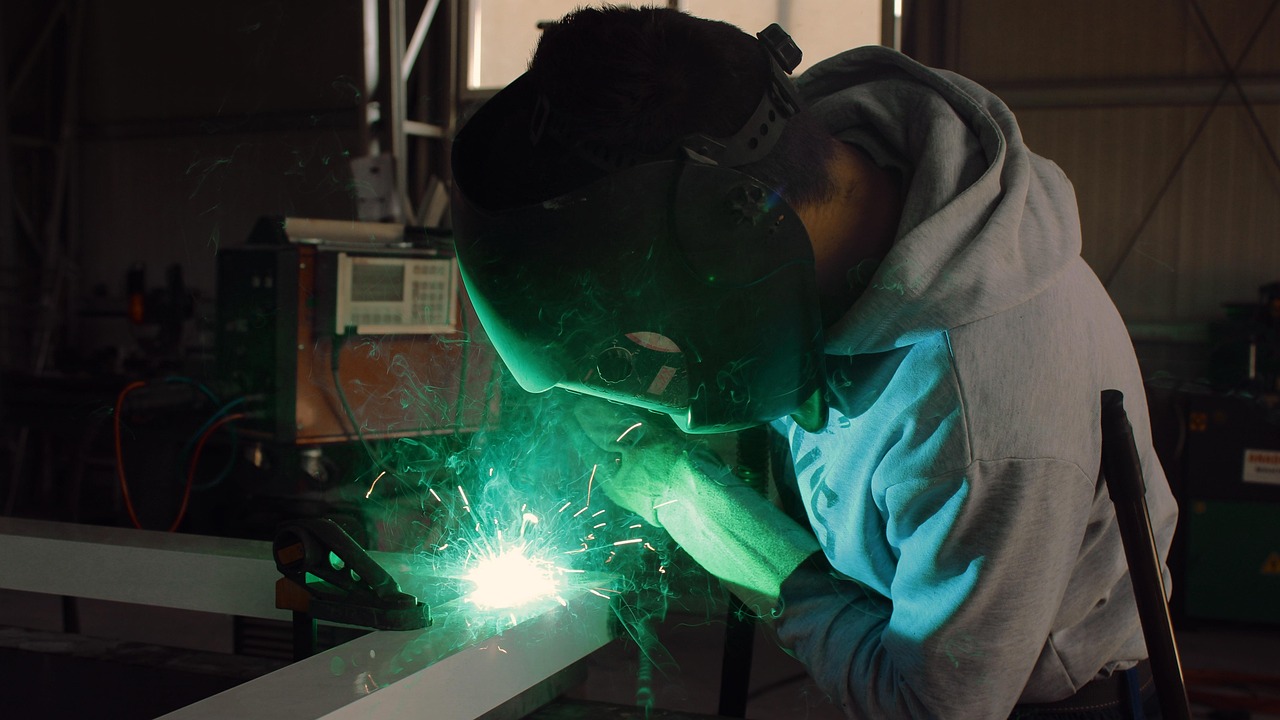
Artificial Intelligence in the welding sector is reshaping how manufacturers design, monitor, and control processes. To master this transformation, learners must become fluent in a core set of terms that describe the technologies, methods, and challenges unique to welding applications. The following exposition defines each term, illustrates its relevance with practical examples, and highlights common pitfalls that can arise during implementation. The language is deliberately learner‑friendly, employing clear definitions, real‑world scenarios, and step‑by‑step insights so that practitioners can apply the concepts directly on the shop floor or in research labs.
Machine Learning refers to algorithms that enable computers to improve performance on a specific task through experience rather than explicit programming. In welding, machine learning models are trained on historical data such as voltage waveforms, arc length measurements, and defect logs. Once trained, the models can predict outcomes like weld penetration depth or the likelihood of porosity. A typical workflow begins with data collection, proceeds to preprocessing, then to model selection, training, validation, and finally deployment. The distinction between supervised, unsupervised, and reinforcement learning is crucial because each paradigm addresses a different class of welding problems.
Supervised Learning is the most widely used approach for quality prediction. It requires a labeled dataset where each input record (for example, a set of sensor readings) is paired with a known output (such as “defect present” or “no defect”). Algorithms such as linear regression, support vector machines, and decision trees learn the mapping from inputs to outputs. For instance, a welding engineer might collect 10,000 arcs, label each with the observed defect type, and then train a decision‑tree classifier to automatically flag future arcs that exceed the defect threshold. The key challenge is ensuring that the labels are accurate and representative of the full range of operating conditions.
Unsupervised Learning does not rely on explicit labels; instead, it discovers hidden structures in the data. Clustering techniques like k‑means or hierarchical clustering can group similar weld parameters together, revealing operating regimes that produce consistent quality. Dimensionality‑reduction methods such as principal component analysis (PCA) help visualize high‑dimensional sensor data on two‑dimensional plots, making it easier to spot outliers that may indicate equipment malfunction or operator error. In practice, an unsupervised model might be used to detect a drift in the power supply that is not captured by standard alarms.
Reinforcement Learning (RL) is an emerging paradigm for process control. In RL, an agent interacts with the welding environment, selects actions (e.G., Adjusting current, voltage, or travel speed), and receives a reward based on the resulting weld quality. Over many episodes, the agent learns a policy that maximizes cumulative reward, effectively automating the tuning of process parameters. A practical example involves a robotic welding cell where the RL agent continuously adjusts the torch angle to minimize spatter while maintaining required penetration. RL is attractive because it can adapt to new materials or joint designs without retraining a traditional supervised model, but it also demands careful safety constraints to prevent damage during exploration.
Neural Network is a family of models inspired by the structure of the human brain. They consist of layers of interconnected nodes that transform input data through weighted sums and nonlinear activation functions. In welding, feed‑forward neural networks can approximate complex relationships between arc voltage, current, and resulting bead geometry. For example, a three‑layer network may predict the bead width from a set of real‑time sensor readings, enabling on‑the‑fly adjustments. Training neural networks requires large datasets and careful regularization to avoid overfitting, especially when the number of parameters exceeds the amount of available data.
Convolutional Neural Network (CNN) excels at processing image data. In welding inspection, high‑resolution infrared or visible‑light images of the weld pool are fed into a CNN to detect defects such as cracks, undercuts, or lack of fusion. The convolutional layers automatically learn spatial filters that highlight edges, textures, and shapes associated with each defect class. A typical deployment uses a camera mounted on a robotic arm that captures images after each pass; the CNN processes the image in near‑real‑time and raises an alarm if a defect probability exceeds a preset threshold. One must consider lighting conditions, lens distortion, and image resolution, as these factors directly affect the CNN’s accuracy.
Recurrent Neural Network (RNN) and its advanced variant, long short‑term memory (LSTM), handle sequential data. Welding processes generate time‑series signals—voltage, current, and acoustic emissions—that evolve over the duration of the arc. An LSTM can learn temporal dependencies, such as the effect of a sudden voltage spike on subsequent droplet formation. By feeding the raw waveform into an LSTM, the model can forecast the likelihood of a defect several milliseconds before it becomes observable, giving the control system a valuable window for corrective action. However, RNNs are computationally intensive, and careful tuning of sequence length and batch size is required to achieve stable training.
Transfer Learning leverages knowledge from a pre‑trained model to accelerate learning on a new but related task. In welding, a CNN trained on a large dataset of generic metal surface images can be fine‑tuned on a smaller dataset of weld‑specific images. This reduces the amount of labeled data needed and often improves performance on the target task. Practitioners typically freeze the early layers of the network (which capture generic edge detectors) and retrain only the final classification layers on the welding data. Transfer learning is especially useful for small manufacturers that lack the resources to collect thousands of defect images.
Computer Vision encompasses the techniques used to extract meaningful information from visual data. In the context of welding, computer‑vision pipelines may include image acquisition, preprocessing (noise reduction, contrast enhancement), segmentation (isolating the weld bead from the background), feature extraction (calculating shape descriptors), and classification (identifying defect types). A practical implementation might involve a line‑scan camera that captures a continuous image of the bead as the torch moves; the software then extracts the bead profile, compares it to a template, and flags deviations beyond tolerance. Robust computer‑vision systems must handle variations in illumination, surface reflectivity, and welding fumes.
Digital Twin is a virtual replica of a physical welding system that mirrors its behavior in real time. The twin receives sensor data from the actual machine, runs physics‑based or data‑driven models, and predicts outcomes such as temperature distribution or residual stress. Engineers can experiment with parameter changes in the digital twin before applying them on the shop floor, reducing risk and material waste. For example, a digital twin of a multi‑pass pipe welding operation can simulate the effect of a new filler metal on the final joint strength, allowing the engineer to select the optimal configuration without costly trial runs. Maintaining synchronization between the physical system and its twin is a key challenge, requiring low‑latency communication and accurate modeling.
Predictive Maintenance uses AI to anticipate equipment failures before they occur. Sensors mounted on welding power supplies, transformers, and cooling systems generate streams of data that feed into anomaly‑detection algorithms. A common approach is to train a one‑class support vector machine on normal operating data; when the model detects a deviation, it triggers a maintenance alert. In practice, a welding line equipped with vibration and temperature sensors might predict a transformer overheating event several hours in advance, allowing the maintenance crew to replace the component during scheduled downtime. Predictive‑maintenance programs must balance false alarms against missed failures to avoid unnecessary interruptions.
Quality Inspection in welding traditionally relies on visual examination and non‑destructive testing (NDT) methods such as ultrasonic testing (UT) or radiography. AI augments these techniques by automating defect detection and quantifying defect severity. For example, a deep‑learning model can analyze ultrasonic A‑scan data to locate internal cracks with millimeter precision, reducing the need for manual interpretation. Similarly, a reinforcement‑learning controller can adjust welding speed in real time to maintain a target bead shape, ensuring consistent quality across varying joint geometries. Integration with existing inspection standards (e.G., ISO 5817) is essential to achieve regulatory compliance.
Process Optimization applies AI to identify the most efficient set of welding parameters that meet design specifications while minimizing energy consumption and material waste. Multi‑objective optimization algorithms, such as genetic algorithms or particle‑swarm optimization, explore the parameter space (current, voltage, shielding gas flow, travel speed) to find Pareto‑optimal solutions. A practical case study might involve optimizing a robotic GMAW (gas metal arc welding) process for thin‑sheet aluminum, where the goal is to reduce spatter and heat input without sacrificing joint strength. The optimizer evaluates thousands of simulated runs, guided by a surrogate model trained on a limited set of real experiments.
Safety Monitoring leverages AI to protect operators from hazards associated with welding—excessive UV radiation, fumes, and electric shock. Wearable sensors can detect physiological indicators (heart rate, skin temperature) and environmental parameters (ambient gas concentration). A classification model can infer whether a worker is at risk of heat stress based on a combination of sensor inputs and contextual data (e.G., Shift length). Alerts are then sent to a supervisor’s tablet, prompting a break or ventilation adjustment. Ensuring privacy and data security for personal health information is a critical consideration in deploying such systems.
Edge Computing brings AI inference close to the data source, reducing latency and bandwidth usage. In welding environments, edge devices such as industrial‑grade PCs or programmable logic controllers (PLCs) host lightweight neural‑network models that process sensor streams locally. For instance, an edge device may run a CNN that classifies weld bead images within milliseconds, enabling immediate corrective actions without sending data to a cloud server. The trade‑off is limited computational resources, which necessitates model compression techniques like quantization or pruning. Selecting the appropriate hardware (GPU, FPGA, or ASIC) depends on the required throughput and power constraints.
Cloud Computing offers scalable storage and compute resources for training large models and aggregating data from multiple welding lines. A cloud‑based platform can host a central repository of weld‑parameter datasets, allowing engineers to share best practices across facilities. Model training pipelines often use distributed frameworks such as TensorFlow or PyTorch, leveraging dozens of GPU instances to accelerate convergence. After training, the resulting models can be exported to edge devices for inference. Data security, latency, and regulatory compliance (e.G., GDPR) must be addressed when transferring proprietary welding data to the cloud.
Data Acquisition is the first step in any AI project. It involves selecting appropriate sensors, defining sampling rates, and establishing communication protocols. Common sensors in welding include voltage and current probes, infrared pyrometers for temperature measurement, acoustic emission microphones, high‑speed cameras, and laser scanners for geometry capture. The sampling frequency must be high enough to capture the dynamics of the arc; for example, a 20 kHz sampling rate is typical for capturing voltage fluctuations that influence droplet formation. Data acquisition hardware must be synchronized across channels to ensure temporal alignment, which is essential for accurate feature extraction.
Data Preprocessing prepares raw sensor streams for analysis. Typical steps include filtering (low‑pass, high‑pass, or band‑stop to remove electrical noise), normalization (scaling variables to a common range), and handling missing values (interpolation or imputation). In welding, a common preprocessing task is to segment continuous data into individual weld passes using a trigger signal from the robotic controller. Each segment is then labeled with the corresponding joint geometry and material type. Preprocessing pipelines are often implemented in Python or MATLAB, but industrial deployments may use compiled languages for real‑time performance.
Feature Extraction transforms preprocessed data into a compact representation that captures the essence of the welding phenomenon. Time‑domain features include statistical moments (mean, variance, skewness), peak‑to‑peak amplitude, and zero‑crossing rate. Frequency‑domain features are obtained via Fourier transform or wavelet analysis, revealing dominant frequencies associated with arc instability. For image data, texture descriptors such as gray‑level co‑occurrence matrix (GLCM) metrics or histogram of oriented gradients (HOG) may be used. Selecting informative features reduces the dimensionality of the problem and improves model interpretability.
Feature Selection is the process of choosing a subset of features that contribute most to predictive performance. Techniques such as recursive feature elimination, mutual information, or LASSO regularization help identify redundant or noisy variables. In welding, a feature‑selection study might reveal that the combination of arc voltage variance and shielding‑gas flow rate predicts porosity better than any single sensor reading. Reducing the feature set also eases the computational load on edge devices, enabling faster inference.
Model Validation assesses how well a trained model generalizes to unseen data. Common validation strategies include k‑fold cross‑validation, hold‑out test sets, and bootstrapping. Performance metrics vary with the problem type: Classification tasks use accuracy, precision, recall, and F1‑score; regression tasks use mean squared error, mean absolute error, and R‑squared. In welding, a classifier that predicts defect type may achieve high accuracy but low recall for rare defects, indicating a need for class‑imbalance handling (e.G., Using SMOTE or weighted loss functions). Validation must be performed on data that reflects the full range of operating conditions, including different materials, joint designs, and environmental factors.
Model Deployment moves a validated model from the development environment to the production line. Deployment steps include exporting the model in a portable format (ONNX, TensorFlow Lite), integrating it with the control system’s software stack, and establishing monitoring hooks to track performance over time. A typical deployment scenario involves a robotic welding cell where the PLC queries the edge device for the latest prediction before each pass. If the model predicts a high defect probability, the controller may automatically adjust welding parameters or pause the operation for human inspection. Continuous‑learning pipelines can retrain the model periodically as new data becomes available, but care must be taken to avoid “model drift” that degrades performance.
Explainability addresses the need to understand why an AI model makes a particular decision. In safety‑critical welding applications, stakeholders often require transparent reasoning to trust automated systems. Techniques such as SHAP (Shapley Additive Explanations) or LIME (Local Interpretable Model‑agnostic Explanations) can highlight which input features contributed most to a prediction. For a CNN detecting cracks, a heat‑map overlay (Grad‑CAM) can show the regions of the image that influenced the decision. Explainability not only builds confidence but also assists in root‑cause analysis when a defect is flagged.
Model Interpretability differs from explainability in that it focuses on building models that are inherently understandable. Simple models like decision trees or linear regression provide clear relationships between inputs and outputs, making them suitable for early‑stage pilot projects. However, they may lack the capacity to capture the nonlinear interactions present in complex welding phenomena. A hybrid approach may combine an interpretable model for high‑level decision making with a deep‑learning model for fine‑grained defect detection, offering a balance between performance and transparency.
Data Governance defines policies for data ownership, quality, security, and compliance. Welding data often includes proprietary process parameters and may be subject to export controls or industry standards. Establishing a data‑governance framework ensures that data is collected consistently, stored securely, and accessed only by authorized personnel. Metadata—information about the data such as sensor type, calibration date, and location—must be recorded to preserve traceability. Robust governance also facilitates reproducibility of AI experiments, a requirement for certification bodies.
Regulatory Compliance is mandatory for many welding applications, especially in aerospace, automotive, and pressure‑vessel manufacturing. Standards such as ISO 3834 (quality requirements for welding) and ASME Section IX (welding qualifications) dictate documentation and testing procedures. AI‑driven inspection systems must be validated against these standards, often requiring a formal verification plan that demonstrates equivalence or superiority to traditional methods. For example, a deep‑learning model used for ultrasonic flaw detection must undergo a statistical performance assessment to prove that its false‑negative rate meets the acceptable risk level defined by the standard.
Scalability refers to the ability of an AI solution to handle increasing data volumes, more welding lines, or additional process variations without a loss of performance. Cloud‑based training pipelines naturally scale by adding compute nodes, while edge deployments must consider resource constraints. A scalable architecture might involve a hierarchical system where edge devices perform real‑time inference, a regional server aggregates results for fleet‑wide analytics, and a central cloud platform orchestrates model updates. Horizontal scaling (adding more devices) and vertical scaling (enhancing device capabilities) both play roles in achieving robust scalability.
Latency is the time delay between data acquisition and the generation of a decision. In welding control loops, latency must be kept below the time constant of the process to ensure effective intervention. Real‑time defect detection typically requires sub‑100 ms latency; otherwise, the defect may already be embedded in the weld. Edge computing reduces latency by eliminating the round‑trip to a remote server, but developers must still account for processing overhead, sensor readout time, and communication bus delays. Profiling tools can measure end‑to‑end latency and identify bottlenecks for optimization.
Robustness describes how well an AI system tolerates variations in input data, such as sensor drift, environmental noise, or unexpected operating conditions. A robust welding model should maintain performance when the shielding‑gas composition changes slightly or when ambient temperature fluctuates. Techniques to improve robustness include data augmentation (adding synthetic noise during training), adversarial training (exposing the model to worst‑case perturbations), and regularization (penalizing overly complex weights). Robustness testing involves stress‑testing the model with edge‑case scenarios that may not have been present in the original training set.
Domain Adaptation tackles the problem of transferring a model trained on one set of welding conditions to another. For example, a model trained on mild‑steel GMAW data may perform poorly on stainless‑steel GTAW (gas tungsten arc welding) due to differences in arc physics and heat input. Domain‑adaptation methods such as fine‑tuning on a small target dataset, or using adversarial networks to align feature distributions, enable the model to generalize across domains. Successful domain adaptation reduces the need for extensive data collection for each new material or joint configuration.
Data Augmentation creates additional training examples by applying transformations to existing data. In image‑based weld inspection, augmentation may involve rotating, flipping, scaling, or adjusting brightness of weld images to simulate different camera angles or lighting conditions. For time‑series sensor data, augmentation techniques include adding Gaussian noise, time‑warping, or cropping segments. Augmentation expands the effective dataset size, helping prevent overfitting and improving the model’s ability to handle real‑world variability.
Model Compression reduces the size and computational demand of neural networks, making them suitable for deployment on resource‑constrained edge devices. Techniques include weight pruning (removing low‑importance connections), quantization (reducing precision from 32‑bit floating point to 8‑bit integer), and knowledge distillation (training a smaller “student” model to mimic the outputs of a larger “teacher” model). A compressed CNN for weld‑defect detection might shrink from 50 MB to 5 MB while retaining 95 % of the original accuracy, enabling real‑time inference on an industrial PC with limited GPU capability.
Hyperparameter Tuning involves selecting the optimal configuration for model training, such as learning rate, batch size, number of hidden layers, and regularization strength. Automated tuning methods like grid search, random search, or Bayesian optimization can systematically explore the hyperparameter space. In welding applications, hyperparameter tuning may be constrained by the limited size of the training dataset; overly aggressive learning rates can cause divergence, while too small a batch size may lead to noisy gradients. Practitioners often start with a coarse search to identify promising regions, then refine the search with narrower ranges.
Cross‑Validation provides a reliable estimate of model performance by partitioning the dataset into multiple training and validation folds. This approach mitigates the risk of over‑optimistic performance estimates that arise from a single train‑test split. For welding data, stratified cross‑validation is useful when the dataset contains imbalanced classes, such as a small number of crack instances relative to a large number of defect‑free welds. By preserving the class distribution across folds, stratified cross‑validation ensures that each validation set contains representative examples of rare defects.
Class Imbalance occurs when some defect types appear far less frequently than others. Standard loss functions may bias the model toward the majority class, leading to poor detection of critical defects. Solutions include resampling techniques (oversampling minority classes or undersampling majority classes), using class‑weighted loss functions, or employing focal loss, which emphasizes hard‑to‑classify examples. In a welding defect‑classification project, applying SMOTE (Synthetic Minority Over‑sampling Technique) to generate synthetic crack samples can improve recall for the crack class without sacrificing overall accuracy.
Ensemble Methods combine multiple models to improve predictive performance and reduce variance. Common ensembles include bagging (e.G., Random forests), boosting (e.G., XGBoost), and stacking (training a meta‑learner on the outputs of base models). In welding, an ensemble of a decision tree, a support vector machine, and a neural network may achieve higher defect‑prediction accuracy than any single model. Ensembles also provide a measure of uncertainty, as disagreement among base models can signal low confidence in a prediction, prompting human review.
Uncertainty Quantification estimates the confidence of model predictions, which is critical for safety‑critical welding operations. Bayesian neural networks, Monte Carlo dropout, and deep ensembles are popular techniques for quantifying predictive uncertainty. A model that predicts a high probability of porosity with a narrow confidence interval can be trusted to trigger automatic parameter adjustments, whereas a wide interval may indicate the need for operator intervention. Incorporating uncertainty into the control loop helps avoid over‑reacting to spurious predictions.
Real‑Time Monitoring integrates AI models into the continuous data stream of a welding process, providing instantaneous feedback to operators or automated controllers. Real‑time dashboards display key performance indicators such as arc stability, heat input, and defect probability. Alerts are generated when metrics exceed predefined thresholds, allowing corrective actions within seconds. Implementing real‑time monitoring requires low‑latency communication protocols (e.G., Ethernet/IP, OPC UA) and efficient model inference pipelines that can keep up with high‑frequency sensor data.
Batch Processing differs from real‑time monitoring by aggregating data over longer periods for offline analysis. Batch jobs may retrain models nightly, generate performance reports, or conduct root‑cause investigations on a set of defective welds. While batch processing does not provide immediate corrective feedback, it enables deeper insight into long‑term trends, such as gradual wear of a welding torch or seasonal changes in shielding‑gas purity. Combining batch analytics with real‑time monitoring creates a feedback loop where insights from batch runs inform updates to the live inference models.
Integration Architecture describes how AI components connect with existing welding equipment, control systems, and enterprise software. A typical architecture includes sensor layers (data acquisition), a processing layer (edge inference), a communication layer (message brokers like MQTT or industrial fieldbuses), and an application layer (SCADA/HMI dashboards). Standardized interfaces such as OPC UA simplify integration by providing a common data model and security framework. Careful architecture design ensures that AI modules can be added or removed without disrupting the core welding process.
Human‑In‑the‑Loop (HITL) designates systems where human operators retain ultimate authority over decisions. In welding, HITL may manifest as a supervisory interface where the AI suggests parameter adjustments, but the operator approves the change. This approach balances automation benefits with the expertise of skilled welders, especially during the commissioning of new joint designs. HITL also facilitates gradual adoption, as operators can build trust in the AI by observing its recommendations before granting full autonomy.
Automation Level categorizes the extent to which AI controls the welding process. Levels range from advisory (AI provides suggestions) to fully autonomous (AI decides and executes all parameter changes). Selecting an appropriate automation level depends on factors such as process criticality, regulatory constraints, and workforce readiness. For high‑volume, low‑variance production lines, a high automation level may be justified, whereas custom fabrication shops may prefer lower levels to preserve flexibility.
Ethical Considerations are increasingly relevant as AI reshapes labor dynamics and decision‑making authority in manufacturing. Deploying AI in welding can displace certain manual inspection tasks, raising concerns about workforce retraining and job security. Transparent communication about the role of AI, coupled with upskilling programs, helps mitigate resistance. Moreover, bias in training data (e.G., Over‑representing certain material types) can lead to models that unfairly favor specific production lines, potentially violating fairness principles. Ethical AI practices require auditing datasets, documenting model decisions, and establishing governance structures that involve stakeholders from engineering, operations, and management.
Data Privacy becomes a concern when welding data includes proprietary process parameters or personal health information from wearable sensors. Encryption of data in transit and at rest, role‑based access controls, and anonymization techniques protect sensitive information. Compliance with regulations such as GDPR or industry‑specific confidentiality agreements mandates clear data‑handling policies and the ability to purge data upon request. Privacy safeguards must be built into the data pipeline from the moment of acquisition.
Standardization facilitates interoperability between AI tools, welding equipment, and enterprise systems. Open standards such as ISO 15926 for process data exchange, OPC UA for communication, and ONNX for model representation enable vendors to develop compatible solutions. Standardization also supports benchmarking, allowing organizations to compare the performance of different AI models on a common set of welding tasks. Adoption of standards reduces integration effort and future‑proofs investments against technology churn.
Lifecycle Management encompasses the entire lifespan of an AI solution, from concept through retirement. Key phases include data collection, model development, validation, deployment, monitoring, maintenance, and eventual decommissioning. A robust lifecycle plan specifies responsibilities, timelines, and criteria for each phase. For welding, lifecycle management ensures that models remain accurate as equipment ages, new materials are introduced, or regulatory requirements evolve. Regular audits and scheduled retraining cycles are essential components of a sustainable AI program.
Model Retraining addresses the phenomenon of model drift, where the statistical properties of input data change over time, degrading prediction quality. In welding, drift may occur due to wear of electrodes, changes in gas purity, or upgrades to power supplies. A retraining schedule might involve collecting new labeled data every quarter, fine‑tuning the existing model, and redeploying the updated version after validation. Automated pipelines can trigger retraining when monitoring metrics (e.G., Prediction confidence or error rates) exceed predefined thresholds.
Continuous Integration / Continuous Deployment (CI/CD) practices bring software engineering rigor to AI development. Automated testing frameworks verify that new model versions meet performance standards before they are pushed to production. In welding, a CI/CD pipeline may run unit tests on data preprocessing scripts, integration tests on the edge inference module, and performance tests on a simulated welding environment. Successful pipelines reduce the risk of introducing regressions that could compromise weld quality.
Version Control tracks changes to code, model parameters, and datasets. Tools such as Git for source code and DVC (Data Version Control) for data enable reproducibility and collaborative development. For welding AI projects, versioning ensures that a specific model can be tied back to the exact sensor configuration, calibration dates, and material batch used during training. This traceability is essential for audits and for meeting certification requirements that demand evidence of controlled development processes.
Scalable Storage is required to retain large volumes of high‑frequency sensor data and high‑resolution images. Object storage services (e.G., Amazon S3, Azure Blob) provide cost‑effective, durable repositories that can be accessed by both training pipelines and edge devices. Metadata tagging facilitates efficient retrieval, allowing engineers to query data by material type, joint geometry, or defect label. Implementing lifecycle policies that move older data to colder storage tiers helps manage costs while preserving historical records for long‑term analysis.
Latency‑Sensitive Inference describes scenarios where the inference time must meet strict deadlines. In welding, latency‑sensitive inference often occurs in closed‑loop control where the AI must output a parameter adjustment before the next droplet forms (typically within a few milliseconds). Techniques to achieve low latency include using compiled inference engines (e.G., TensorRT), pruning models to reduce layer depth, and deploying on hardware accelerators such as GPUs or specialized AI ASICs. Profiling tools measure the end‑to‑end latency, allowing developers to identify and eliminate bottlenecks.
Batch‑Sensitive Training refers to the need for large, well‑curated datasets to achieve high model accuracy. In welding, acquiring labeled data can be costly because each defect must be verified by an expert inspector or NDT method. Strategies to reduce labeling effort include semi‑supervised learning (leveraging unlabeled data), active learning (prioritizing the most informative samples for labeling), and crowdsourcing within the organization (having trained welders provide quick annotations). Effective batch‑sensitive training balances data quantity, quality, and labeling cost.
Sensor Fusion combines multiple sensor modalities to create a richer representation of the welding process. For example, fusing voltage waveforms, acoustic emissions, and infrared temperature maps can improve defect detection compared to using any single modality alone. Sensor fusion can be performed at the raw data level (early fusion), feature level (mid‑level fusion), or decision level (late fusion). Early fusion often yields the best performance but requires careful synchronization and alignment of sensor streams. Mid‑level fusion offers a compromise, allowing each sensor to be processed independently before combining their extracted features.
Acoustic Emission Monitoring captures high‑frequency sound waves generated by the welding arc and droplet formation. These signals contain information about arc stability, spatter generation, and even crack initiation. Machine‑learning classifiers can be trained on acoustic spectrograms to differentiate between stable and unstable arcs, providing an early warning system that can adjust parameters before a defect manifests. Acoustic sensors are inexpensive and can be retrofitted to existing welding stations, making them an attractive addition to a sensor‑fusion strategy.
Infrared Thermography measures the temperature distribution on the workpiece and surrounding environment. In welding, infrared cameras can track the heat‑affected zone, detect overheating, and infer cooling rates that affect microstructure. By feeding temperature maps into a CNN, the system can predict residual stress patterns or identify regions prone to cracking. Infrared data is especially valuable for high‑heat‑input processes such as welding of thick plates, where traditional sensors may not capture the full thermal profile.
Laser Profiling uses laser scanners to capture the three‑dimensional geometry of the weld bead. The resulting point cloud can be compared against a CAD‑derived target shape, and deviations can be quantified as bead height error, width error, or surface roughness. Machine‑learning regression models can predict bead geometry from process parameters, enabling feed‑forward control that pre‑emptively compensates for expected deviations. Laser profiling systems are often integrated into robotic welding cells where the scanner moves in synchrony with the torch.
Shielding‑Gas Analysis monitors the composition and flow rate of the protective gas used during welding. Deviations in gas purity can lead to porosity or oxidation. Sensors such as mass‑flow controllers and gas‑composition analyzers provide real‑time data that can be fed into anomaly‑detection models. Early detection of a gas‑mixture shift allows the system to trigger an alarm or automatically adjust the flow rate, preserving weld integrity.
Power‑Supply Diagnostics capture detailed electrical characteristics of the welding power source, including harmonic distortion, ripple, and stability of the output voltage. Advanced diagnostics can identify issues such as transformer aging or malfunctioning rectifiers. AI models trained on historical power‑supply data can predict imminent failures, enabling proactive maintenance. Power‑supply health is a critical factor for consistent arc behavior, and integrating diagnostics into the AI pipeline improves overall process reliability.
Digital Signal Processing (DSP) techniques are applied to raw sensor signals to extract meaningful features. Common DSP operations include Fast Fourier Transform (FFT) for frequency analysis, wavelet transforms for time‑frequency localization, and envelope detection for identifying droplet formation cycles. Proper DSP preprocessing can significantly enhance model performance by emphasizing the most informative aspects of the signal while suppressing noise. In welding, FFT analysis of voltage waveforms may reveal resonant frequencies associated with unstable arcs, which can be used as input features for a classification model.
Time‑Series Forecasting predicts future sensor values based on historical trends. Models such as ARIMA, Prophet, or LSTM‑based forecasters can anticipate changes in arc voltage or temperature, providing a predictive buffer for control systems. For example, a forecaster might predict a gradual increase in arc voltage due to electrode wear, prompting a scheduled replacement before the voltage exceeds quality thresholds. Accurate forecasting reduces unplanned downtime and improves overall equipment effectiveness (OEE).
Residual Stress Prediction estimates the internal stresses that remain in the welded joint after cooling. These stresses influence fatigue life and distortion. Physics‑based finite‑element simulations are computationally intensive, but data‑driven surrogate models trained on simulation results can provide rapid estimates. By inputting process parameters and material properties into a trained regression model, engineers can obtain residual‑stress predictions in seconds, enabling real‑time decision making for post‑weld heat‑treatment planning.
Distortion Compensation uses AI to predict and counteract warpage that occurs during welding of large structures. A predictive model estimates the expected distortion based on weld sequence, heat input, and fixture constraints. The welding robot then adjusts the torch position or modifies the weld order to minimize the final distortion. Implementing distortion compensation reduces the need for costly post‑weld straightening operations and improves dimensional accuracy. The AI model may be continuously refined using sensor feedback from strain gauges placed on the workpiece.
Process Parameter Optimization seeks the ideal combination of welding variables that satisfy multiple objectives, such as minimizing spatter, maximizing penetration, and reducing energy consumption. Multi‑objective optimization algorithms, like NSGA‑II (Non‑Dominated Sorting Genetic Algorithm) or MOEA/D (Multi‑Objective Evolutionary Algorithm based on Decomposition), generate a Pareto front of optimal solutions. Engineers can then select a point on the Pareto front that aligns with production priorities. AI‑driven optimization reduces the trial‑and‑error approach traditionally used in welding process development.
Virtual Reality Training incorporates AI‑generated scenarios to immerse welders in simulated environments. AI can adapt the difficulty of training tasks based on the learner’s performance, providing personalized feedback. For instance, a VR module might simulate a high‑speed welding operation with AI‑controlled defect injection, challenging the trainee to identify and correct issues in real time. This approach accelerates skill acquisition and can be used to certify operators on new welding techniques without exposing them to actual hazardous conditions.
Augmented Reality Assistance overlays AI‑derived guidance onto the physical welding workspace. A heads‑up display can show recommended travel speed, torch angle, or real‑time defect probability directly in the welder’s field of view. By integrating sensor data with computer‑vision algorithms, the AR system can highlight areas of the joint that require additional passes or indicate zones where the shielding gas flow is insufficient. This hands‑free assistance improves consistency and reduces reliance on post‑process inspection.
Explainable AI (XAI) methods provide human‑readable explanations for model decisions. In welding, XAI can generate rule‑based summaries like “high voltage variance and low gas flow increase porosity risk” that are understandable to engineers and operators. Visual explanation tools such as saliency maps for CNNs help verify that the model is focusing on relevant image regions (e.G., The weld pool) rather than background artifacts. Deploying XAI builds confidence and facilitates regulatory acceptance of AI‑driven inspection systems.
Regulatory Auditing involves systematic review of AI systems to ensure compliance with industry standards and legal requirements. Auditors examine documentation, data provenance, model validation reports, and change‑control records.
Key takeaways
- The language is deliberately learner‑friendly, employing clear definitions, real‑world scenarios, and step‑by‑step insights so that practitioners can apply the concepts directly on the shop floor or in research labs.
- Machine Learning refers to algorithms that enable computers to improve performance on a specific task through experience rather than explicit programming.
- For instance, a welding engineer might collect 10,000 arcs, label each with the observed defect type, and then train a decision‑tree classifier to automatically flag future arcs that exceed the defect threshold.
- Dimensionality‑reduction methods such as principal component analysis (PCA) help visualize high‑dimensional sensor data on two‑dimensional plots, making it easier to spot outliers that may indicate equipment malfunction or operator error.
- RL is attractive because it can adapt to new materials or joint designs without retraining a traditional supervised model, but it also demands careful safety constraints to prevent damage during exploration.
- Training neural networks requires large datasets and careful regularization to avoid overfitting, especially when the number of parameters exceeds the amount of available data.
- A typical deployment uses a camera mounted on a robotic arm that captures images after each pass; the CNN processes the image in near‑real‑time and raises an alarm if a defect probability exceeds a preset threshold.