
Analog Integrated Circuit Design
Analog Integrated Circuit Design is a specialized field within the broader discipline of electrical engineering that deals with the design and implementation of integrated circuits that are primarily used to process continuous signals. Anal…
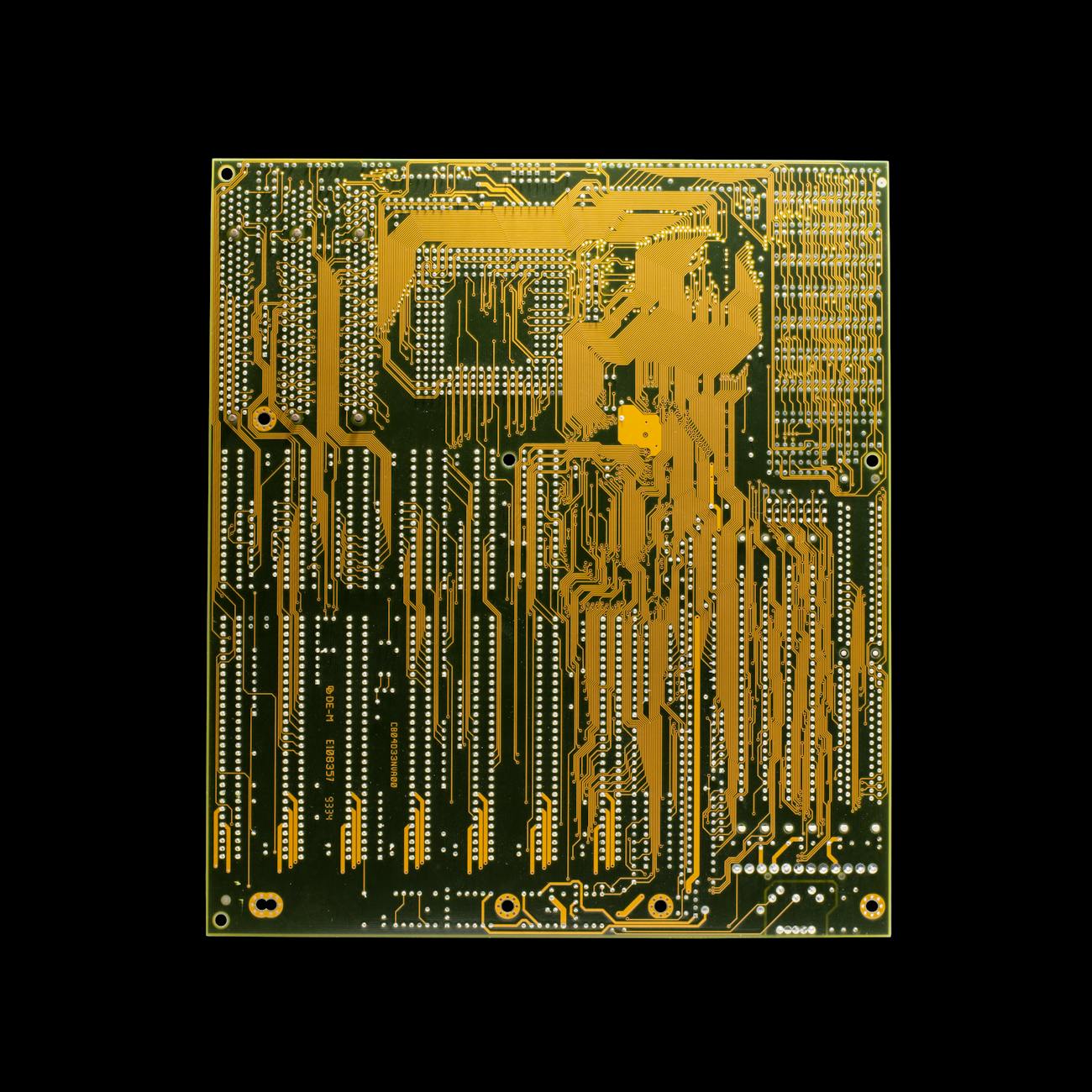
Analog Integrated Circuit Design is a specialized field within the broader discipline of electrical engineering that deals with the design and implementation of integrated circuits that are primarily used to process continuous signals. Analog circuits are essential components in many electronic devices, including amplifiers, filters, and sensors, among others. This postgraduate certificate course in Analog Circuit Design aims to equip students with the necessary knowledge and skills to design, analyze, and optimize analog integrated circuits for various applications.
Key Terms and Vocabulary:
1. **Analog Circuit:** An electronic circuit that processes continuous signals. These circuits work with continuous voltage or current signals and are used in applications such as amplifiers, filters, and signal conditioning.
2. **Integrated Circuit (IC):** A miniaturized electronic circuit that consists of multiple interconnected semiconductor devices on a single semiconductor substrate. Analog integrated circuits combine analog and digital components on the same chip.
3. **Operational Amplifier (Op-Amp):** A high-gain differential amplifier with a very high input impedance and low output impedance. Op-amps are widely used in analog circuits for amplification, filtering, signal conditioning, and mathematical operations.
4. **Transistor:** A semiconductor device used to amplify or switch electronic signals. Bipolar junction transistors (BJTs) and metal-oxide-semiconductor field-effect transistors (MOSFETs) are commonly used in analog integrated circuits.
5. **CMOS Technology:** Complementary Metal-Oxide-Semiconductor technology is a widely used fabrication process for integrated circuits. CMOS technology offers low power consumption, high noise immunity, and high packing density, making it ideal for analog and digital circuits.
6. **Biasing:** The process of setting the operating point of a transistor or amplifier to ensure proper functionality. Biasing is essential for maintaining the desired operating conditions and signal levels in analog circuits.
7. **Small-Signal Analysis:** A technique used to analyze the behavior of an amplifier or circuit under small variations in input signals. Small-signal analysis helps in understanding the gain, bandwidth, and stability of analog circuits.
8. **Frequency Response:** The relationship between the input and output signals of a circuit as a function of frequency. The frequency response of an analog circuit determines its bandwidth, gain, phase shift, and stability.
9. **Noise:** Unwanted random variations in a signal that can degrade the performance of an analog circuit. Noise sources include thermal noise, shot noise, flicker noise, and intermodulation noise.
10. **Layout Design:** The physical arrangement of components and interconnections on an integrated circuit. Proper layout design is crucial for minimizing parasitic effects, reducing noise, and ensuring reliable operation of analog circuits.
11. **Feedback:** A technique used in analog circuits to control gain, bandwidth, and stability. Negative feedback is commonly used to improve linearity, reduce distortion, and enhance the performance of amplifiers and filters.
12. **Compensation:** The process of improving the stability and bandwidth of an amplifier or circuit by introducing additional components or techniques. Compensation is essential for maintaining the desired performance of analog circuits.
13. **Power Supply Rejection Ratio (PSRR):** A measure of the ability of an amplifier or circuit to reject variations in the power supply voltage. High PSRR is desirable in analog circuits to minimize the impact of power supply noise.
14. **Common-Mode Rejection Ratio (CMRR):** A measure of the ability of an amplifier to reject common-mode signals. CMRR is essential for minimizing the impact of noise and interference in analog circuits.
15. **Slew Rate:** The maximum rate of change of the output voltage of an amplifier. Slew rate determines the ability of an amplifier to respond to fast input signals without distortion.
16. **Distortion:** Any deviation from the ideal output signal in an amplifier or circuit. Distortion can be caused by nonlinearity, noise, bandwidth limitations, or other factors and can degrade the quality of the output signal.
17. **Operational Transconductance Amplifier (OTA):** A type of amplifier that converts a voltage input signal into a current output signal. OTAs are commonly used in filters, oscillators, and analog signal processing circuits.
18. **Phase-Locked Loop (PLL):** A control system that generates an output signal with a fixed phase relationship to an input reference signal. PLLs are used in frequency synthesis, clock recovery, and demodulation applications.
19. **Switched-Capacitor Circuit:** An analog circuit that uses switches and capacitors to perform signal processing functions. Switched-capacitor circuits are widely used in filters, analog-to-digital converters, and sample-and-hold circuits.
20. **Bandgap Reference:** A voltage reference circuit that generates a stable and accurate reference voltage independent of variations in temperature and supply voltage. Bandgap references are essential for precision analog circuits.
21. **Current Mirrors:** A circuit configuration that copies the current flowing in one branch to another branch. Current mirrors are used in biasing circuits, current sources, and differential amplifiers to improve matching and stability.
22. **Cadence Virtuoso:** A popular electronic design automation (EDA) tool used for designing and simulating analog and mixed-signal integrated circuits. Cadence Virtuoso provides a comprehensive platform for designing complex analog circuits.
23. **Layout Parasitics:** Unintentional resistances, capacitances, and inductances that arise due to the physical layout of components on an integrated circuit. Layout parasitics can degrade the performance of analog circuits and must be minimized during design.
24. **Monte Carlo Analysis:** A statistical simulation technique used to analyze the variation in circuit performance due to process variations. Monte Carlo analysis helps in predicting the yield and reliability of analog integrated circuits.
25. **Electromigration:** The phenomenon where the movement of metal atoms in a conductor leads to the degradation of the conductor over time. Electromigration is a reliability concern in analog circuits and can cause open or short circuits.
26. **Temperature Coefficient:** The rate at which a parameter of a circuit changes with temperature. Temperature coefficients are important for ensuring the stability and accuracy of analog circuits over a wide temperature range.
27. **Latch-Up:** A condition in which a parasitic thyristor structure in an integrated circuit latches into a low-resistance state, causing a short circuit between power supply rails. Latch-up can damage the circuit and must be avoided in analog integrated circuits.
28. **Layout DRC/LVS:** Design Rule Check (DRC) and Layout vs. Schematic (LVS) are tools used to verify the correctness of the layout design with respect to the design rules and the schematic. DRC and LVS ensure that the layout is manufacturable and matches the intended circuit functionality.
29. **Noise Figure:** A measure of how much noise a circuit adds to the input signal. Low noise figure is desirable in analog circuits to preserve the signal-to-noise ratio and minimize the impact of noise on the output signal.
30. **Power Amplifier:** An amplifier that is designed to deliver high power to a load. Power amplifiers are used in applications such as audio amplification, RF transmitters, and power supplies.
In conclusion, Analog Integrated Circuit Design is a complex and challenging field that requires a deep understanding of analog circuit principles, semiconductor devices, fabrication technologies, and design methodologies. By mastering the key terms and vocabulary outlined above, students can gain the necessary foundation to excel in designing high-performance analog integrated circuits for various applications. The practical applications, examples, and challenges associated with analog circuit design will further enhance the learning experience and prepare students for a successful career in this dynamic and rewarding field.
Key takeaways
- Analog Integrated Circuit Design is a specialized field within the broader discipline of electrical engineering that deals with the design and implementation of integrated circuits that are primarily used to process continuous signals.
- These circuits work with continuous voltage or current signals and are used in applications such as amplifiers, filters, and signal conditioning.
- **Integrated Circuit (IC):** A miniaturized electronic circuit that consists of multiple interconnected semiconductor devices on a single semiconductor substrate.
- **Operational Amplifier (Op-Amp):** A high-gain differential amplifier with a very high input impedance and low output impedance.
- Bipolar junction transistors (BJTs) and metal-oxide-semiconductor field-effect transistors (MOSFETs) are commonly used in analog integrated circuits.
- CMOS technology offers low power consumption, high noise immunity, and high packing density, making it ideal for analog and digital circuits.
- **Biasing:** The process of setting the operating point of a transistor or amplifier to ensure proper functionality.