
Environmental Impact Assessment and Energy Projects
Expert-defined terms from the Certificate in Energy Law and Policy course at HealthCareCourses (An LSIB brand). Free to read, free to share, paired with a professional course.
Air Quality Impact #
Air Quality Impact
Explanation #
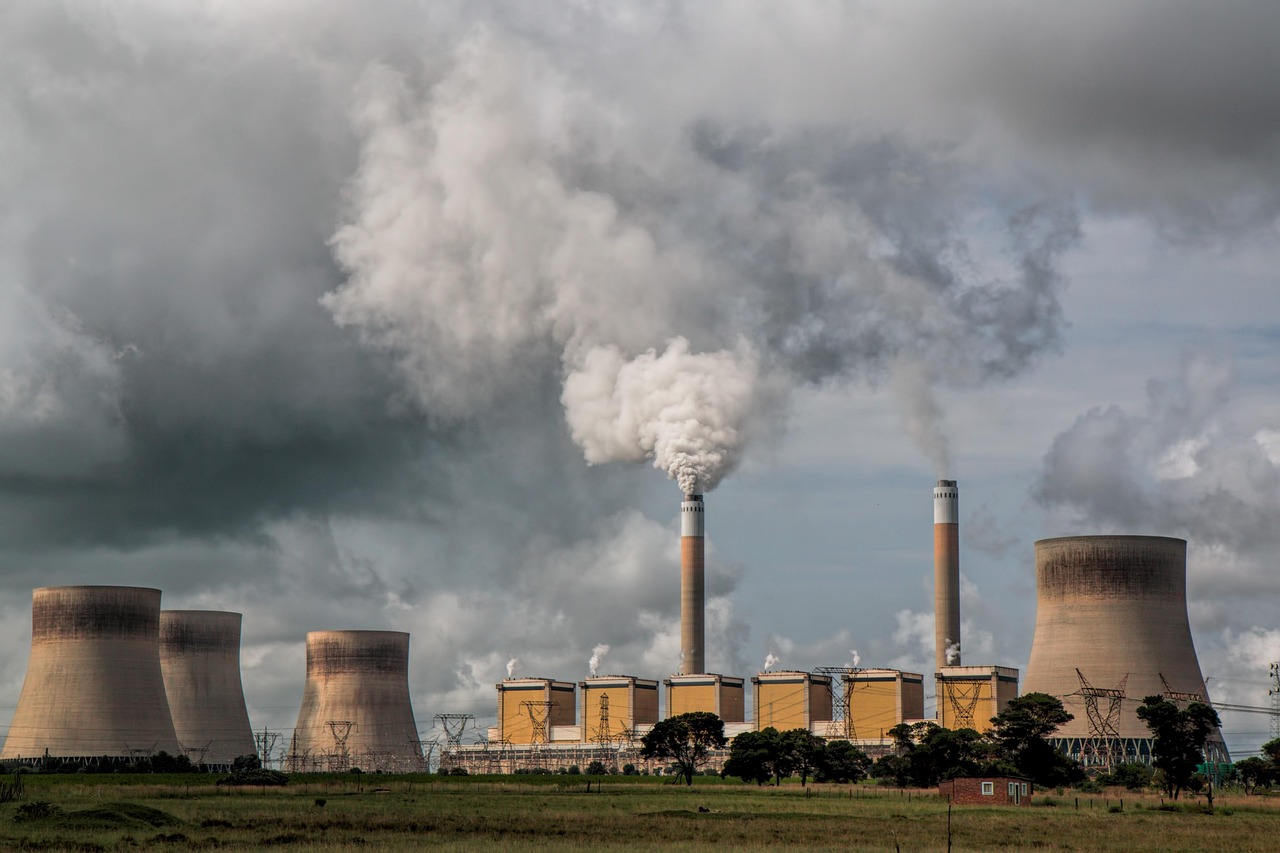
The effect of a proposed energy project on ambient concentrations of pollutants such as NOx, SO₂, PM₂.₅, and VOCs. Assessment includes baseline monitoring, predictive modeling, and comparison with national air quality standards. Example: a coal‑fired power plant’s stack emissions are modeled to predict down‑wind pollutant levels. Practical application involves recommending stack heights, fuel switches, or flue‑gas desulfurization to mitigate impacts. Challenges include data scarcity in remote locations and uncertainty in meteorological forecasts.
Baseline Environmental Conditions #
Baseline Environmental Conditions
Explanation #
The existing state of physical, biological, and socio‑economic environments before project implementation. Baseline data serve as the control against which predicted changes are measured. Typical components are water quality, biodiversity inventories, and land‑use patterns. In practice, baseline surveys guide the selection of appropriate mitigation measures. A key challenge is ensuring baseline data are recent, representative, and collected using scientifically robust methods.
Carbon Footprint #
Carbon Footprint
Explanation #
The total amount of greenhouse gases emitted directly and indirectly by an energy project, expressed in CO₂‑equivalents. Calculation includes construction, operation, fuel extraction, and de‑commissioning phases. For instance, the carbon footprint of a solar farm accounts for embodied emissions in panels and balance‑of‑system components. Practitioners use the footprint to evaluate climate compatibility and to design offset strategies. Challenges arise from allocating emissions across shared infrastructure and from variations in grid emission factors.
Climate Change Vulnerability #
Climate Change Vulnerability
Explanation #
The degree to which a project’s assets, operations, and surrounding communities are susceptible to climate‑driven hazards such as sea‑level rise, extreme heat, or altered precipitation. Vulnerability analysis combines climate projections with exposure and sensitivity analyses. Example: a coastal wind farm may be vulnerable to storm surge and erosion. The assessment informs adaptation measures like elevated foundations or flexible operation schedules. Difficulty lies in selecting appropriate climate scenarios and translating scientific uncertainty into actionable design criteria.
Cumulative Impact Assessment #
Cumulative Impact Assessment
Explanation #
Evaluation of the combined effects of a project when considered alongside other existing or planned developments in the same geographic area. It moves beyond isolated project analysis to capture synergistic or antagonistic interactions. In practice, a new hydroelectric dam is assessed together with upstream water withdrawals and downstream fishery activities. The main challenge is obtaining reliable data on other projects and quantifying non‑linear ecological responses.
Decommissioning Plan #
Decommissioning Plan
Explanation #
A detailed roadmap for safely shutting down, dismantling, and restoring an energy facility after its operational life. The plan specifies timelines, waste handling procedures, and financial guarantees. For example, an offshore oil platform decommissioning plan includes plug‑and‑abandon of wells and removal of topside structures. Practical application ensures that future liability is minimized. Challenges include forecasting future regulatory requirements and securing sufficient financial assurance.
Environmental Impact Statement (EIS) #
Environmental Impact Statement (EIS)
Explanation #
A comprehensive document that presents the findings of the environmental impact assessment, including baseline conditions, predicted impacts, mitigation measures, and monitoring plans. Required by many jurisdictions before granting project permits. An EIS for a geothermal plant would detail groundwater drawdown, seismicity risk, and noise levels. Its preparation demands interdisciplinary expertise and stakeholder engagement. A frequent difficulty is balancing technical depth with readability for non‑technical decision‑makers.
Environmental Management Plan (EMP) #
Environmental Management Plan (EMP)
Explanation #
Operational blueprint that outlines how identified impacts will be avoided, minimized, or compensated during project implementation. It assigns responsibilities, timelines, and performance indicators. For a wind farm, the EMP may include turbine siting restrictions to protect bird migration corridors. The plan is usually linked to permitting conditions and audited by regulators. Challenges involve integrating the EMP with existing corporate environmental systems and ensuring adaptive management.
Environmental Monitoring #
Environmental Monitoring
Explanation #
Systematic collection of data during construction and operation to verify that impacts remain within predicted ranges and that mitigation measures are effective. Monitoring parameters can include air emissions, water quality, noise levels, and biodiversity indicators. In practice, a solar PV project might monitor soil erosion on cleared land. The main challenges are defining appropriate sampling frequency, securing long‑term funding, and addressing data gaps promptly.
Environmental Screening #
Environmental Screening
Explanation #
Initial, rapid evaluation to determine whether a proposed project is likely to cause significant environmental effects and thus requires a full impact assessment. Screening criteria often involve project size, technology type, and proximity to sensitive receptors. For example, a small rooftop solar installation may be screened out of detailed assessment. The process streamlines regulatory workload but can be contentious if screening thresholds are perceived as too lax.
Fluvial Ecosystem Impact #
Fluvial Ecosystem Impact
Explanation #
Assessment of how alterations to river flow, sediment transport, and water quality affect fish populations, macroinvertebrates, and riparian vegetation. Hydropower projects commonly trigger this analysis. Practical steps include fish passage design and flow‑regime modeling. Challenges include limited baseline biological data and the need to reconcile competing water‑use demands.
Fuel Cycle Analysis #
Fuel Cycle Analysis
Explanation #
Examination of environmental impacts across all stages of a fuel’s life—from extraction, processing, transport, combustion, to waste disposal. Provides a holistic view of resource efficiency and greenhouse gas intensity. In a nuclear context, the analysis includes uranium mining, enrichment, reactor operation, and spent‑fuel management. The main difficulty is aggregating data across disparate supply‑chain actors and accounting for regional variations in energy mixes.
Geothermal Reservoir Sustainability #
Geothermal Reservoir Sustainability
Explanation #
Evaluation of whether a geothermal field can maintain productive temperatures and pressures over the intended exploitation period. Sustainability metrics include heat extraction versus natural recharge and chemical balance of the fluid. For a binary cycle plant, the EMP may prescribe specific reinjection volumes to avoid reservoir cooling. Challenges involve long‑term monitoring of subsurface temperature and managing induced seismicity.
Greenhouse Gas (GHG) Inventory #
Greenhouse Gas (GHG) Inventory
Explanation #
Systematic compilation of all greenhouse gas emissions associated with a project, categorized by source and scope (Scope 1, 2, 3). The inventory underpins carbon footprint calculations and regulatory reporting. For a natural‑gas combined‑cycle plant, Scope 1 includes combustion emissions, while Scope 2 covers purchased electricity for auxiliary systems. A major challenge is ensuring data quality and addressing emissions from upstream fuel supply chains.
Habitat Fragmentation #
Habitat Fragmentation
Explanation #
The process by which continuous natural habitats are broken into smaller, isolated patches, often due to infrastructure such as transmission lines or access roads. Fragmentation can impede wildlife movement and reduce genetic diversity. Mitigation may involve designing wildlife overpasses or underpasses. Practical application requires spatial analysis using GIS. The difficulty lies in predicting species‑specific movement patterns and securing land for corridor preservation.
Hydropower Licensing #
Hydropower Licensing
Explanation #
Legal authorization granted by a water‑resource authority to construct and operate a hydropower facility, typically contingent upon meeting environmental and social criteria. Licensing processes often require an EIS, public consultation, and compliance with flow‑release obligations. In practice, a license may stipulate minimum ecological flow to protect downstream ecosystems. Challenges include reconciling competing water‑allocation claims and navigating multi‑jurisdictional water law.
Impact Mitigation Hierarchy #
Impact Mitigation Hierarchy
Explanation #
Structured approach that prioritizes impact avoidance, then minimisation, then restoration, and finally compensation for residual effects. The hierarchy guides the selection of mitigation measures in the EMP. For instance, a wind farm may first avoid siting turbines in high‑risk bird migration corridors (avoidance), then use low‑noise blade designs (reduction), and finally fund habitat restoration elsewhere (offset). The challenge is demonstrating that higher‑order measures have been fully explored before resorting to offsets.
Induced Seismicity #
Induced Seismicity
Explanation #
Human‑induced earthquakes that result from activities such as fluid injection, reservoir impoundment, or geothermal extraction. Assessment involves seismic risk modeling and monitoring networks. In enhanced geothermal systems, injection pressures can reactivate pre‑existing faults. Practical mitigation includes controlling injection rates and implementing traffic light protocols. The main challenge is distinguishing induced events from natural seismicity and managing public perception.
International Environmental Law #
International Environmental Law
Explanation #
Body of legal norms governing transboundary environmental impacts, including conventions such as the Convention on Biological Diversity and the Paris Agreement. Projects that cross borders or affect shared resources must comply with these instruments. For a cross‑border transmission line, parties must conduct joint impact assessments and consult affected states. Challenges include harmonizing divergent national regulations and enforcing compliance across jurisdictions.
Life‑Cycle Costing (LCC) #
Life‑Cycle Costing (LCC)
Explanation #
Quantitative analysis of all costs associated with a project over its entire lifespan, including capital, operation, maintenance, and de‑commissioning expenses. LCC helps compare technologies such as solar PV versus natural‑gas turbines on a cost‑per‑MWh basis. Practical application requires reliable discount rates and assumptions about fuel price trajectories. Challenges involve forecasting long‑term policy changes and accounting for externalities like environmental damages.
Marine Renewable Energy Impact #
Marine Renewable Energy Impact
Explanation #
Evaluation of how offshore renewable devices affect marine ecosystems, navigation, and fisheries. Impacts may include habitat alteration, noise, and collision risk for marine mammals. Mitigation strategies include seasonal curtailment and device spacing guidelines. In practice, a tidal stream project must conduct acoustic monitoring to assess marine mammal disturbance. Challenges include limited baseline marine biodiversity data and reconciling multiple ocean‑use interests.
Mitigation Banking #
Mitigation Banking
Explanation #
Creation of a restored or preserved habitat area that generates credits used to offset unavoidable impacts elsewhere. Credits are sold to developers to achieve regulatory compliance. For a solar farm that impacts prairie grassland, the developer may purchase credits from a prairie restoration bank. Practical use requires rigorous monitoring to ensure credit validity. Challenges include establishing robust credit valuation methods and preventing “banking” of impacts without genuine ecological gains.
Noise Pollution Control #
Noise Pollution Control
Explanation #
Assessment and management of sound levels generated by energy projects, particularly wind turbines, generators, and compressors. Noise criteria are set by national standards and may include limits on dB(A) at nearby residences. Mitigation options include blade design, curtailment during low‑wind conditions, and noise barriers. In practice, a wind farm must conduct pre‑construction noise modeling and post‑construction monitoring. Challenges involve cumulative noise from multiple turbines and community perception of acceptable levels.
Operational Emissions #
Operational Emissions
Explanation #
Greenhouse gases and pollutants released directly during the day‑to‑day functioning of an energy facility. For a coal plant, operational emissions consist of CO₂, NOx, SO₂, and particulate matter from combustion. Accurate measurement is essential for compliance reporting and carbon trading. Mitigation may involve low‑NOx burners or flue‑gas desulfurization. The main difficulty is capturing intermittent or low‑level fugitive emissions, such as methane leaks from natural‑gas pipelines.
Participatory Public Consultation #
Participatory Public Consultation
Explanation #
Structured process that invites affected communities, NGOs, and other stakeholders to provide input on project design, impact assessment, and mitigation measures. Effective consultation improves project legitimacy and can surface local knowledge. Techniques include public meetings, focus groups, and digital platforms. In practice, a hydroelectric project may hold village workshops to discuss resettlement plans. Challenges include managing divergent interests, language barriers, and ensuring that feedback meaningfully influences decision‑making.
Petroleum‑Based Energy Projects #
Petroleum‑Based Energy Projects
Explanation #
Projects involving the exploration, production, and refining of fossil fuels. Environmental assessments focus on spills, air emissions, water consumption, and socio‑economic impacts. For an offshore drilling platform, the EIA would analyze oil‑spill response capacity and marine habitat disturbance. Mitigation may involve double‑hull tankers and real‑time leak detection. Challenges include dealing with legacy contamination, high‑risk operational phases, and increasing regulatory scrutiny on climate impacts.
Photovoltaic (PV) Technology Assessment #
Photovoltaic (PV) Technology Assessment
Explanation #
Evaluation of the environmental performance of solar PV projects, covering land use, embodied energy, water usage, and end‑of‑life disposal. Lifecycle analysis often shows low operational emissions but highlights concerns over module recycling. Practical mitigation includes selecting high‑efficiency panels to reduce land footprint and establishing take‑back schemes. Challenges involve supply‑chain transparency for rare‑earth materials and managing large‑scale land‑use conflicts.
Power Purchase Agreement (PPA) #
Power Purchase Agreement (PPA)
Explanation #
Long‑term contract between an energy producer and a buyer that defines price, volume, and delivery terms. PPAs are critical for project financing and influence the environmental risk profile by locking in fuel types and generation schedules. For a wind farm, a 20‑year PPA may stipulate a minimum capacity factor, affecting turbine siting decisions. Challenges include renegotiating PPAs under changing policy regimes and ensuring that contract clauses align with environmental compliance obligations.
Regulatory Impact Assessment (RIA) #
Regulatory Impact Assessment (RIA)
Explanation #
Systematic appraisal of the economic, social, and environmental consequences of proposed regulations, such as new emissions standards for power plants. RIA helps policymakers balance environmental protection with industry viability. In practice, a RIA may model how tighter NOx limits affect plant retrofit costs versus public health benefits. The main difficulty is quantifying intangible benefits and dealing with political pressures that may skew assumptions.
Renewable Energy Certificates (RECs) #
Renewable Energy Certificates (RECs)
Explanation #
Tradable instruments that represent the environmental attributes of renewable electricity generation. RECs enable corporations to claim renewable sourcing without directly owning the generation asset. For a biomass plant, each MWh produced generates one REC that can be sold on a voluntary market. Practical use supports corporate sustainability goals and can finance additional renewable projects. Challenges include ensuring additionality, preventing double‑counting, and maintaining market transparency.
Risk Management Framework #
Risk Management Framework
Explanation #
Structured approach to identify, assess, and mitigate environmental and operational risks associated with energy projects. The framework integrates risk registers, probability‑impact matrices, and mitigation action plans. In a geothermal development, risks may include reservoir depletion and induced seismicity. Effective risk management ensures regulatory compliance and protects project viability. Challenges involve quantifying low‑probability, high‑impact events and integrating risk considerations across multidisciplinary teams.
Scenario Analysis #
Scenario Analysis
Explanation #
Method of evaluating how different future conditions—such as policy changes, technology adoption, or climate trajectories—affect project outcomes. Scenario analysis informs strategic decisions and resilience planning. For a natural‑gas power plant, scenarios might include carbon‑price escalation or renewable‑energy penetration. Practical application includes adjusting plant operating schedules or investing in carbon capture. The difficulty lies in selecting plausible scenarios and communicating uncertainty to stakeholders.
Seabed Disturbance Assessment #
Seabed Disturbance Assessment
Explanation #
Evaluation of physical impacts on the ocean floor caused by installation of offshore structures, cables, or anchoring systems. Disturbance can affect benthic communities and sediment dynamics. In practice, a tidal turbine array requires sonar surveys to map sensitive habitats and develop mitigation plans such as burial depth specifications. Challenges include limited baseline data for deep‑sea ecosystems and the difficulty of monitoring post‑installation impacts.
Social Impact Assessment (SIA) #
Social Impact Assessment (SIA)
Explanation #
Systematic study of how a project influences the social fabric, health, and well‑being of affected populations. SIA examines displacement, employment, gender dynamics, and cultural sites. For a large‑scale solar farm, the SIA may assess land‑use conflicts with pastoralist communities. Mitigation measures can include livelihood restoration programs and community benefit agreements. Challenges include obtaining reliable socioeconomic data and ensuring that mitigation is culturally appropriate.
Stakeholder Mapping #
Stakeholder Mapping
Explanation #
Process of identifying all parties affected by or capable of influencing a project, categorizing them by interest level and power. Mapping informs targeted engagement strategies and conflict resolution. In a wind energy project, stakeholders may include landowners, indigenous groups, local NGOs, and grid operators. Practical use ensures that communication resources are allocated efficiently. The main difficulty is capturing hidden stakeholders and dynamically updating the map as project phases evolve.
Sustainable Development Goal (SDG) Alignment #
Sustainable Development Goal (SDG) Alignment
Explanation #
Linking project outcomes to the United Nations SDGs, such as affordable clean energy (SDG 7) or climate action (SDG 13). Alignment helps demonstrate broader societal benefits and can attract ESG‑focused investors. For a bioenergy plant, alignment may involve showing contributions to rural development (SDG 1) and responsible consumption (SDG 12). Challenges include measuring contributions accurately and avoiding “greenwashing” claims.
Thermal Pollution Control #
Thermal Pollution Control
Explanation #
Management of temperature increases in water bodies caused by discharge from power plant cooling systems. Elevated temperatures can harm aquatic life and alter ecosystem dynamics. Mitigation techniques include closed‑loop cooling, cooling towers, or seasonal discharge restrictions. In practice, a coal plant may implement a hybrid cooling system to limit river temperature rise. Challenges involve higher capital costs and ensuring compliance with water‑quality standards under variable flow conditions.
Transmission Line Corridor Impact #
Transmission Line Corridor Impact
Explanation #
Assessment of the environmental and social effects of constructing high‑voltage transmission lines, including habitat fragmentation, electromagnetic fields, and visual landscape changes. Mitigation may involve undergrounding, route optimization, and vegetation management. For a 500 kV line crossing a protected forest, the study would evaluate bird collision risk and propose bird‑safe designs. Challenges include balancing technical feasibility, cost, and minimizing impacts on sensitive ecosystems.
Water Use Efficiency #
Water Use Efficiency
Explanation #
Evaluation of the volume of water consumed per unit of energy produced, aiming to reduce withdrawals and improve recycling. In a thermoelectric plant, water efficiency is improved through dry cooling or wastewater reuse. Practical application includes installing water‑intensive process monitoring and adopting best‑practice guidelines. Challenges involve site‑specific water scarcity, regulatory water‑allocation permits, and trade‑offs between water savings and increased capital expenditures.
Wildlife Collision Risk Assessment #
Wildlife Collision Risk Assessment
Explanation #
Quantitative analysis of the probability that flying fauna—birds and bats—will collide with energy infrastructure, particularly wind turbines. The assessment uses field surveys, radar tracking, and species‑specific flight behavior data. Mitigation strategies may include curtailment during peak migration periods, blade‑painting, or acoustic deterrents. In practice, a wind farm in a migratory corridor will adopt a seasonal shutdown protocol. Challenges include limited data on nocturnal migration routes and balancing energy production loss with wildlife protection.
Zero‑Emission Energy Project #
Zero‑Emission Energy Project
Explanation #
Project designed to produce energy without emitting greenhouse gases during operation, typically relying on renewable sources such as wind, solar, hydro, or advanced nuclear. The concept extends to lifecycle considerations, including manufacturing and de‑commissioning emissions. For a solar‑plus‑storage facility, achieving zero‑emission status may involve sourcing materials with low embodied carbon and implementing recycling programs. Practical challenges include supply‑chain emissions, intermittency management, and ensuring that ancillary services (e.g., backup generation) do not reintroduce emissions.